Air-gap power is an important concept in electromagnetic devices, particularly in the analysis and design of these devices. It refers to the electromagnetic power transmitted through the air gap. Below is a detailed explanation of the concept of air-gap power and its applications in different devices.
Detailed Explanation
Definition:
Air-gap power is the electromagnetic power transmitted through the air gap, which is the energy transferred from the rotor (or primary side) to the stator (or secondary side).
Calculation:
Air-gap power can be calculated using the following formula:

where:
Pg is the air-gap power.
Bm is the maximum flux density in the air gap.
Hm is the maximum magnetic field strength in the air gap.
A is the area of the air gap.
v is the speed at which the flux passes through the air gap.
Physical Significance:
Air-gap power is a key parameter in the energy transfer in electromagnetic devices. In motors, it represents the electromagnetic energy transferred from the rotor to the stator, which is ultimately converted into mechanical energy.
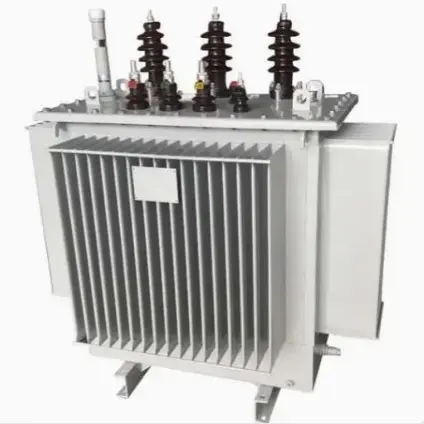
In transformers, air-gap power represents the electromagnetic energy transferred from the primary side to the secondary side, which is ultimately converted into electrical energy.
Applications
Motors:
DC Motors: In DC motors, the flux in the air gap transfers energy through brushes and commutators, causing the rotor to rotate.
AC Motors: In AC motors, the flux in the air gap transfers energy through the interaction between the stator and the rotor, generating a rotating magnetic field that drives the rotor.
Synchronous Motors: In synchronous motors, the flux in the air gap transfers energy through the synchronous magnetic fields between the stator and the rotor, maintaining the synchronous rotation of the rotor and the stator magnetic fields.
Induction Motors: In induction motors, the flux in the air gap transfers energy through the slip magnetic fields between the stator and the rotor, producing torque.
Transformers:
In transformers, the flux in the air gap transfers energy through the coupling between the primary and secondary windings, achieving voltage and current transformation.
Factors Affecting Air-Gap Power
Air-Gap Length:The longer the air-gap length, the higher the magnetic reluctance, resulting in a smaller amount of flux and thus a reduction in air-gap power.
Flux Density:The higher the flux density in the air gap, the more electromagnetic energy is transferred, resulting in higher air-gap power.
Magnetic Field Strength:The higher the magnetic field strength in the air gap, the more electromagnetic energy is transferred, resulting in higher air-gap power.
Air-Gap Area:The larger the air-gap area, the more electromagnetic energy is transferred, resulting in higher air-gap power.
Conclusion
Air-gap power is a crucial parameter in the energy transfer in electromagnetic devices, particularly in motors and transformers. Understanding the concept and calculation methods of air-gap power helps in optimizing the design and performance of these devices, improving the efficiency of energy transfer.