What is Hysteresis Loss?
Hysteresis loss refers to the energy dissipation that occurs in ferromagnetic materials (such as iron cores) due to the hysteresis effect during the magnetization process. When the external magnetic field changes, the magnetization of the ferromagnetic material does not immediately follow the change in the magnetic field; instead, there is a lag. Specifically, when the magnetic field strength returns to zero, the magnetization does not completely return to zero but requires a reverse magnetic field to eliminate the residual magnetization. This lag results in energy being dissipated as heat, which is known as hysteresis loss.
The hysteresis loop is a graphical representation of this phenomenon, showing the relationship between magnetic field strength (H) and magnetic flux density (B). The area enclosed by the hysteresis loop represents the energy loss per unit volume of the material for each complete cycle of magnetization.
Role of Hysteresis Loss in Magnetic Circuits
Energy Loss:
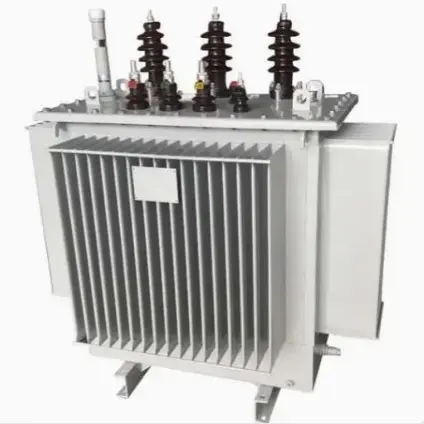
In transformers, motors, and other electromagnetic devices, the core is typically made of ferromagnetic material. As these devices operate, the magnetic field within the core frequently changes direction and strength. Each change in the magnetic field leads to hysteresis losses, resulting in energy being dissipated as heat.
This energy loss reduces the overall efficiency of the device because some of the input energy is wasted in heating the core rather than being used for the intended work.
Temperature Rise:
The heat generated by hysteresis losses can cause the core temperature to rise. If the temperature becomes too high, it may damage insulation materials, shorten the lifespan of the equipment, or even cause failure.
Therefore, when designing and selecting ferromagnetic materials, it is crucial to consider their hysteresis characteristics to minimize unnecessary heat generation.
Impact on Device Performance:
High hysteresis losses can reduce the efficiency of the device, especially in high-frequency applications where these losses are particularly significant. To improve efficiency, low coercivity and low hysteresis loss materials such as silicon steel or amorphous alloys are often chosen.
In some cases, magnetic circuit design can be optimized to reduce the frequency of magnetic flux density changes, thereby minimizing hysteresis losses.
Calculation of Hysteresis Loss:
Hysteresis loss can be estimated using the Steinmetz equation:

where,Wh is the hysteresis loss per unit volume (watts per cubic meter);
kh is a constant related to the material;
f is the frequency of magnetic field changes (hertz);
Bm is the maximum magnetic flux density (tesla);
n is an empirical exponent, typically ranging between 1.6 and 2.0.
Summary
Hysteresis loss is the energy dissipation caused by the hysteresis effect in ferromagnetic materials, primarily manifesting as heat. In magnetic circuits, it affects the efficiency and temperature rise of devices, so careful consideration must be given to material selection and design. By choosing appropriate materials and optimizing designs, hysteresis losses can be effectively reduced, improving the overall performance and lifespan of the equipment.