• Product
  • Suppliers
  • Manufacturers
  • Solutions
  • Free tools
  • Knowledges
  • Experts
  • Communities
Search


What should be done if the neutral line current is too large?

RW Energy
Field: Distribution Automation
China

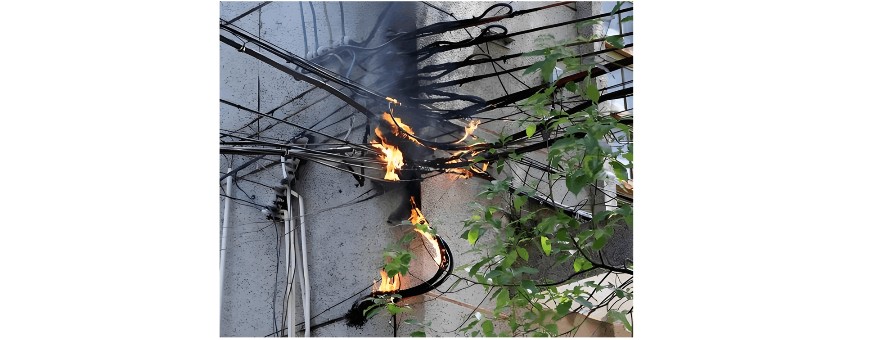
As we all know, if an electrical line exceeds its rated load, it will overheat severely, and may even cause a fire. For safety reasons, overcurrent protection devices are therefore installed on lines. Whenever the current in the line exceeds the rated value, the overcurrent protection device will automatically cut off the line to prevent fire. The "excessive neutral line current" mentioned here refers to the phenomenon where the neutral line current is excessively high (more than 1.5 times the phase line current) even when the three-phase load is balanced. In such cases, phenomena such as overheating of the neutral line, tripping, and overheating of the transformer usually occur.

It should be noted that electrical codes explicitly prohibit the installation of protection devices on the neutral line. This means that even if the neutral line current exceeds the phase line current, no protection measures will be triggered, and the neutral line will continue to heat up unchecked. Before the overcurrent fuse on the phase line reacts, the neutral line may have been severely overheated and burned out, which could even lead to a fire. When the neutral line is disconnected, electrical equipment on the power grid may be damaged.

In general buildings, the cross-sectional area of the neutral line does not exceed that of the phase line, and is even smaller than the phase line. Therefore, if the current on the neutral line exceeds that on the phase line, overheating will occur, posing a huge safety hazard. Here is a key statistic: the maximum current on the neutral line can reach 1.73 times that of the phase line. According to the formula P=I^2R, the power consumption of the neutral line will be 1.73^2 ≈ 3 times that of the phase line. Such high power consumption will inevitably cause the neutral line to overheat—one consequence is that the neutral line may be burned out, and an even more serious consequence is that it may cause a fire.
neutral line current.jpg

Hazards of Excessive Neutral Line Current

Causes the neutral line cable to overheat, accelerating insulation aging and even breaking down the insulation to cause a short circuit, increasing the risk of fire.

  • The neutral line current circulates inside the transformer, reducing the transformer's capacity and increasing its losses, causing the transformer to overheat severely and potentially burn out in extreme cases.

  • Long-term overcurrent in the neutral line will burn it out, and the system voltage may rise from 220V to 400V, resulting in the burnout of equipment.

  • Causes neutral point drift, resulting in a voltage between the neutral line and the ground, endangering equipment and personal safety.

  • Causes switches to trip frequently and irregularly, affecting the stability of power supply.

  • Increases losses and heat generation of equipment and materials in the power supply system, accelerates insulation aging, and shortens their service life.
Give a tip and encourage the author!

Recommended

Why Must a Transformer Core Be Grounded at Only One Point? Isn't Multi-Point Grounding More Reliable?
Why Does the Transformer Core Need to Be Grounded?During operation, the transformer core, along with the metal structures, parts, and components that fix the core and windings, are all situated in a strong electric field. Under the influence of this electric field, they acquire a relatively high potential with respect to ground. If the core is not grounded, a potential difference will exist between the core and the grounded clamping structures and tank, which may lead to intermittent discharge.I
01/29/2026
Understanding Transformer Neutral Grounding
I. What is a Neutral Point?In transformers and generators, the neutral point is a specific point in the winding where the absolute voltage between this point and each external terminal is equal. In the diagram below, pointOrepresents the neutral point.II. Why Does the Neutral Point Need Grounding?The electrical connection method between the neutral point and earth in a three-phase AC power system is called theneutral grounding method. This grounding method directly affects:The safety, reliabilit
01/29/2026
Voltage Imbalance: Ground Fault, Open Line, or Resonance?
Single-phase grounding, line break (open-phase), and resonance can all cause three-phase voltage unbalance. Correctly distinguishing among them is essential for rapid troubleshooting.Single-Phase GroundingAlthough single-phase grounding causes three-phase voltage unbalance, the line-to-line voltage magnitude remains unchanged. It can be classified into two types: metallic grounding and non-metallic grounding. Inmetallic grounding, the faulted phase voltage drops to zero, while the other two phas
11/08/2025
Composition and Working Principle of Photovoltaic Power Generation Systems
Composition and Working Principle of Photovoltaic (PV) Power Generation SystemsA photovoltaic (PV) power generation system is primarily composed of PV modules, a controller, an inverter, batteries, and other accessories (batteries are not required for grid-connected systems). Based on whether it relies on the public power grid, PV systems are divided into off-grid and grid-connected types. Off-grid systems operate independently without relying on the utility grid. They are equipped with energy-s
10/09/2025
Send inquiry
+86
Click to upload file
Download
Get the IEE Business Application
Use the IEE-Business app to find equipment, obtain solutions, connect with experts, and participate in industry collaboration anytime, anywhere—fully supporting the development of your power projects and business.