• Product
  • Suppliers
  • Manufacturers
  • Solutions
  • Free tools
  • Knowledges
  • Experts
  • Communities
Search


What Causes CT20 Mechanism to Fail to Close? Insufficient Closing Solenoid Stroke Is Key

Felix Spark
Field: Failure and maintenance
China

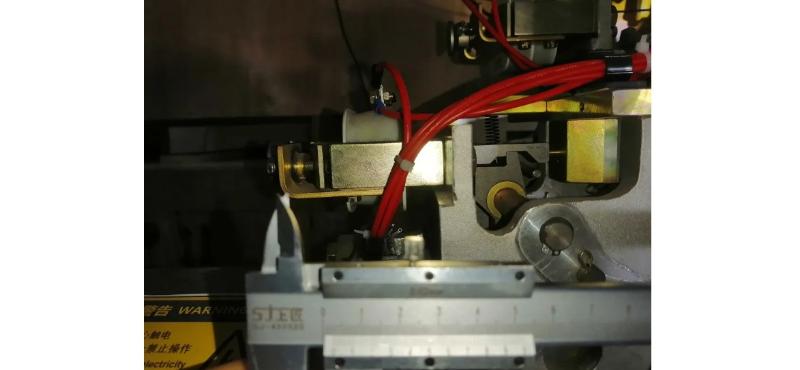
The CT20 series operating mechanism is a classic design. One common cause of failure to close is an improperly adjusted, overly short stroke of the closing solenoid. The rated stroke is approximately 5mm. However, due to vibration or incorrect adjustment after maintenance, the stroke may decrease to around 3mm, potentially causing the mechanism to fail to operate. If the control system continuously issues a closing command under such conditions, the solenoid remains energized, which can lead to overheating and eventual burnout.

As shown in the diagram below, when the closing solenoid stroke is normal, the U-shaped component at the end of the plunger pushes the primary closing trip unit, enabling successful closing.
CT20.jpg

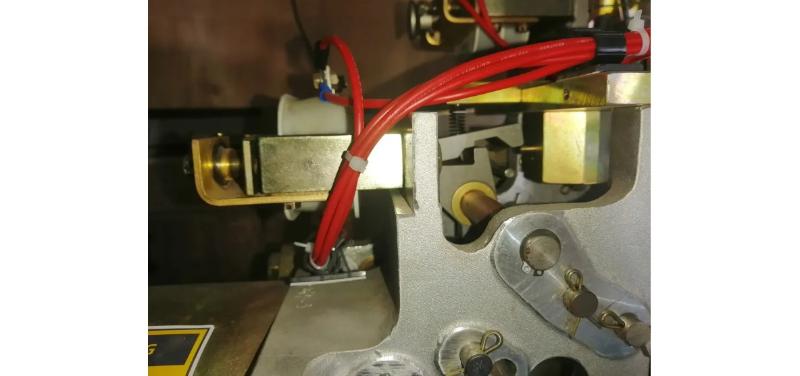
One possible cause of failure to close is illustrated below:
CT20.jpg

If the closing solenoid stroke is too short, when the solenoid operates, the front end of the U-shaped part is lifted by the fixed cylindrical rod directly ahead. As a result, although the solenoid activates, it fails to drive the primary closing trip unit to release, leading to a failed closing operation.

In such cases, manual adjustment may restore normal closing. However, if the adjusted stroke remains near the critical 3mm value, the mechanism may again fail to close during the next attempt after a subsequent opening operation.
CT20.jpg

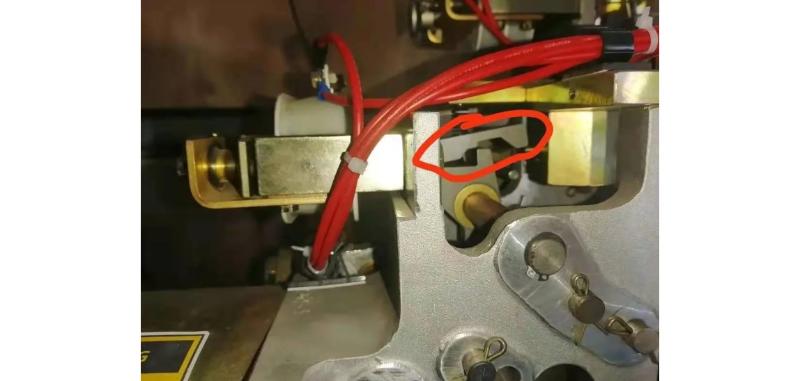
According to feedback from power grid experts, most CT20 mechanism failures are caused by the red-circled area in the figure above failing to reset.

In addition, other causes include mechanical binding combined with spring fatigue. For XK25 models produced before 2013, poor sealing of the mechanism enclosure often led to water ingress and corrosion.

Some failures are due to the dislocation of the reset spring at the closing solenoid or anti-jump assembly, while others result from dried lubricant and slight rust causing resistance and preventing proper reset. The stroke, once correctly set during commissioning, rarely causes issues later—however, care must be taken to restore the correct setting after replacing the coil.
Give a tip and encourage the author!

Recommended

Faults and Handling of Single-phase Grounding in 10kV Distribution Lines
Characteristics and Detection Devices for Single-Phase Ground Faults1. Characteristics of Single-Phase Ground FaultsCentral Alarm Signals:The warning bell rings, and the indicator lamp labeled “Ground Fault on [X] kV Bus Section [Y]” illuminates. In systems with a Petersen coil (arc suppression coil) grounding the neutral point, the “Petersen Coil Operated” indicator also lights up.Insulation Monitoring Voltmeter Indications:The voltage of the faulted phase decreases (in
01/30/2026
Neutral point grounding operation mode for 110kV~220kV power grid transformers
The arrangement of neutral point grounding operation modes for 110kV~220kV power grid transformers shall meet the insulation withstand requirements of transformer neutral points, and shall also strive to keep the zero-sequence impedance of substations basically unchanged, while ensuring that the zero-sequence comprehensive impedance at any short-circuit point in the system does not exceed three times the positive-sequence comprehensive impedance.For 220kV and 110kV transformers in new constructi
01/29/2026
Why Do Substations Use Stones, Gravel, Pebbles, and Crushed Rock?
Why Do Substations Use Stones, Gravel, Pebbles, and Crushed Rock?In substations, equipment such as power and distribution transformers, transmission lines, voltage transformers, current transformers, and disconnect switches all require grounding. Beyond grounding, we will now explore in depth why gravel and crushed stone are commonly used in substations. Though they appear ordinary, these stones play a critical safety and functional role.In substation grounding design—especially when multiple gr
01/29/2026
Why Must a Transformer Core Be Grounded at Only One Point? Isn't Multi-Point Grounding More Reliable?
Why Does the Transformer Core Need to Be Grounded?During operation, the transformer core, along with the metal structures, parts, and components that fix the core and windings, are all situated in a strong electric field. Under the influence of this electric field, they acquire a relatively high potential with respect to ground. If the core is not grounded, a potential difference will exist between the core and the grounded clamping structures and tank, which may lead to intermittent discharge.I
01/29/2026
Send inquiry
+86
Click to upload file
Download
Get the IEE Business Application
Use the IEE-Business app to find equipment, obtain solutions, connect with experts, and participate in industry collaboration anytime, anywhere—fully supporting the development of your power projects and business.