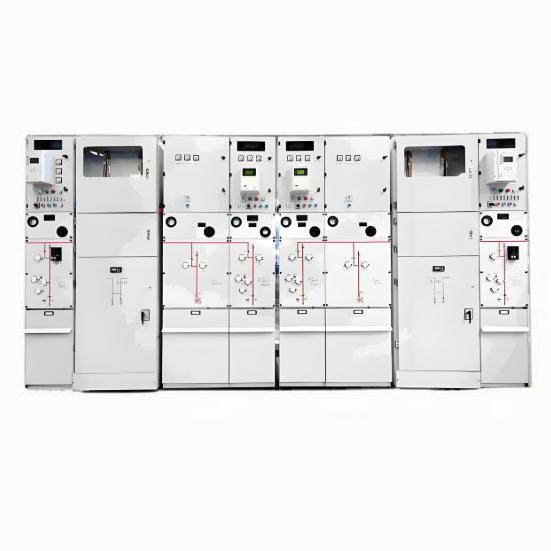
Circuit Breaker Definition
A circuit breaker is defined as a device designed to protect an electrical circuit from damage caused by overcurrent or short circuits by interrupting the flow of electricity.
Short Circuit Breaking Current of Circuit Breaker
This is the maximum short circuit current which a circuit breaker (CB) can withstand before it, finally cleared by opening its contacts.
When a short circuit flows through a circuit breaker, it causes thermal and mechanical stresses in the breaker’s current-carrying parts. If the contact area and conducting parts are too small, this can lead to permanent damage to the insulation and conducting parts of the circuit breaker.
According to Joule’s law of heating, the temperature rise is directly proportional to the square of the short circuit current, contact resistance, and duration of the short circuit. The short circuit current continues to flow through the circuit breaker until the fault is cleared by opening the breaker.
As the thermal stress in the circuit breaker is proportional to the period of short circuit, the breaking capacity of electrical circuit breaker, depends upon the operating time. At 160oC aluminum becomes soft and losses its mechanical strength, this temperature may be taken as limit of temperature rise of breaker contacts during short circuit.
Hence, the short circuit breaking capacity or breaking current of a circuit breaker is defined as the maximum current that can flow through the breaker from the time a short circuit occurs until it is cleared, without causing permanent damage to the circuit breaker.The value of short circuit breaking current is expressed in RMS.
During short circuit, the CB is not only subjected to thermal stress, it also suffers seriously from mechanical stresses. So during determining short circuit capacity, the mechanical strength of the CB is also considered.
So for choosing suitable circuit breaker it is obvious to determine the fault level at that point of the system where CB to be installed. Once the fault level of any part of electrical transmission is determined it is easy to choose the correct rated circuit breaker for this part of network.
Rated Short Circuit Making Capacity
The short circuit making capacity of a circuit breaker is expressed in peak value, unlike the breaking capacity, which is in RMS value. Theoretically, at the instant a fault occurs, the fault current can rise to twice its symmetrical fault level.
At the instant of switching on a circuit breaker in faulty condition, of system, the short circuit portion of the system connected to the source. The first cycle of the current during a circuit is closed by circuit breaker, has maximum amplitude. This is about twice of the amplitude of symmetrical fault current waveform.
The breaker’s contacts have to withstand this highest value of current during the first cycle of waveform when breaker is closed under fault. On the basis of this above mentioned phenomenon, a selected breaker should be rated with short circuit making capacity.
As the rated short circuit making current of circuit breaker is expressed in maximum peak value, it is always more than rated short circuit breaking current of circuit breaker. The normal value of short circuit making current is 2.5 times more than short circuit breaking current. This holds true for both standard and remote control circuit breaker.
Rated Operating Sequence
This is mechanical duty requirement of circuit breaker operating mechanism. The sequence of rated operating duty of a circuit breaker has been specified as:

Where, O indicates opening operation of CB.CO represents closing operation time which is immediately followed by an opening operation without any intentional time delay.t’ is time between two operations which is necessary to restore the initial conditions and/or to prevent undue heating of conducting parts of circuit breaker. t = 0.3 sec for circuit breaker intended for first auto re closing duty, if not otherwise specified.
Suppose rated duty circle of a circuit breaker is:

This means, an opening operation of circuit breaker is followed by a closing operation after a time interval of 0.3 sec, and then the circuit breaker again opens without any intentional time delay. After this opening operation the CB is again closed after 3 minutes and then instantly trips without any intentional time delay.
Rated Short Time Current
This is the current limit which a circuit breaker can carry safely for certain specific time without any damage in it. The circuit breakers do not clear the short circuit current as soon as any fault occurs in the system. There always some intentional and an intentional time delays present between the instant of occurrence of fault and instant of clearing the fault by CB.
This delay is because of time of operation of protection relays, time of operation of circuit breaker and also there may be some intentional time delay imposed in relay for proper coordination of power system protection. Even a circuit breaker fails to trip, the fault will be cleared by next higher positioned circuit breaker.
In this case the fault clearing time is longer. Hence, after fault, a circuit breaker has to carry the short circuit for certain time. The summation of all time delays should not be more than 3 seconds; hence a circuit breaker should be capable of carrying a maximum faulty current for at least this short period of time.
The short circuit current may have two major affects inside a circuit breaker.Because of the high electric current, there may be high thermal stress in the insulation and conducting parts of CB.The high short circuit current, produces significant mechanical stresses in different current carrying parts of the circuit breaker.
A circuit breaker is designed to withstand these stresses. However, no circuit breaker should carry a short circuit current for longer than the specified short period. The rated short time current of a circuit breaker is at least equal to its rated short circuit breaking current.
Rated Voltage of Circuit Breaker
Rated voltage of circuit breaker depends upon its insulation system. For below 400 KV systems, the circuit breaker is designed to withstand 10% above the normal system voltage. For above or equal 400 KV system the insulation of circuit breaker should be capable of withstanding 5% above the normal system voltage.
That means, rated voltage of circuit breaker corresponds to the highest system voltage. This is because during no load or small load condition the voltage level of power system is allowed rise up to highest voltage rating of the system.