As altitude increases, air density, temperature, and atmospheric pressure decrease accordingly, leading to reduced dielectric strength of air gaps and external insulation performance of porcelain components. This results in degraded external insulation performance for high-voltage electrical equipment. Since most high-voltage equipment is designed for installation at altitudes below 1,000 meters, using such equipment at elevations exceeding 1,000 meters may compromise reliable insulation performance. Therefore, the external insulation strength of high-voltage switchgear used in high-altitude areas must be enhanced.
For high-altitude regions above 1,000 meters (up to 4,000 meters), it is generally required that for every additional 100 meters of elevation, the external insulation test voltage be increased by 1% during equipment selection and testing.
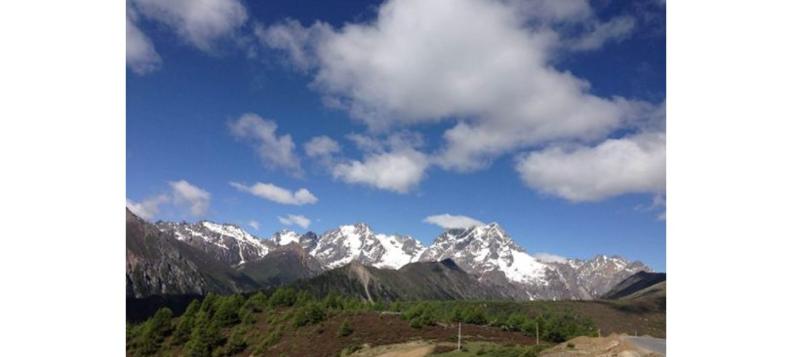
For high-voltage equipment operating at altitudes between 2,000 and 3,000 meters with voltages up to 110kV, the external insulation strength is typically enhanced by selecting equipment with one higher insulation level—this increases the impulse and power-frequency withstand voltages by approximately 30%.
For correction methods and calculations regarding external insulation at high altitudes, refer to IEC 62271-1, GB 11022, and Q/GDW 13001-2014 Technical Specification for External Insulation Configuration in High-Altitude Areas.
In addition to the impact of altitude on external insulation, according to IEC standards, if the temperature rise test of high-voltage equipment is conducted at an altitude below 2,000 meters, the temperature rise performance must be re-evaluated when the equipment is deployed at altitudes between 2,000 and 4,000 meters. This is because thinner air reduces the effectiveness of natural convection cooling.
Under normal test conditions, the measured temperature rise must not exceed the values specified in Table 3 of IEC 62271-1. When equipment is installed at altitudes above 2,000 meters, the allowable maximum temperature limit should be reduced by 1% for every additional 100 meters of elevation. However, in practice, it is generally unnecessary to impose special temperature rise limits based solely on increasing altitude. This is because higher altitudes are associated with lower substation ambient temperatures. Even if the temperature rise is higher, the final operating temperature of the equipment remains within acceptable limits (it is the final temperature, not the temperature rise, that affects equipment performance). Different altitudes correspond to different maximum ambient air temperatures, as shown in the table below.
Table 1: Maximum Ambient Air Temperature Corresponding to Different Altitudes
| Altitude / m | Maximum Ambient Air Temperature / °C |
| 0~2000 | 40 |
| 2000~3000 | 35 |
| 3000~4000 | 30 |
In addition to affecting the external insulation of the primary (high-voltage) parts of high-voltage electrical equipment, high altitude also impacts control devices. Control cabinets may contain secondary components such as motors, circuit breakers, contactors, and relays, most of which rely on air insulation. Therefore, their insulation performance also degrades at high altitudes. This factor must be considered during equipment selection.