• Product
  • Suppliers
  • Manufacturers
  • Solutions
  • Free tools
  • Knowledges
  • Experts
  • Communities
Search


Policy-Driven Transformation: Eco-Friendly Solutions Take Center Stage

Baker
Field: News
Engineer
4-6Year
Canada

With the implementation of the EU’s new F-Gas Regulation (Regulation (EU) 2024/573), the power equipment industry is entering a countdown toward environmental transformation. The regulation explicitly prohibits, starting in 2026, the use of fluorinated greenhouse gases in medium-voltage switchgear rated at 24 kV and below. This restriction will be extended to equipment up to 52 kV from 2030 onward, accelerating the industry’s shift away from sulfur hexafluoride (SF₆)—a gas with a high global warming potential.
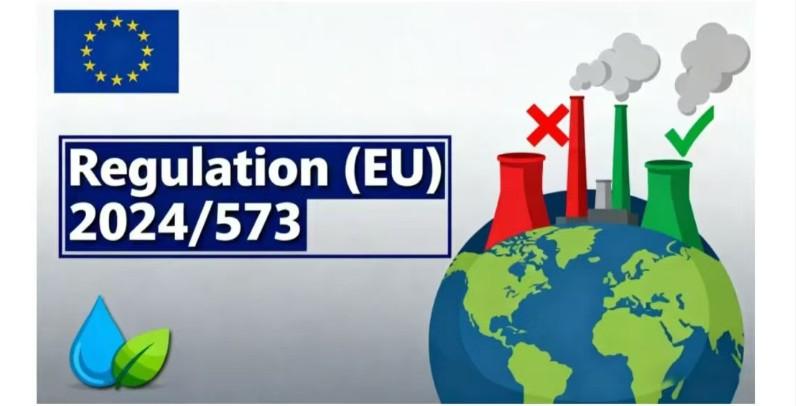
Regulation.jpg

ROCKWILL has launched a highly competitive eco-friendly switchgear solution: the QGG Series Solid Insulated Switchgear. Integrating decades of product development expertise from both Air-Insulated Switchgear (AIS) and Gas-Insulated Switchgear (GIS), the QGG series represents a major breakthrough in medium-voltage technology, offering exceptional operational safety. As a core component of power distribution networks, it is widely deployed across various distribution systems.

The QGG series utilizes vacuum interrupters for arc quenching, and all high-voltage live parts are fully encapsulated using solid insulating materials—specifically epoxy resin—with superior dielectric performance. This design eliminates the need for a pressurized gas chamber (previously operating at 0.03 MPa), achieving true full insulation, complete sealing, and maintenance-free operation.

Equipped with an intelligent online monitoring system, the QGG series enables real-time monitoring of critical internal components, continuously collects operational parameters, and automatically assesses potential fault risks—providing robust protection for both the switchgear itself and the entire distribution line.

After years of dedicated R&D, ROCKWILL’s solid insulated switchgear has evolved into four distinct product series (IV Series), each tailored with unique features to meet diverse application requirements.
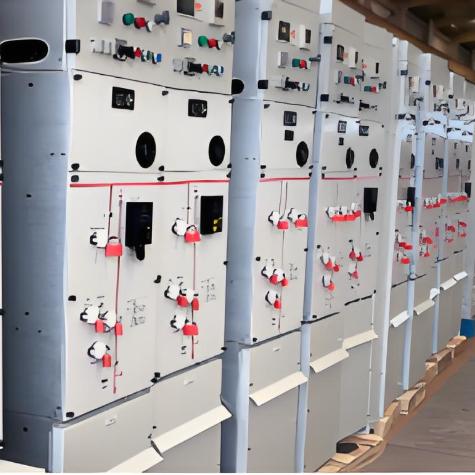
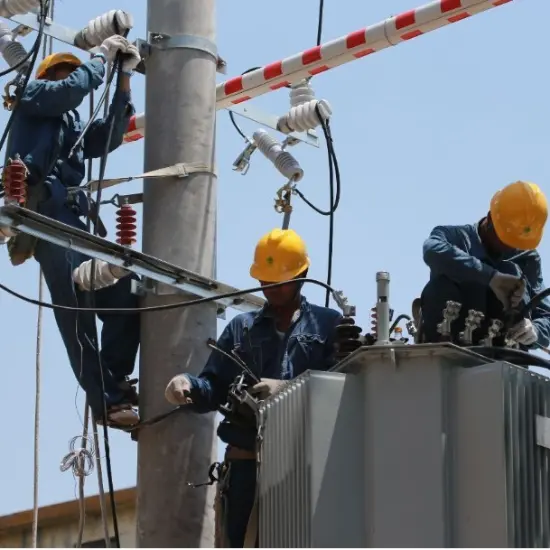
Maintenance-Free solid insulated switchgear Ensuring Stable Power

Give a tip and encourage the author!

Recommended

Faults and Handling of Single-phase Grounding in 10kV Distribution Lines
Characteristics and Detection Devices for Single-Phase Ground Faults1. Characteristics of Single-Phase Ground FaultsCentral Alarm Signals:The warning bell rings, and the indicator lamp labeled “Ground Fault on [X] kV Bus Section [Y]” illuminates. In systems with a Petersen coil (arc suppression coil) grounding the neutral point, the “Petersen Coil Operated” indicator also lights up.Insulation Monitoring Voltmeter Indications:The voltage of the faulted phase decreases (in
01/30/2026
Neutral point grounding operation mode for 110kV~220kV power grid transformers
The arrangement of neutral point grounding operation modes for 110kV~220kV power grid transformers shall meet the insulation withstand requirements of transformer neutral points, and shall also strive to keep the zero-sequence impedance of substations basically unchanged, while ensuring that the zero-sequence comprehensive impedance at any short-circuit point in the system does not exceed three times the positive-sequence comprehensive impedance.For 220kV and 110kV transformers in new constructi
01/29/2026
Why Do Substations Use Stones, Gravel, Pebbles, and Crushed Rock?
Why Do Substations Use Stones, Gravel, Pebbles, and Crushed Rock?In substations, equipment such as power and distribution transformers, transmission lines, voltage transformers, current transformers, and disconnect switches all require grounding. Beyond grounding, we will now explore in depth why gravel and crushed stone are commonly used in substations. Though they appear ordinary, these stones play a critical safety and functional role.In substation grounding design—especially when multiple gr
01/29/2026
Why Must a Transformer Core Be Grounded at Only One Point? Isn't Multi-Point Grounding More Reliable?
Why Does the Transformer Core Need to Be Grounded?During operation, the transformer core, along with the metal structures, parts, and components that fix the core and windings, are all situated in a strong electric field. Under the influence of this electric field, they acquire a relatively high potential with respect to ground. If the core is not grounded, a potential difference will exist between the core and the grounded clamping structures and tank, which may lead to intermittent discharge.I
01/29/2026
Send inquiry
+86
Click to upload file
Download
Get the IEE Business Application
Use the IEE-Business app to find equipment, obtain solutions, connect with experts, and participate in industry collaboration anytime, anywhere—fully supporting the development of your power projects and business.