Isolating Switch: Definition and Overview
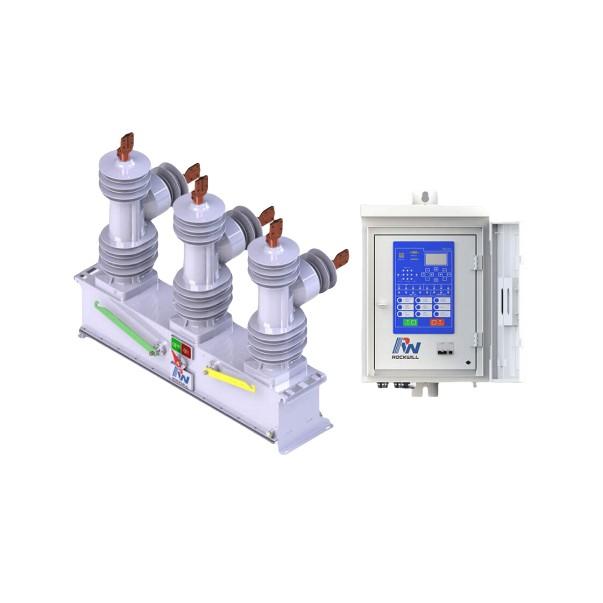
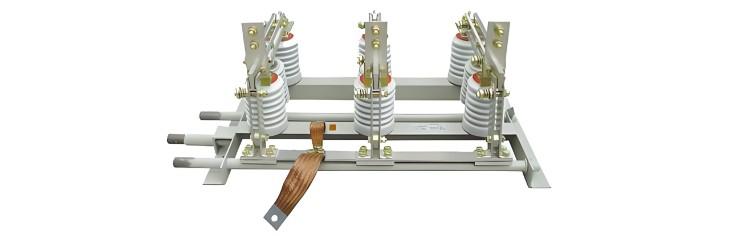
An isolating switch (or disconnector) is a switching device primarily used for isolating power sources, switching operations (bus transfer), and making or breaking small-current circuits. It has no arc-quenching capability.
When in the open position, there is a specified insulation distance between contacts and a clearly visible disconnection indicator. When in the closed position, it can carry the normal operating current and, for a specified duration, the abnormal current (e.g., during a short circuit).
Typically used as a high-voltage isolating switch (rated voltage above 1 kV), its operating principle and structure are relatively simple. However, due to its widespread use and high reliability requirements, it significantly impacts the design, construction, and safe operation of substations and power plants.
A key characteristic of isolating switches is their inability to interrupt load current—they must only be operated under no-load conditions.
This article covers the functions, features, types, applications, anti-misoperation improvements, maintenance practices, and common issues related to isolating switches.
Ice or snow freezing the mechanism or contacts.
Jamming or binding in the transmission mechanism.
Welding or mechanical seizure at the contact parts.
For manually operated isolating switches:
Do not force the switch open. During operation, carefully observe the movement of the support insulator and operating mechanism to prevent insulator fracture.
For electrically operated isolating switches:
Stop the operation immediately and inspect the motor and connecting linkages for faults.
For hydraulically operated isolating switches:
Check whether the hydraulic pump is low on oil or if the oil quality has degraded. If low oil pressure prevents operation, disconnect the oil pump power supply and switch to manual operation.
If the operating mechanism itself is faulty:
Request permission from the grid dispatcher to transfer the load, then de-energize the circuit for maintenance.