• Product
  • Suppliers
  • Manufacturers
  • Solutions
  • Free tools
  • Knowledges
  • Experts
  • Communities
Search


Why Cement Sealing Is Banned for GIS Wall Penetrations?

Echo
Field: Transformer Analysis
China

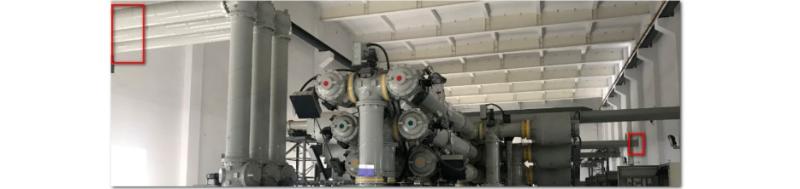
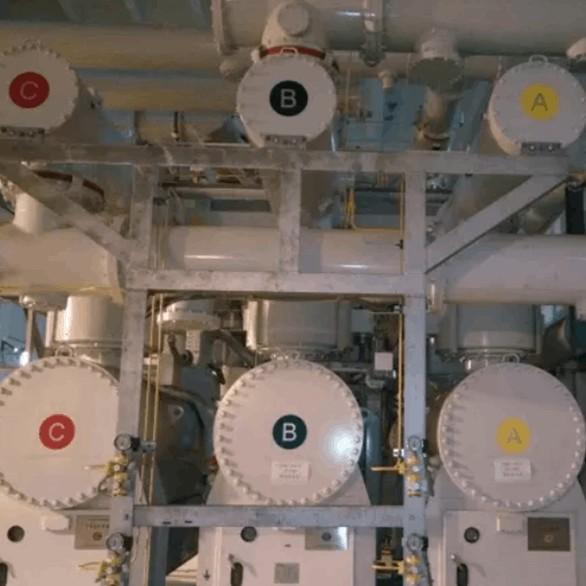
Indoor GIS equipment typically involves wall-penetrating installations, except in cases with cable in/out connections. In most cases, the main or branch bus duct extends from indoors through a wall to the outdoor side, where it connects to porcelain or composite bushings for overhead line connections. The gap between the wall opening and the GIS bus enclosure, however, is prone to water and air leakage and therefore usually requires sealing. This article discusses why cement-based sealing is not allowed.

The 2015 edition of China Southern Power Grid’s Anti-Accident Measures explicitly prohibits the use of cement to seal wall-penetrating sections of GIS bus ducts.
GIS.jpg

The primary reason for this prohibition is the risk of chemical reactions between alkaline components in cement and the aluminum alloy used in GIS enclosures. When wet (unhardened) cement or rainwater-soaked cement comes into contact with the aluminum surface, corrosion can occur, potentially leading to gas leakage. Note that the reaction only occurs when the cement is damp—once fully hardened, the risk is significantly reduced. However, this issue requires special attention during the construction phase.

When cement particles come into contact with water, hydration begins on the surface layer by layer. The main hydration products include: calcium silicate hydrate (C-S-H) gel, calcium ferrite hydrate gel, calcium hydroxide (Ca(OH)₂), calcium aluminate hydrate, and ettringite. Among these, alkaline substances such as calcium hydroxide and calcium aluminate hydrate can react with aluminum alloy, causing damage to the GIS enclosure.
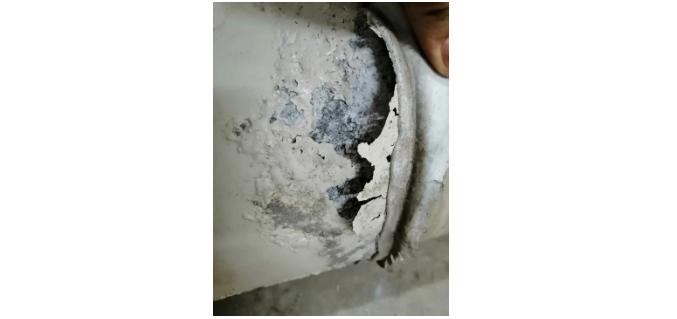
image.png

Besides cement, other sealing materials like asbestos boards or waterproof sealants may also be used at wall-penetrating points. However, asbestos boards often contain cementitious components, and improperly selected sealants—especially alkaline types—can similarly corrode the aluminum alloy enclosure, risking gas leakage.

Although aluminum alloy is naturally corrosion-resistant in air, another possible corrosion mechanism exists: cement may first degrade the protective paint layer on the enclosure surface, since paint is less corrosion-resistant than aluminum. Once the coating is compromised, the underlying metal becomes vulnerable. In the construction industry, this is why a primer or putty layer is typically applied before painting over cement.

This explains the origin of the prohibition against using cement to seal wall-penetrating GIS bus ducts.
Give a tip and encourage the author!

Recommended

Classification of Equipment Defects for Relay Protection and Safety Automatic Devices in Substations
In daily operations, various equipment defects are inevitably encountered. Whether maintenance personnel, operation and maintenance staff, or specialized management personnel, all must understand the defect classification system and adopt appropriate measures according to different situations.According to Q/GDW 11024-2013 "Operation and Management Guide for Relay Protection and Safety Automatic Devices in Smart Substations," equipment defects are classified into three levels based on severity an
12/15/2025
Under What Conditions Will the Line Circuit Breaker Auto-Reclosing Signal Be Locked Out?
The line circuit breaker auto-reclosing signal will be locked out if any of the following conditions occur:(1) Low SF6 gas pressure in circuit breaker chamber at 0.5MPa(2) Insufficient energy storage in circuit breaker operating mechanism or low oil pressure at 30MPa(3) Busbar protection operation(4) Circuit breaker failure protection operation(5) Line distance protection zone II or zone III operation(6) Short lead protection operation of circuit breaker(7) Presence of remote tripping signal(8)
12/15/2025
Application of Auto-Reclosing Residual Current Protective Devices in Lightning Protection for Communication Power Supplies
1. Power Interruption Problems Caused by RCD False Tripping During Lightning StrikesA typical communication power supply circuit is shown in Figure 1. A residual current device (RCD) is installed at the power supply input terminal. The RCD primarily provides protection against electrical equipment leakage currents to ensure personal safety, while surge protective devices (SPDs) are installed on power supply branches to protect against lightning intrusions. When lightning strikes occur, the senso
12/15/2025
Reclosing Charge Time: Why Does Reclosing Require Charging? What Effects Does Charging Time Have?
1. Function and Significance of Reclosing ChargingReclosing is a protective measure in power systems. After faults such as short circuits or circuit overloads occur, the system isolates the faulty circuit and then restores normal operation through reclosing. The function of reclosing is to ensure continuous operation of the power system, improving its reliability and safety.Before performing reclosing, the circuit breaker must be charged. For high-voltage circuit breakers, the charging time is g
12/15/2025
Send inquiry
+86
Click to upload file
Download
Get the IEE Business Application
Use the IEE-Business app to find equipment, obtain solutions, connect with experts, and participate in industry collaboration anytime, anywhere—fully supporting the development of your power projects and business.