• Product
  • Suppliers
  • Manufacturers
  • Solutions
  • Free tools
  • Knowledges
  • Experts
  • Communities
Search


GIS Bolt Tightening Torque Standards by Material & Size

Encyclopedia
Field: Encyclopedia
0
China

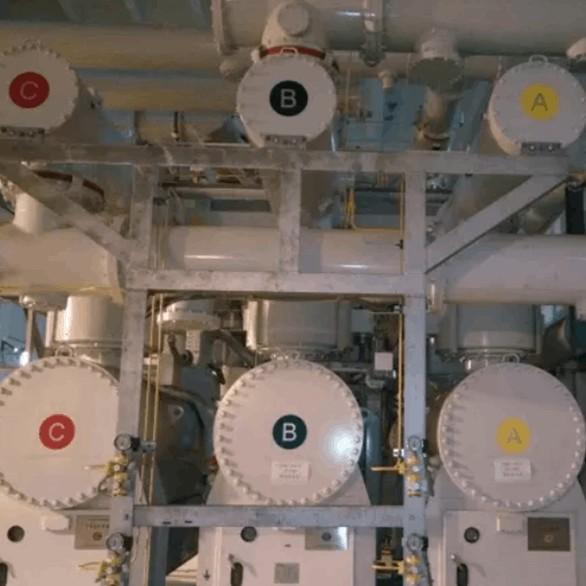
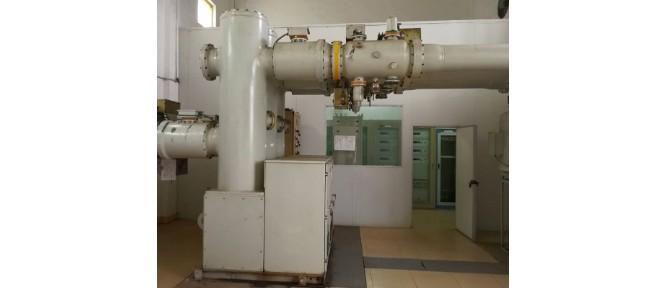
GIS.jpg

GIS (Gas-Insulated Metal-Enclosed Switchgear) contains numerous bolted and screwed connections, and the tightening torque varies depending on bolt material, size, and application. The recommended tightening torque values are listed below for reference:

Table 1 Tightening Torque Values for Bolts of Different Materials and Sizes (N·m / kgf·cm)

Thread Diameter (mm) Q235 (A3) Cast Insulator 45 Steel Chrome-Molybdenum Steel Stainless Steel
M6
5.88/60 3.92/40 12.3/125 19.6/200 4.9/50
M8 13.7/140 7.84/80 28.4/290 45.6/465 11.8/120
M10 27.5/280 19.6/200 56.8/580 91.1/930 24.5/250
M12 47.1/480 33.8/345 98/1000 157/1600 41.2/420
M16 118/1200 85.3/870 245/2500 392/4000 104/1060
M20 216/2200 165/1680 449/4580 718/7330 190/1940
M22 294/3000 211/2150 612/6240 979/9990 225/2600
M24 382/3900 284/2900 794/8100 1273/12990 336/3430
M30 755/7700 515/5250 1568/16000 2513/25640 664/6780

Note: For materials other than Q235, apply the specified torque values as indicated in the instruction manual, drawings, or inspection cards; if not specified, use the torque values for Q235.

Torque specifications for connections such as tank flanges to bushing insulators, conductors to insulator inserts, and conductor-to-conductor joints are provided in Table 2 below:

Table 2 Bolt Tightening Torque Management Values

Thread Specification Torque of Steel Bolt Torque of Nonferrous Metal Alloy Bolt
M5 5 /
M6 7 /
M8 12 6
M10 20
12
M12 45 30
M16 95 60
M20 180
110
M24 300 190
Note The tightening torque value for post insulators shall be 60% of the above values.

The tightening torque for metal flange to metal flange, and metal flange to porcelain bushing, is shown in Table 3 below:

Table 3 Bolt Tightening Torque Management Values

Bolt Specification Metal Flange to Metal Flange Metal Flange to Porcelain Sleeve
M6 6 4
M8 14
8
M10 28 20
M12 48
35
M16 120
87
M20 220
170
M24 330
220


Give a tip and encourage the author!

Recommended

Classification of Equipment Defects for Relay Protection and Safety Automatic Devices in Substations
In daily operations, various equipment defects are inevitably encountered. Whether maintenance personnel, operation and maintenance staff, or specialized management personnel, all must understand the defect classification system and adopt appropriate measures according to different situations.According to Q/GDW 11024-2013 "Operation and Management Guide for Relay Protection and Safety Automatic Devices in Smart Substations," equipment defects are classified into three levels based on severity an
12/15/2025
Under What Conditions Will the Line Circuit Breaker Auto-Reclosing Signal Be Locked Out?
The line circuit breaker auto-reclosing signal will be locked out if any of the following conditions occur:(1) Low SF6 gas pressure in circuit breaker chamber at 0.5MPa(2) Insufficient energy storage in circuit breaker operating mechanism or low oil pressure at 30MPa(3) Busbar protection operation(4) Circuit breaker failure protection operation(5) Line distance protection zone II or zone III operation(6) Short lead protection operation of circuit breaker(7) Presence of remote tripping signal(8)
12/15/2025
Application of Auto-Reclosing Residual Current Protective Devices in Lightning Protection for Communication Power Supplies
1. Power Interruption Problems Caused by RCD False Tripping During Lightning StrikesA typical communication power supply circuit is shown in Figure 1. A residual current device (RCD) is installed at the power supply input terminal. The RCD primarily provides protection against electrical equipment leakage currents to ensure personal safety, while surge protective devices (SPDs) are installed on power supply branches to protect against lightning intrusions. When lightning strikes occur, the senso
12/15/2025
Reclosing Charge Time: Why Does Reclosing Require Charging? What Effects Does Charging Time Have?
1. Function and Significance of Reclosing ChargingReclosing is a protective measure in power systems. After faults such as short circuits or circuit overloads occur, the system isolates the faulty circuit and then restores normal operation through reclosing. The function of reclosing is to ensure continuous operation of the power system, improving its reliability and safety.Before performing reclosing, the circuit breaker must be charged. For high-voltage circuit breakers, the charging time is g
12/15/2025
Send inquiry
+86
Click to upload file
Download
Get the IEE Business Application
Use the IEE-Business app to find equipment, obtain solutions, connect with experts, and participate in industry collaboration anytime, anywhere—fully supporting the development of your power projects and business.