MPP Power Conduit Selection: Key Factors and Practical Guidelines
When selecting MPP (Modified Polypropylene) power conduits, it is essential to consider multiple factors including application scenarios, performance requirements, construction conditions, budget, and long-term maintenance. Below is a detailed analysis:
Voltage Level and Cable Type
High-voltage cables (above 10 kV): Choose MPP pipes with thicker walls and high compressive strength to prevent deformation caused by electromagnetic effects or thermal expansion during cable operation.
Low-voltage or communication cables: Thinner-walled, more flexible MPP models can be used to reduce costs.
Special cables (e.g., fire-resistant or high-temperature resistant): Match with MPP conduits that have corresponding fire-resistance ratings (e.g., Class B1) or enhanced thermal resistance.
Environmental Conditions
High-temperature environments: In areas with high summer temperatures or significant cable heat generation, select MPP pipes with a higher heat deflection temperature (typically ≥120°C).
Wet or corrosive environments: In coastal zones, chemical plants, or areas with high groundwater levels, ensure the MPP conduit has good chemical resistance to prevent aging due to media erosion.
Geological conditions: In soft soil foundations or seismic zones, choose MPP pipes with strong anti-settlement performance, or enhance stability by increasing pipe diameter or burial depth.
Physical Properties
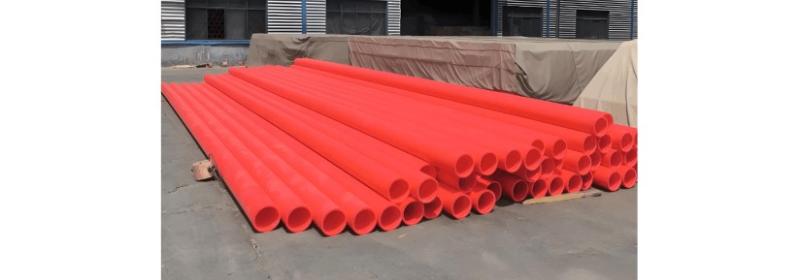
Ring Stiffness (SN Rating): Indicates the pipe’s ability to resist external pressure. Common ratings are SN4 (4 kN/m²) and SN8 (8 kN/m²).
SN8 or higher is recommended for shallow burial or high-load areas (e.g., under roads).
SN4 is sufficient for deeper burial or low-load areas (e.g., under greenbelts).
Compressive Strength: Must withstand overburden soil pressure and live surface loads (e.g., vehicles, equipment). Calculations or reference to standards are required.
Impact Resistance: In areas prone to mechanical impact (e.g., near construction sites), select MPP pipes with high impact resistance.
Thermal Properties
Heat Deflection Temperature: Must exceed the maximum operating temperature of the cable (typically 90°C for conductor). Prevents deformation due to thermal expansion.
Coefficient of Linear Expansion: In regions with large temperature variations (e.g., high day-night differentials), account for thermal expansion/contraction by installing expansion joints or flexible couplings.
Electrical Properties
Insulation Resistance: Ensure smooth inner walls to prevent cable insulation damage during installation. The conduit itself must have good electrical insulation.
Dielectric Strength: For high-voltage applications, verify that the MPP conduit’s dielectric strength meets operational requirements.
Installation Methods
Direct Burial: Use thick-walled, high-ring-stiffness MPP pipes. Consider burial depth (typically ≥0.7 m) and backfill material compaction (e.g., fine sand).
Trenchless Installation (e.g., horizontal directional drilling): Choose flexible, high-tensile-strength MPP pipes to avoid breakage during pulling.
Bridge or Tunnel Installation: Consider fire resistance (e.g., flame-retardant rating) and vibration resistance.
Connection Methods
Hot-Melt Butt Welding: Suitable for large-diameter pipes requiring long-term sealing. High joint strength but requires professional equipment.
Socket Joint (with seal ring): Easy to install; requires high-quality gaskets. Suitable for small-diameter pipes or emergency repairs.
Electrofusion Joining: Ideal for complex terrain or confined spaces. Reliable but higher cost.
Construction Schedule and Cost
Fast Installation: For tight schedules, select easy-to-install MPP pipes (e.g., pre-assembled sections) and connection methods (e.g., socket joints).
Lifecycle Cost: Evaluate material cost, installation, maintenance, and service life. Avoid low upfront cost leading to frequent replacements.
Industry Standards
Refer to standards such as Code for Design of Cables in Electrical Engineering (GB 50217) and Buried Polypropylene (PP) Structured Wall Pipe Systems (GB/T 32439) to ensure compliance with ring stiffness, compressive strength, and thermal performance.
Confirm that the pipe meets national certifications (e.g., CCC, fire safety certification).
Project-Specific Requirements
For special needs (e.g., UV resistance, anti-aging), select MPP pipes meeting relevant standards or request customized products from manufacturers.
Initial Investment
Compare prices of MPP pipes with different diameters and SN ratings. Include installation costs (excavation, connections, backfill).
Consider transportation costs, especially for large-diameter or long-distance deliveries.
Long-Term Maintenance
Choose corrosion-resistant, anti-aging MPP pipes to reduce inspection and replacement frequency.
Confirm manufacturer warranty (e.g., 10+ years) to minimize long-term risks.
Urban Grid Upgrade: For high-voltage cable undergrounding, SN8-grade MPP pipes are typically used, connected via hot-melt welding, with a burial depth of 1.2 m to withstand vehicle loads.
Industrial Park Power Supply: In chemical or corrosive environments, use chemically resistant MPP pipes with increased wall thickness for enhanced compression resistance.
Mountainous Power Transmission: In complex terrains, flexible MPP pipes are installed using trenchless technology to minimize environmental impact.