Types and Common Fault Analysis of High-Voltage Switchgear
High-voltage switchgear is a critical electrical device in power systems. Deterioration in switchgear operation is one of the main causes of power system failures. What are the common faults in high-voltage switchgear?
(1) Outdoor and Indoor Types
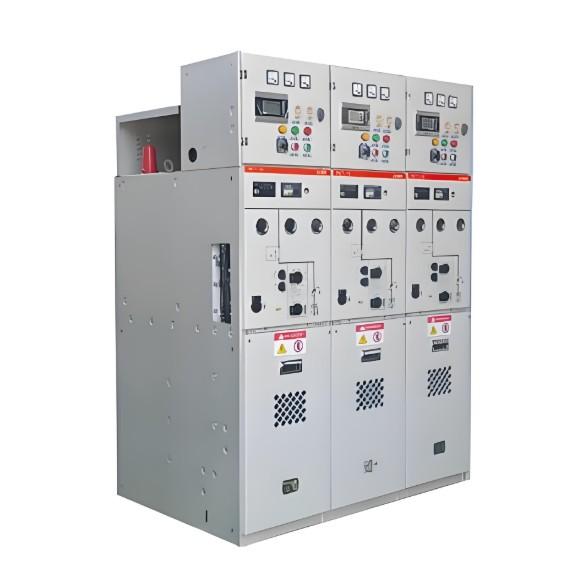
Based on installation environment, high-voltage switchgear can be classified as outdoor or indoor types. Equipment rated at 10 kV and below is mostly installed indoors. According to primary circuit configurations, they can be further categorized as incoming/outgoing line switchgear, tie-oil switchgear, bus section switchgear, etc.
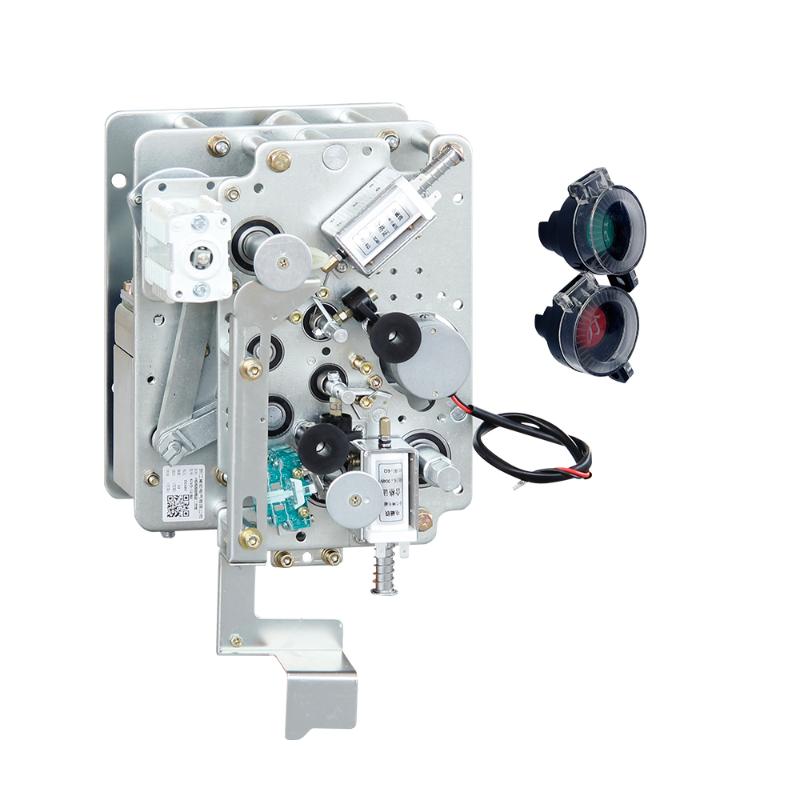
Indoor 10 kV incoming/outgoing switchgear typically houses minimum-oil or vacuum circuit breakers. These breakers are usually equipped with spring or electromagnetic operating mechanisms, though some use manual or permanent-magnet operating mechanisms. Different switchgear designs vary significantly in structure, which directly affects the selection and installation of sensors.
(2) Fixed and Withdrawable Types
Based on usage and design, high-voltage switchgear can be divided into fixed and withdrawable (draw-out) types. Historically, power plants preferred withdrawable switchgear for station service systems, while fixed types were more common in utility power supply systems.
With advances in technology and new product development, traditional practices are evolving. For example, the metal-enclosed armored withdrawable switchgear evolved from fixed-type switchgear. This type features a fully enclosed design with functionally separated compartments. It offers enhanced operational safety, improved anti-misoperation interlocks, and easier maintenance, greatly increasing operational reliability.
(3) Development of High-Voltage Switchgear
In recent years, with the advancement and widespread use of compact vacuum circuit breakers, the mid-mounted switchgear (also known as "switchgear with withdrawable unit mounted in the middle compartment") has rapidly developed as a new type of metal-enclosed armored withdrawable switchgear.
Mid-mounted switchgear offers several advantages, the most significant being miniaturization of the withdrawable unit and mechanized manufacturing processes, which allow for more precise alignment between the trolley and guide rails. Some manufacturers even ship the circuit breaker trolley and cabinet separately, enabling easy on-site assembly and commissioning with high reliability.
Due to excellent interchangeability, these switchgear units are less affected by floor leveling at the installation site. With high operational reliability and convenient maintenance, mid-mounted metal-clad withdrawable switchgear is increasingly adopted in power supply systems.
II. Common Fault Analysis of High-Voltage Switchgear
Faults in high-voltage switchgear primarily arise from issues in insulation, current conduction, and mechanical systems.
(1) Failure to Operate or Maloperation
This is the most common type of fault in high-voltage switchgear and can be attributed to two main causes:
Mechanical faults in the operating mechanism and transmission system, such as mechanism jamming, component deformation, displacement, or damage; loose or stuck closing/tripping plungers; broken or loose pins; and latch failure.
Electrical faults in control and auxiliary circuits, including poor contact in secondary wiring, loose terminals, incorrect wiring, burnt-out closing/tripping coils (due to mechanism jamming or faulty selector switches), malfunctioning auxiliary switches, and failures in the control power supply, closing contactors, or limit switches.
(2) Switching and Closing Faults
These faults originate from the circuit breaker itself.
In minimum-oil circuit breakers, common issues include oil spraying during short circuits, arc chamber damage, insufficient breaking capacity, and explosions during closing.
In vacuum circuit breakers, typical faults include leakage in the arc chamber or bellows, reduced vacuum level, restriking when switching capacitor banks, and ceramic tube cracking.
(3) Insulation Failures
Insulation performance must properly balance the various voltages acting on the insulation (including normal operating voltage and transient overvoltages), protective measures (such as surge arresters), and the dielectric strength of the insulation material. The goal is to achieve a safe, economical, and cost-effective design.
Common insulation faults include:
External insulation flashover to ground
Internal insulation flashover to ground
Phase-to-phase flashover
Lightning overvoltage-induced flashover
Flashover, pollution flashover, puncture, or explosion of porcelain or capacitor bushings
Flashover of support rods
Flashover, puncture, or explosion of current transformers (CTs)
Porcelain insulator fracture
(4) Current-Carrying Faults
At voltage levels of 7.2–12 kV, current-carrying faults are mainly caused by poor contact at the isolation disconnects (joints), leading to overheating and melting of contacts.
(5) External Forces and Other Faults
These include faults caused by foreign object impacts, natural disasters, animal-induced short circuits, and other unpredictable external or accidental factors.