
An electric power system is defined as a network of electrical components used to supply, transfer, and consume electric power. The supply is done through some form of generation (e.g. a power plant), the transfer is done through a transmission (via a transmission line) and distribution system, and the consumption can be through residential applications such as powering the lights or air conditioning in your home, or via industrial applications such as the operation of large motors.
An example of a power system is the electrical grid that provides power to homes and industry within an extended area. The electrical grid can be broadly divided into the generators that supply the power, the transmission system that carries the power from the generating centers to the load centers, and the distribution system that feeds the power to nearby homes and industries.
Smaller power systems are also found in industry, hospitals, commercial buildings, and homes. The majority of these systems rely upon three-phase AC power—the standard for large-scale power transmission and distribution across the modern world.
Specialized power systems that do not always rely upon three-phase AC power are found in aircraft, electric rail systems, ocean liners, submarines, and automobiles.
The generation plants produce electrical energy at a low voltage level. We keep the generation voltage at a low level because it has some specific advantages. Low voltage generation creates fewer stresses on the armature of the alternator. Hence at low voltage generation, we can construct a smaller alternator with thinner and lighter insulation.
From an engineering and design point of view, smaller alternators are more practical. We can not transmit this low voltage power to the load centers.
Low voltage transmission causes more copper loss, poor voltage regulations, and more installation costs of the transmission system. To avoid these three difficulties we have to step up the voltage to a specific high voltage level.
We can not raise the system voltage beyond a certain level because beyond a limit of voltage the insulation cost tremendously increases and also to keep adequate ground clearance the expenses of the line supporting structures also abruptly increase.
The transmission voltage depends on the quantity of power to be transmitted. The surge impedance loading is another parameter which determines the voltage level of the system for transmitting an amount of energy.
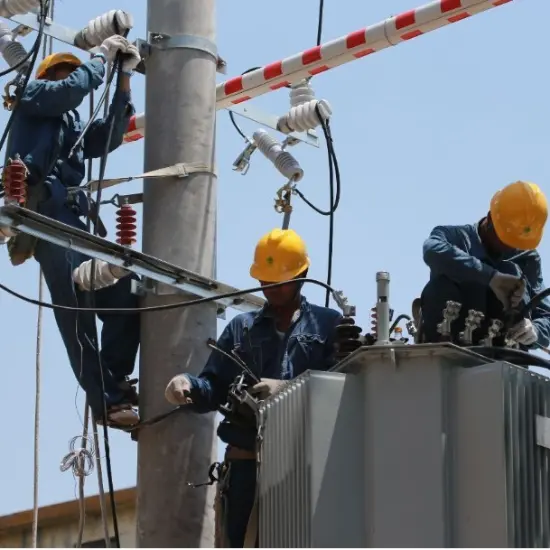
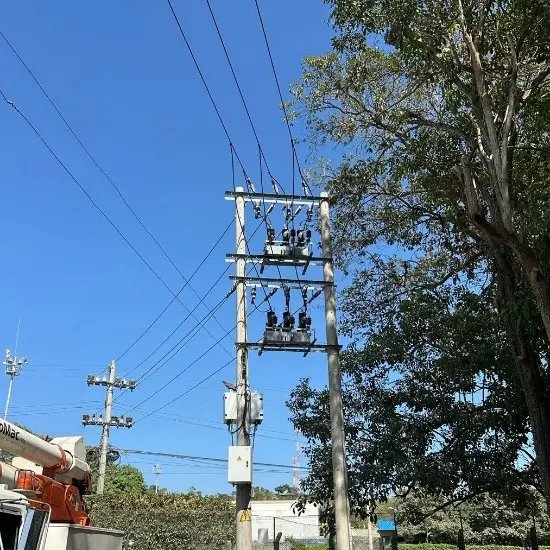
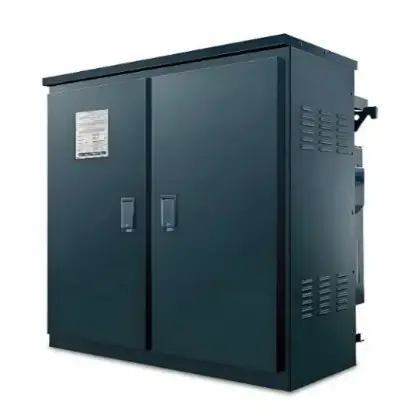
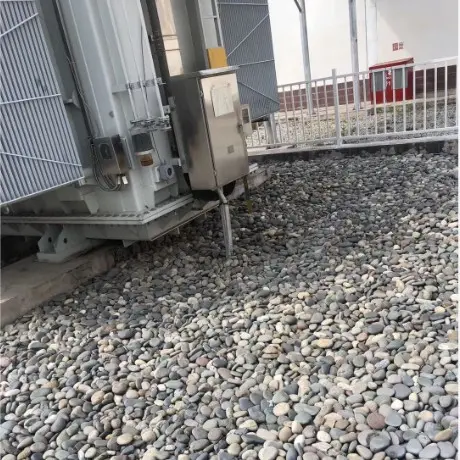
For stepping up system voltage, we use step-up transformers and their associated protections and operations arrangements at the generating station. We call this a generation substation. At the end of the transmission line, we have to step down the transmission voltage to a lower level for secondary transmission and or distribution purposes.
Here we use step down transformers and their associated protection and operational arrangements. This is a transmission substation. After primary transmission, the electrical energy passes through secondary transmission or primary distribution. After secondary transmission or primary distribution again we step down the voltage to a desired low voltage level to distribute at the consumer premises.
This was the basic structure of an electrical power system. Although, we have not mentioned the details of each piece of equipment used in an electrical power system. In addition to three main components alternator, transformer, and transmission line there is a number of associated equipment.
Some of these pieces of equipment are circuit breaker, lightning arrestor, isolator, current transformer, voltage transformer, capacitor voltage transformer, wave trap, capacitor bank, relaying system, controlling arrangement, the earthing arrangement of the line and substation equipment, etc.
From an economic point of view, we always construct a generating station where resources are readily available. Consumers consume electrical energy, but they may stay in such locations where the resources for producing electricity are not available.
Not only that, sometimes there are many other constraints due to which we can not construct a generating station nearer to the dense consumer’s localities or load centers.
So instead we use an externally located generation source and then transmit this generated power to the load centers through a long transmission line and a distribution system.
We call the entire arrangement from generating plants to consumer ends for delivering electricity efficiently and reliably as the electric power system.
Statement: Respect the original, good articles worth sharing, if there is infringement please contact delete.