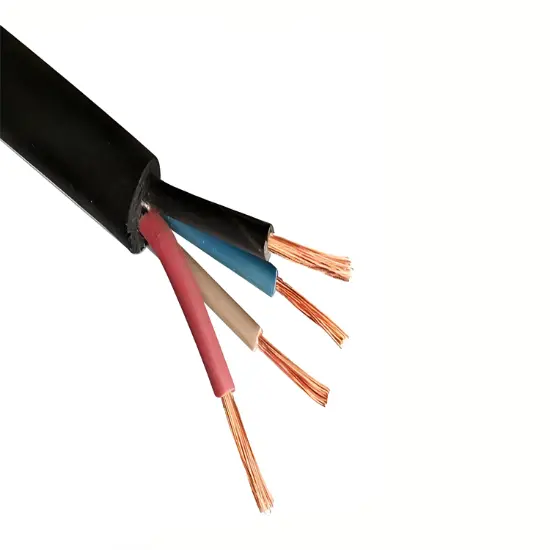
The Role of Earth Wire or Ground Wire in Overhead Power Lines
An earth wire, also commonly referred to as a ground wire or Optical Ground Wire (OPGW), is a bare conductor positioned at the apex of transmission towers. Its primary function is to act as a protective shield for the power lines beneath it. By intercepting lightning strikes before they can reach the current - carrying conductors, the ground wire plays a crucial role in safeguarding the integrity of the power transmission system.
Under normal operating conditions, ground wires do not carry electrical current. This characteristic allows them to be constructed from steel, which provides the necessary strength and durability while keeping costs relatively low. In both transmission and distribution systems, ground wires are firmly and continuously connected to the ground at each tower. This connection ensures that any electrical charge, such as that from a lightning strike, is safely and effectively dissipated into the earth, minimizing the risk of damage to the power lines, equipment, and potential hazards to people and property.
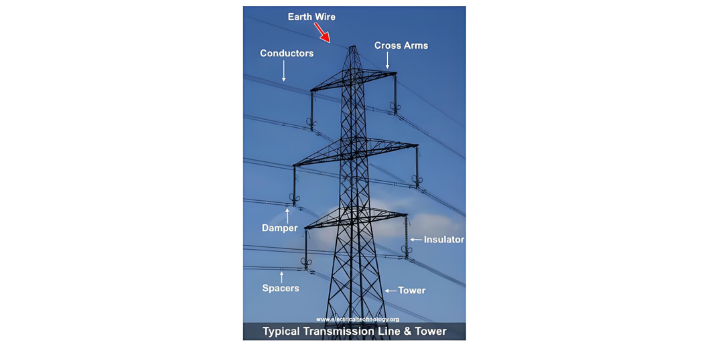
The Role of Ground Wires in Overhead Power Lines
In power systems, ground wires (also known as earth wires) are an essential component of overhead transmission lines with voltages of 110 kV and higher. In contemporary power infrastructure, many transmission towers feature two ground wires instead of a single one. This dual - wire configuration offers enhanced protection. Compared to a single earth wire, the two - wire setup not only has no impact on switching surges but also provides a stronger coupling effect and lower surge impedance, significantly improving the overall safety and reliability of the power transmission system.
During lightning strikes, the resistance between the earth and the tower base is a critical factor for effective protection. When lightning strikes the ground wire, the resulting electrical waves propagate along the line in opposite directions until they reach adjacent towers. These towers are designed to safely channel the electrical energy into the ground, ensuring that lightning - related faults do not cause power outages.
The primary function of ground wires is to shield the power line conductors from direct lightning strikes. In high - voltage (HV) transmission lines, before a lightning strike reaches the ground wire, it can cause a significant voltage increase at the top of the tower. This elevated voltage may lead to back flashovers, where the electrical arc jumps from the tower to the conductors and insulators, potentially causing severe damage.
While ground wires are crucial for protection, they alone are not sufficient to prevent insulator flash - overs. To minimize the risk of such events, it is essential to reduce the voltage spike at the top of the tower. This can be achieved through proper grounding and earthing of poles and towers, typically by using deep earthing rods or counterpoise wires. These additional measures work in tandem with the ground wires to create a comprehensive protection system, effectively reducing the likelihood of faults and maintaining the uninterrupted operation of the power grid.