Types of Voltage Regulators
A voltage regulator is an electrical device used to maintain a stable output voltage in various electrical and electronic systems. Depending on their working principles, application scenarios, and technical features, voltage regulators can be categorized into several types. Below are some common types of voltage regulators and their characteristics:
1. Linear Voltage Regulator
Working Principle: A linear voltage regulator adjusts the output voltage by controlling the conduction level of an internal transistor. It operates like a variable resistor, dissipating the difference between the input and output voltages as heat.
Advantages:
Very stable output voltage with low noise.
Simple design and lower cost.
Suitable for low-power applications.
Disadvantages:
Lower efficiency, especially when the input voltage is significantly higher than the output voltage.
Requires good heat dissipation due to energy loss as heat.
Applications: Ideal for applications requiring high voltage stability and low power, such as consumer electronics, sensors, and communication devices.
2. Switching Voltage Regulator
Working Principle: A switching voltage regulator rapidly switches semiconductor devices (like MOSFETs) in the power path to convert the input voltage into a pulsating waveform, which is then smoothed by a filter circuit. The switching frequency typically ranges from tens of kilohertz to several megahertz.
Advantages:
High efficiency, especially when there is a large difference between input and output voltages.
Can achieve step-up, step-down, or inverting functions.
Suitable for high-power applications.
Disadvantages:
Output voltage may contain some ripple and noise, requiring additional filtering.
More complex design and higher cost.
Electromagnetic interference (EMI) from switching frequencies needs special handling.
Applications: Suitable for applications requiring high efficiency and high power, such as computer power supplies, electric vehicles, and industrial control systems.
3. Series Voltage Regulator
Working Principle: A series voltage regulator is a type of linear regulator that uses a variable resistor (usually a transistor) in series between the input and output to regulate the output voltage. It controls the conduction level of the transistor via a feedback loop to maintain a stable output voltage.
Advantages:
Very stable output voltage with low noise.
Suitable for medium to low-power applications.
Disadvantages:
Lower efficiency, especially when the input voltage is much higher than the output voltage.
Requires good heat dissipation.
Applications: Ideal for applications requiring high voltage stability, such as laboratory power supplies and precision instruments.
4. Shunt Voltage Regulator
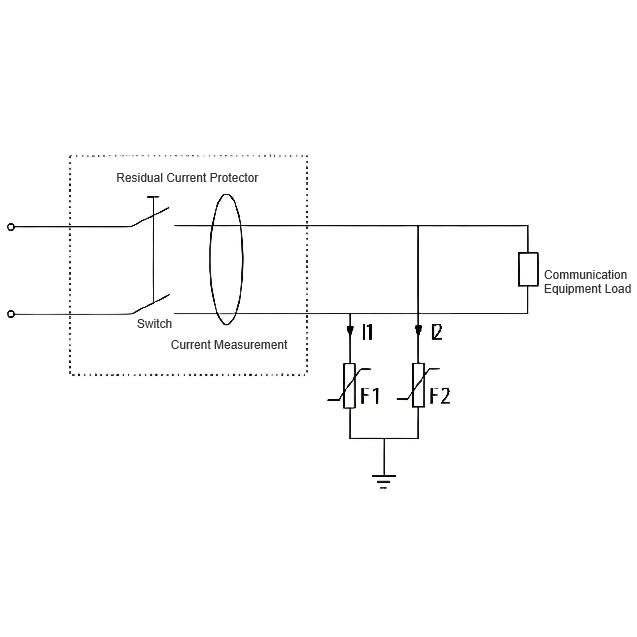
Working Principle: A shunt voltage regulator diverts excess current to ground to regulate the output voltage. It typically uses a Zener diode or other types of voltage-stabilizing elements.
Advantages:
Simple structure and low cost.
Suitable for low-power applications.
Disadvantages:
Lower efficiency, especially at higher load currents.
Limited voltage regulation range.
Applications: Suitable for simple voltage reference sources, such as reference voltage sources in low-power applications.
5. DC-DC Converter
Working Principle: A DC-DC converter is a type of switching regulator specifically designed to convert one level of DC voltage to another. It can perform step-up, step-down, or inverting functions depending on the circuit topology (e.g., Buck, Boost, Buck-Boost).
Advantages:
High efficiency for high-power applications.
Wide voltage regulation range.
Compact and lightweight.
Disadvantages:
Output voltage may contain some ripple and noise.
More complex design and higher cost.
Applications: Suitable for portable electronic devices, automotive electronics, and industrial automation.
6. AC-DC Converter
Working Principle: An AC-DC converter converts alternating current (AC) to stable direct current (DC). It typically includes rectification, filtering, and regulation stages. Modern AC-DC converters often use switch-mode technology to improve efficiency and reduce size.
Advantages:
Can directly obtain power from the mains (AC) and operate over a wide input voltage range.
High efficiency and compact size.
Disadvantages:
More complex design and higher cost.
May generate electromagnetic interference (EMI).
Applications: Suitable for household appliances, computer power supplies, and chargers that require conversion from AC to DC.
7. Uninterruptible Power Supply (UPS)
Working Principle: An uninterruptible power supply not only regulates voltage but also provides battery backup. It automatically switches to battery power when the mains power fails, ensuring continuous operation of the load. A UPS typically includes a rectifier, inverter, and battery management system.
Advantages:
Provides stable voltage output and emergency power.
Protects equipment from voltage fluctuations, power outages, and other power issues.
Disadvantages:
Higher cost and more complex maintenance.
Battery life is limited and requires periodic replacement.
Applications: Suitable for data centers, servers, medical equipment, financial systems, and other applications requiring high power reliability.
8. Ferrite Resonant Regulator
Working Principle: A ferrite resonant regulator uses the nonlinear properties of ferrite materials to produce a resonant effect at a specific frequency, thereby stabilizing the voltage. It controls the output voltage by adjusting the resonant frequency.
Advantages:
Suitable for high-voltage, high-power applications.
Simple structure and high reliability.
Disadvantages:
Complex design and difficult to tune.
Limited application scope, mainly for specific scenarios.
Applications: Suitable for high-voltage transmission lines and power systems requiring voltage regulation.
9. Digital Voltage Regulator
Working Principle: A digital voltage regulator monitors and regulates the output voltage using a microcontroller or dedicated integrated circuit (IC). It can adjust parameters in real-time based on load changes to ensure precise and stable output voltage.
Advantages:
High precision and fast response.
Enables intelligent control with support for remote monitoring and fault diagnosis.
Disadvantages:
Higher cost and more complex design.
Requires additional software support.
Applications: Suitable for high-end electronic devices, industrial automation, communication base stations, and other applications requiring high-precision voltage regulation.
10. Module Voltage Regulator (MVR)
Working Principle: A module voltage regulator integrates the voltage regulation circuit into a standalone module. Users can choose different modules based on their needs, simplifying system installation and maintenance.
Advantages:
Easy installation and scalability.
Simplified maintenance with modular design, making replacement and upgrades easier.
Disadvantages:
Higher overall cost due to the modular design.
Applications: Suitable for data centers, servers, communication equipment, and other applications requiring flexible configuration.
Summary
Different types of voltage regulators have their own advantages and disadvantages, suitable for various applications. When selecting a voltage regulator, consider the following factors:
Power Requirements: Ensure the regulator's power capacity meets the load requirements.
Efficiency: For high-power applications, efficiency is crucial, and switching regulators are generally more efficient.
Voltage Stability: Some applications require extremely stable voltage, in which case linear regulators might be a better choice.
Cost: Different types of regulators vary in cost, and you should choose based on your budget.
Environmental Conditions: The working environment (such as temperature, humidity, and electromagnetic interference) can affect the performance and reliability of the regulator.