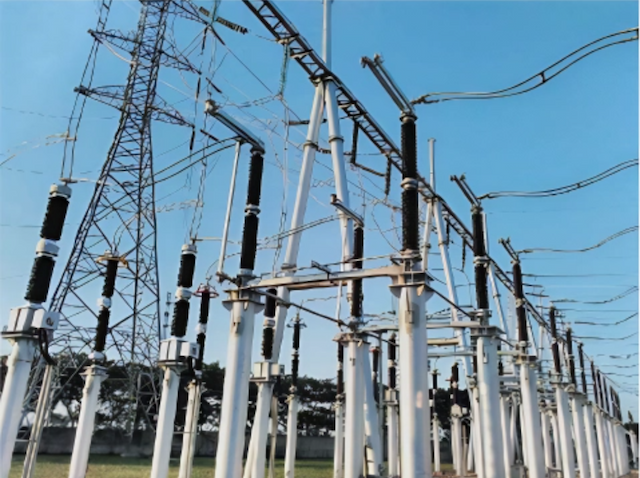
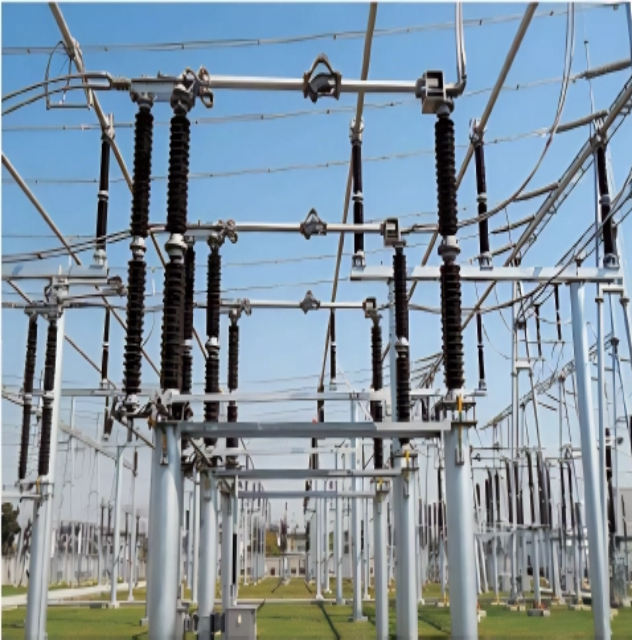
Application of High-Voltage Disconnectors in Traction Power Supply Systems
Traditional switches have become increasingly inadequate for the operational demands of modern traction power supply systems. The emergence of high-voltage disconnectors has effectively filled this gap. High-voltage disconnector systems optimize the structure of conventional switches, broaden their applicability, and place greater emphasis on fine details, thereby enhancing the safety and reliability of power systems during actual operation. Therefore, it is essential to analyze and study the application of high-voltage disconnectors in traction power supply systems.
1.Traction Power Supply Systems
The electric traction power supply system currently used in China represents a new form of rail-based traction powered by electricity—an emerging propulsion technology widely applied in mainline railways and urban rail transit, delivering excellent performance and significantly improving public transportation convenience. In practical use, electric traction continuously converts electrical energy into mechanical traction power to drive railway locomotives and electric multiple units.
China’s current electric traction systems are classified by current type into three categories: industrial-frequency single-phase AC, DC, and low-frequency single-phase AC. Among these, the industrial-frequency single-phase AC system is the most prevalent, primarily used in electrified railways.
Electric traction offers three key advantages:
Electric locomotives do not carry fuel but utilize secondary energy sources, enabling non-self-contained traction power that effectively drives trains.
It promotes energy conservation; with China’s railway sector entering a new development phase, electric locomotives are being deployed more extensively.
It enhances operational safety. Thanks to advances in microelectronics and information technology, modern electric locomotives support real-time fault detection, autonomous driving, and remote control, significantly boosting the informatization level of traction systems.
2.Features, Functions, Types, and Evolution of High-Voltage Disconnectors
(1) Functions and Roles
Although high-voltage disconnectors have only recently been widely adopted in China’s power systems, they have demonstrated outstanding performance. Their core functions are twofold:
When open, they ensure a visible and electrically safe isolation distance between contacts;
When closed, they reliably carry rated continuous current.
These capabilities significantly improve both safety and operational efficiency. Key roles include:
• Power Isolation: During maintenance, disconnectors isolate de-energized equipment from live circuits, creating a clearly visible break point that safeguards personnel and equipment.
• Switching Operations (Bus Transfer): They enable safe transitions of equipment among running, standby, or maintenance states, facilitating flexible and secure operational reconfigurations.
(2) Types
Disconnector types vary based on several criteria:
By installation location: outdoor vs. indoor;
By voltage level: low-voltage vs. high-voltage;
By structural design: single-post, double-post, or triple-post;
By operating mechanism: manual, electric, or pneumatic.
(3) Technological Advancements
Traditional disconnectors often suffered from reduced contact area between moving and stationary contacts after prolonged use, leading to increased resistance, higher conduction losses, and elevated energy consumption. Recent innovations—such as finger-contact technology and knurled surface designs—have greatly improved conductivity and reliability. These enhancements have expanded the application scope of modern high-voltage disconnectors across China’s power infrastructure.
3. Applications in Traction Power Supply Systems
(1) Remote Control (Teleoperation)
High-voltage disconnectors are now critical components in electrified railway catenary systems, enabling fault isolation and sectionalized maintenance, thereby enhancing operational safety and precision. Given the vast number and wide distribution of hub stations in China’s electrified rail network, manual on-site operation is inefficient and limits automation. Thus, implementing remote control is vital for advancing railway modernization.
With advances in wired and wireless communication, Remote Terminal Units (RTUs) can now be integrated into electric operating mechanisms. This integration not only resolves key challenges in remote disconnector operation but also boosts system reliability, ensures stable power supply, and elevates the overall automation level of electrified railways.
(2) Wired/Wireless Video Monitoring
Since catenary disconnectors are typically installed outdoors and unattended, remote monitoring is essential alongside remote control. Video surveillance systems allow continuous oversight of field conditions, minimizing human error in command decisions.
Deploying such systems requires hybrid communication solutions—combining wired and wireless technologies like frequency-hopping spread spectrum and Wi-Fi, both of which are mature in China. Integrating these advanced communication methods enables robust remote video monitoring, further enhancing the safety, reliability, and efficiency of electrified rail operations.
(3) Online Temperature Monitoring
Despite their simple structure, disconnector contacts and contact fingers are exposed to harsh outdoor environments, making them prone to oxidation. Oxidation increases contact resistance and generates excessive heat, potentially leading to equipment failure or fire if left unchecked.
In the era of smart substations and unmanned operations, remote temperature monitoring has become indispensable. Three primary methods are used in China: wireless sensors, fiber-optic sensors, and infrared thermography—with fiber-optic sensing being the most widely adopted.
Fiber-optic temperature sensors are clamped directly onto contacts or contact fingers. Data is transmitted via high-voltage-resistant optical fibers to a central processing unit, then relayed to substation backend computers for real-time analysis. Dedicated software for data management and analysis has already been developed in China, ensuring reliable temperature monitoring. However, high equipment and software development costs remain a challenge.
4. Conclusion
China’s electrified railway system has entered a new stage of development. Continuous optimization of traditional disconnectors—through finger-contact and knurled-surface technologies—has significantly improved the performance of high-voltage disconnectors in traction power applications, accelerating the modernization of the national rail network.
Compared to conventional power supply modes, electric traction offers superior efficiency, enhanced safety, and lower energy consumption. The integration of advanced high-voltage disconnectors with electric traction systems has become a hallmark of China’s railway modernization, positioning the country’s electrification technology among the world’s best.