Domestic ±800kV OLTC Achieves Full IP & Global Lead

Recently, Chinese on-load tap changer (OLTC) manufacturers announced a major breakthrough: China’s first ±800 kV ultra-high-voltage (UHV) converter transformer vacuum OLTC with fully independent intellectual property rights has successfully completed all type tests. Its key technical specifications have reached internationally leading levels, marking a critical step toward full domestic control over the entire UHV converter transformer supply chain.
As one of the core components in UHV DC transmission projects, the reliable and smooth operation of the OLTC is essential for the effective functioning of the entire system. This reliability hinges critically on the performance of the vacuum interrupter used within the OLTC. Serving as the “heart” of the device, the vacuum interrupter is responsible for switching high currents and must endure an electrical life of 360,000 operations and a mechanical life of 1.5 million cycles. Historically, both the OLTCs for converter transformers and their associated vacuum interrupters—high-precision mechatronic products—have been heavily reliant on imports, making the urgent development of more reliable, domestically produced OLTCs a national priority.
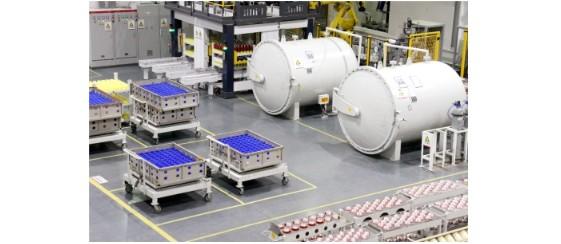
To address this challenge, Chinese OLTC manufacturers launched a dedicated R&D initiative focused on the localization of high-reliability vacuum interrupters. Adopting an innovative collaborative model—"project-driven, integrating industry-academia-research-application, and multi-disciplinary coordination"—the project team conducted comprehensive research and development across performance enhancement, prototype fabrication, testing validation, engineering deployment, and standardization. Leveraging deep expertise in vacuum interrupter technology, the team overcame critical hurdles in design, manufacturing, testing, reliable application, and electromechanical integration—particularly in synchronizing contact bounce behavior with mechanism actuation speed—significantly improving arc-quenching reliability.
The project outcomes have now officially passed the milestone review under the Ministry of Industry and Information Technology’s (MIIT) "Military Order" (Junlingzhuang) accountability program, signifying that China’s domestically developed OLTC has successfully cleared authoritative pre-deployment verification.
The successful completion of these type tests once again demonstrates the stability and reliability of vacuum interrupters produced by Chinese OLTC manufacturers. Moving forward, the company will accelerate the scaling of industrial manufacturing capabilities and expedite the engineering demonstration and deployment of domestically made OLTCs for UHV converter transformers, providing strong support for China’s high-end power equipment industry.
Recommended