What are the installation procedures and the prescribed sequence for energizing and de-energizing voltage regulators?
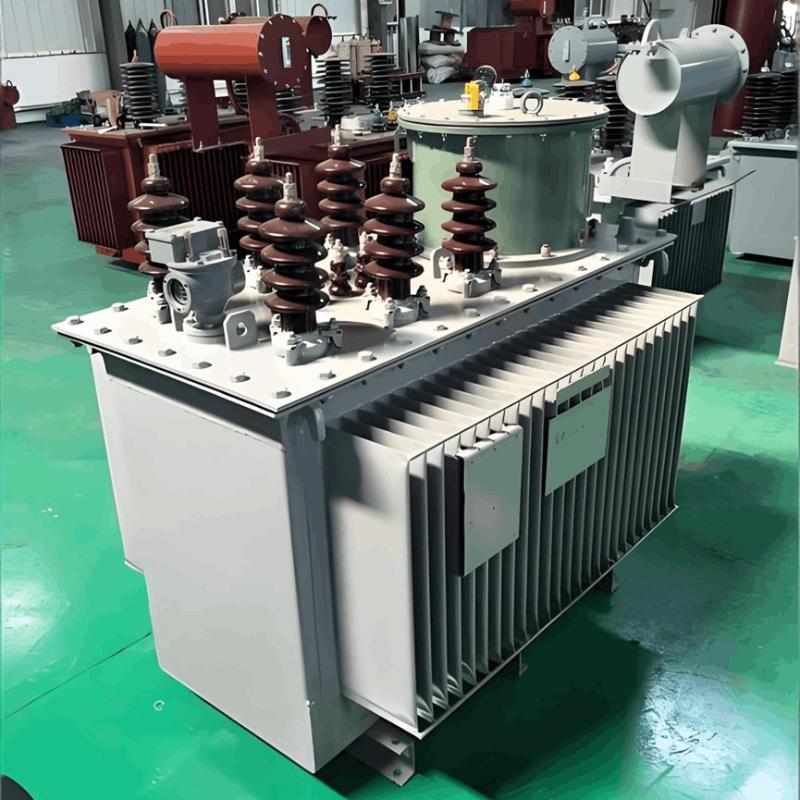
Power voltage regulators are a major electrical equipment in distribution substations. Since the power supply capacity of most distribution substations is relatively small, the capacity of voltage regulators is generally below 1000 kV·A. Therefore, voltage regulators are transported to the site as complete units, with all accessories assembled at the factory before shipment. Hence, the installation work of power voltage regulators in distribution substations mainly includes transportation, visual inspection, and installation.
1. Visual Inspection
After the voltage regulator arrives on site, a visual inspection shall be carried out. Installation can proceed only if no abnormalities are found.
Inspection items include: whether the model and specifications of the voltage regulator match those indicated on the drawings; the body shall show no mechanical damage; cover bolts shall be intact; sealing gaskets shall be tight and in good condition with no oil leakage; the external surface shall be free of rust and the paint coating shall be complete; bushings shall show no oil leakage or surface defects; and the wheel gauge of the rollers shall match the foundation rails.

2. Voltage Regulator Installation
If no abnormalities are found during the above inspection, the voltage regulator may be positioned for installation. Prior to positioning, check whether the guide rails of the voltage regulator are level and whether the rail gauge matches the wheel gauge. For transformers equipped with a gas relay, the top cover shall have an upward slope of 1% to 1.5% in the direction of gas flow toward the gas relay to facilitate gas movement. Commonly, shims are placed under the two rollers on the conservator tank side. The shim thickness equals the distance between the centers of the two rollers multiplied by the slope percentage. For example, if the center distance is 1 m, the shim thickness should be 10–15 mm.
After positioning the voltage regulator, verify that the distances between the voltage regulator and buildings or other equipment comply with design requirements. Then secure the rollers with removable braking devices and apply anti-rust oil. Connect the high-voltage and low-voltage busbars to both sides of the power voltage regulator. When connecting the busbars to the voltage regulator, use two wrenches: one to hold the bushing compression nut steady and the other to tighten the busbar nut, to prevent damage to the bushing.
Install the grounding wire onto the grounding bolt of the voltage regulator. If the connection group of the voltage regulator is Y,yn, the grounding wire shall also be connected to the neutral terminal on the low-voltage side of the power voltage regulator.
3. Pre-commissioning Inspection and Rules for Commissioning and Shutdown
3.1 Before commissioning, conduct a detailed inspection of the voltage regulator and its auxiliary equipment to confirm that the voltage regulator is in good condition and ready for operation. Specific inspection items include:
Oil levels in the conservator tank and bushings. For a voltage regulator in shutdown status, the oil level in the conservator should be near the scale mark corresponding to the ambient temperature.
Whether the cooling system is already in the start-up state.
Whether the tap changer position is correct.
Whether there are any short-circuit grounding wires on the primary and secondary sides.
Whether the relay protection devices have been activated as required and whether there are any concerns regarding their settings.
For repaired or newly installed voltage regulators, review the test reports and check that the primary and secondary wiring is normal.
3.2 Operating sequence for energizing and de-energizing the voltage regulator:
When de-energizing, disconnect the load side first, then the power source side. The energizing sequence is the reverse.
3.3 Operational principles for commissioning and shutdown:
Circuit breakers are installed on both sides of the distribution voltage regulator. Circuit breakers must be used for commissioning or shutdown operations. During commissioning, close the isolating switch first, then the circuit breaker; during shutdown, perform the operations in reverse order.
4. Operation, Maintenance, and Servicing of the Voltage Regulator
The voltage regulator shall be inspected externally on a regular basis. In attended substations, inspections shall be conducted at least once per day, with an additional night inspection each week. In unattended substations, inspections shall be performed at least once per month, as well as before each commissioning and after each shutdown. Immediate inspections are required under special circumstances such as sudden weather changes or icing.
Check whether the sound of the voltage regulator is normal and free of abnormal noises. The top-oil temperature should be normal, generally not exceeding 85°C. The oil level should be normal, typically between 1/3 and 3/4 on the oil-level gauge.
Listen for any abnormal sounds, unusual noise, or excessively loud operation. Inspect whether the surfaces of bushings and porcelain insulators are clean, undamaged, crack-free, and free of discharge phenomena. Check whether the desiccant in the breather has become ineffective and changed color—normally blue, turning pink when moist. Verify that the transformer tank grounding is in good condition. Ensure that the temperatures of all radiator tubes are uniform. No components should exhibit oil leakage or significant seepage. The enclosure shall be kept clean. The voltage regulator shall undergo preventive testing once a year, along with cleaning of bushings and their accessories, oil gauge tubes, Buchholz relays, pressure relief devices, breathers, radiator assemblies, and all valves.
-
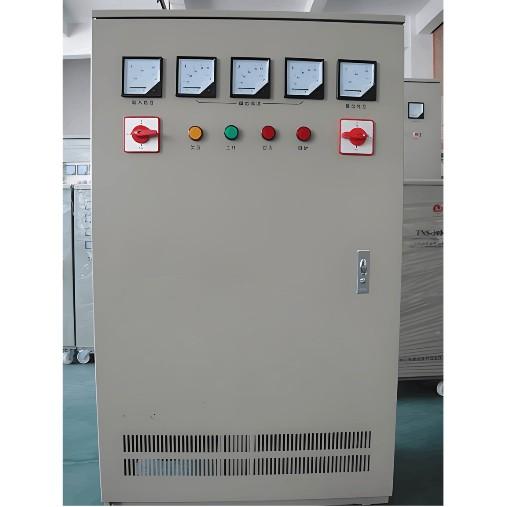
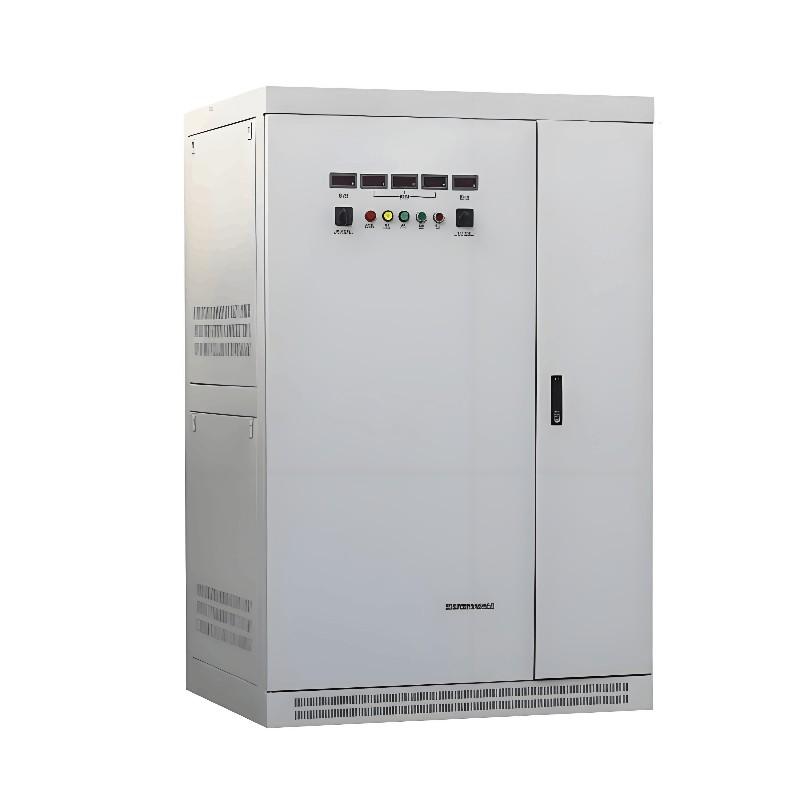
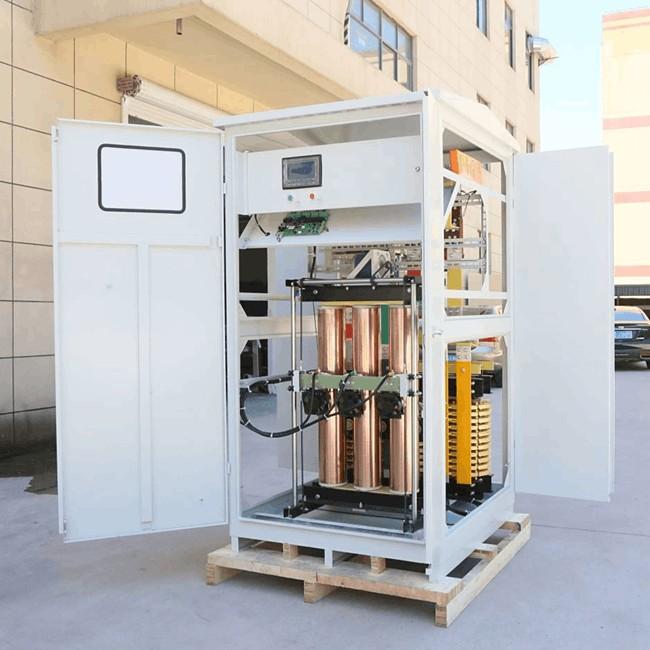
Automatic Tap - Changing Voltage Regulator – 7.62 kV 11kV 13.8 kV 14.4 kV 19.92 kV 34.5 kV, IEEE compliant for Power Industry

-
6kV 6.35kV 7.62kV 13.2kV 13.8kV 14.4 kV Overhead Line Single Phase Automatic Step Voltage Regulator

-
Voltage stabilization and compensation overhead voltage regulator 6kV 6.35kV 11kV 15kV 22kV 33kV – IEEE for Power Industry

-
13.2kV 13.8kV 14.4kV 19.92kV IEC Standard voltage regulator control compliant for Industrial Manufacturing Industry