• Product
  • Suppliers
  • Manufacturers
  • Solutions
  • Free tools
  • Knowledges
  • Experts
  • Communities
Search


​Digital Multi-function Power Meter

  • ​Digital Multi-function Power Meter
  • ​Digital Multi-function Power Meter
  • ​Digital Multi-function Power Meter

Key attributes

Brand RW Energy
Model NO. ​Digital Multi-function Power Meter
size 72*72mm
Series RWY

Product descriptions from the supplier

Description

The Digital Multi-function Power Meter is a modern power monitoring core device that integrates high-precision measurement, comprehensive monitoring, and intelligent communication. Utilizing a clear and intuitive digital display interface, it provides full-spectrum real-time data of the power system for you. It is the ideal choice for realizing fine-grained energy consumption management, enhancing operational efficiency, and ensuring power supply security in industrial automation, building management, data centers, and power distribution systems.

Core Functions, At a Glance:

  • Precision Measurement: Monitors critical electrical parameters including three-phase/single-phase voltage, current, active/reactive/apparent power, power factor, frequency, etc., in real-time, with leading accuracy (high precision).

  • Energy Metering: Accurately meters active energy and reactive energy (import/export), providing a reliable basis for energy consumption analysis and billing.

  • Power Quality Insight: Offers optional monitoring of power quality parameters such as harmonic content, voltage/current unbalance, etc., aiding in optimizing power supply quality.

  • Clear Display: Employs a high-brightness LED or LCD display (typically dual-row or multi-row), presenting data clearly and intuitively with rich information, facilitating fast on-site reading.

  • Flexible Communication: Integrates standard communication interfaces such as RS485, supporting mainstream industrial protocols like Modbus-RTU, Profibus, CANopen (depending on model configuration), enabling seamless integration into SCADA, EMS, BMS and other systems for remote monitoring and data acquisition (SCADA).

  • Intelligent Alarming: Provides out-of-limit alarm functionality, promptly detecting potential risks such as voltage anomalies or current overload.

  • Data Logging: Certain models feature historical data logging capability, facilitating history tracing and analysis.

Product Advantages, Worthy of Trust:

  • High Accuracy and Reliability: Ensures stable measurements and accurate, trustworthy data, meeting high-standard application requirements.

  • Comprehensive Function Integration: Addresses multiple monitoring needs with a single meter, reducing installation complexity and cost.

  • Convenient and Flexible Installation: Offers multiple form factors (square or DIN-rail mounted), allowing easy adaptation to various distribution panels/cabinets (switchboard/cabinet).

  • Powerful Compatibility: Utilizes standard communication protocols, ensuring easy integration with existing systems.

  • Rugged and Durable: Features an industrial-grade design, wide operating temperature range (e.g., -25°C to +70°C), and strong interference resistance (high immunity).

  • Assists Energy Efficiency Enhancement: Provides precise data support for energy audits and energy-saving renovations.

Technical Specifications:

Parameter Specification
Connection Three-phase four-wire Y34 / Three-phase three-wire V33
Signal Input - Voltage Range 400V / 100V
Signal Input - Voltage Overload Continuous: 1.2x, Instantaneous: 2x
Signal Input - Voltage Consumption < 1VA
Signal Input - Current Range 5A / 1A
Signal Input - Current Overload Continuous: 1.2x, Instantaneous: 2x
Signal Input - Current Consumption < 1VA
Frequency 40-65Hz
Power Supply AC220V (default) or AC/DC 80-270V
Energy Pulse Output Passive optocoupler collector output
Pulse width: 80ms &plusmn;20%
Communication &bull; Interface: RS485 (physically isolated)
       &bull; Protocol: MODBUS-RTU
       &bull; Baud rate: 1200-9600 bps
       &bull; Parity: N81/E81/O81
Analog Output &bull; Range: 0/4-20mA or 0-5/10V
       &bull; Configurable variables via programming
Relay Output &bull; Type: Programmable alarm/trip relay
       &bull; Rating: 5A/250V AC, 5A/30V DC
       &bull; Trigger sources: Battery alarm, DI, AI, remote
Digital Input (DI) &bull; Type: Dry contact
       &bull; Function: Programmable alarm mapping
Accuracy Class &bull; Voltage/Current: 0.5
       &bull; Active Energy: 0.5S
       &bull; Reactive Energy: 1.0
       &bull; Frequency: &plusmn;0.1Hz
Display High-definition LCD (integrated nixie tube type)
Environmental &bull; Operating: -10&deg;C to +55&deg;C
       &bull; Storage: -20&deg;C to +75&deg;C
Safety Standards &bull; Insulation resistance: >5M&Omega; (signal/power/earth)
       &bull; Dielectric strength: >2kV AC (signal/power/output)

Wiring diagram:
  Wiring diagram.png

FAQ
Q: How to configure and calibrate the meter, and is remote operation available?
A:

You can configure parameters via the front-panel button, PC software (with RS485-to-USB adapter), or remote Modbus communication. It supports on-site calibration with standard instruments, and the calibration data is stored permanently without frequent adjustment.

Q: Is the digital multifunction power meter suitable for global industrial applications?
A:

Yes, it supports universal power supply (AC 85-265V or DC 24V) and complies with CE, UL, and RoHS certifications. It is widely used in power distribution systems, industrial automation, new energy (PV/energy storage), and building electrical projects worldwide.

Q: Which communication protocols and output signals does the meter support for system integration?
A:

It is equipped with Modbus RTU (RS485) as the standard communication protocol, compatible with PLC/DCS systems (Siemens, Schneider, ABB). It also provides 4-20mA DC/0-10V DC standard analog output and 2-4 路 relay output (DO) for control linkage.

Q: What is the accuracy class of the meter, and how reliable is its measurement?
A:

The standard accuracy class is IEC 0.1 (error ≤±0.1%FS) or 0.5 (error ≤±0.5%FS), equipped with high-precision A/D conversion chips and anti-interference circuits, ensuring stable measurement in harsh industrial environments.

Q: High-precision digital multifunction power meter measures voltage, current, power & energy. Features 4-20mA output, Modbus RS485, IEC 0.1 class accuracy for industrial automation, power distribution & new energy systems.
A:

It supports measurement of 3-phase/1-phase voltage (V), current (A), active/reactive/apparent power (kW/kVAR/kVA), energy (kWh/kVARh), frequency (Hz), and power factor (PF), fully meeting IEC 61010 international measurement standards.
Know your supplier
Online store
On-time delivery rate
Response time
100.0%
≤4h
Company overview
Workplace: 30000m² Total staff: Highest Annual Export(usD): 100000000
Workplace: 30000m²
Total staff:
Highest Annual Export(usD): 100000000
Services
Business Type: Design/Manufacture/Sales
Main Categories: High Voltage Electrical Apparatus/Low Voltage Electrical Apparatus/Instrument meters/New energy/Tester/Robot
Whole life care manager
Whole-life care management services for equipment procurement, use, maintenance, and after-sales, ensuring safe operation of electrical equipment, continuous control, and worry-free electricity consumption.
The equipment supplier has passed platform qualification certification and technical evaluation, ensuring compliance, professionalism, and reliability from the source.

Related Products

Related Knowledges

  • Faults and Handling of Single-phase Grounding in 10kV Distribution Lines
    Characteristics and Detection Devices for Single-Phase Ground Faults1. Characteristics of Single-Phase Ground FaultsCentral Alarm Signals:The warning bell rings, and the indicator lamp labeled “Ground Fault on [X] kV Bus Section [Y]” illuminates. In systems with a Petersen coil (arc suppression coil) grounding the neutral point, the “Petersen Coil Operated” indicator also lights up.Insulation Monitoring Voltmeter Indications:The voltage of the faulted phase decreases (in
    01/30/2026
  • Neutral point grounding operation mode for 110kV~220kV power grid transformers
    The arrangement of neutral point grounding operation modes for 110kV~220kV power grid transformers shall meet the insulation withstand requirements of transformer neutral points, and shall also strive to keep the zero-sequence impedance of substations basically unchanged, while ensuring that the zero-sequence comprehensive impedance at any short-circuit point in the system does not exceed three times the positive-sequence comprehensive impedance.For 220kV and 110kV transformers in new constructi
    01/29/2026
  • Why Do Substations Use Stones, Gravel, Pebbles, and Crushed Rock?
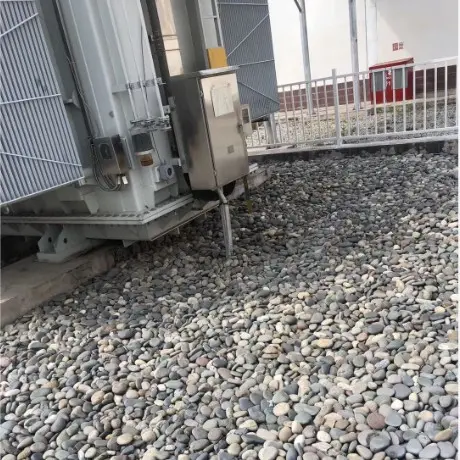
    Why Do Substations Use Stones, Gravel, Pebbles, and Crushed Rock?In substations, equipment such as power and distribution transformers, transmission lines, voltage transformers, current transformers, and disconnect switches all require grounding. Beyond grounding, we will now explore in depth why gravel and crushed stone are commonly used in substations. Though they appear ordinary, these stones play a critical safety and functional role.In substation grounding design—especially when multiple gr
    01/29/2026
  • Why Must a Transformer Core Be Grounded at Only One Point? Isn't Multi-Point Grounding More Reliable?
    Why Does the Transformer Core Need to Be Grounded?During operation, the transformer core, along with the metal structures, parts, and components that fix the core and windings, are all situated in a strong electric field. Under the influence of this electric field, they acquire a relatively high potential with respect to ground. If the core is not grounded, a potential difference will exist between the core and the grounded clamping structures and tank, which may lead to intermittent discharge.I
    01/29/2026
  • Understanding Transformer Neutral Grounding
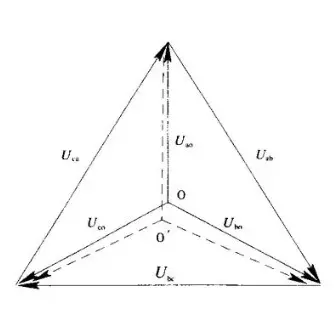
    I. What is a Neutral Point?In transformers and generators, the neutral point is a specific point in the winding where the absolute voltage between this point and each external terminal is equal. In the diagram below, pointOrepresents the neutral point.II. Why Does the Neutral Point Need Grounding?The electrical connection method between the neutral point and earth in a three-phase AC power system is called theneutral grounding method. This grounding method directly affects:The safety, reliabilit
    01/29/2026
  • What’s the Difference Between Rectifier Transformers and Power Transformers?
    What is a Rectifier Transformer?"Power conversion" is a general term encompassing rectification, inversion, and frequency conversion, with rectification being the most widely used among them. Rectifier equipment converts input AC power into DC output through rectification and filtering. A rectifier transformer serves as the power supply transformer for such rectifier equipment. In industrial applications, most DC power supplies are obtained by combining a rectifier transformer with rectifier equ
    01/29/2026

Related Solutions

  • Distribution automation systems solutions
    What are the difficulties in overhead line operation and maintenance?Difficulty one:Overhead lines of distribution network have wide coverage,complicatedterrain,many radiation branches and distributed power supply,resultingin "many line faults and difficulty in fault troubleshooting".Difficulty Two:Manual troubleshooting is time-consuming and laborious.Meanwhile,therunning current,voltage and switching state of the line cannot be graspedin real time,because of the lack of intelligent technical m
    04/22/2025
  • RW8000 DMS Distribution Management System Solutions
    OverviewNowadays, the development trend of power grid is intellectualization. As an important part of power grid, the power distribution system is very close to the customers and it has to run properly. The distribution management system (DMS)played an important role in it.Introduction:RW8000 power distribution management system (DMS) is designed for the smart grids. It is based on real-time application, centered on distribution network operation and management, focusing on the business process
    09/07/2023
  • High-Precision Electrical Parameter Monitoring System Solution
    1.Introduction​With the increasingly stringent requirements for power supply quality in high-end facilities such as precision manufacturing, medical diagnosis, and data centers, traditional power monitoring systems, due to their low sampling accuracy and weak data analysis capabilities, can no longer meet the demand for deep insight and precise management of power quality. In response, we are introducing a new generation ​High-Precision Electrical Parameter Monitoring System. With ​millisecond-l
    09/28/2025
Haven't found the right supplier yet? Let matching verified suppliers find you. Get Quotation Now
Haven't found the right supplier yet? Let matching verified suppliers find you.
Get Quotation Now
Send inquiry
+86
Click to upload file
Download
Get the IEE Business Application
Use the IEE-Business app to find equipment, obtain solutions, connect with experts, and participate in industry collaboration anytime, anywhere—fully supporting the development of your power projects and business.