• Product
  • Suppliers
  • Manufacturers
  • Solutions
  • Free tools
  • Knowledges
  • Experts
  • Communities
Search


110 - 500kV Composite-Housed Line Surge Arresters

  • 110 - 500kV Composite-Housed Line Surge Arresters

Key attributes

Brand ROCKWILL
Model NO. 110 - 500kV Composite-Housed Line Surge Arresters
Rated voltage 220kV
Rated frequency 50/60Hz
Series YH10CX

Product descriptions from the supplier

Description

Description

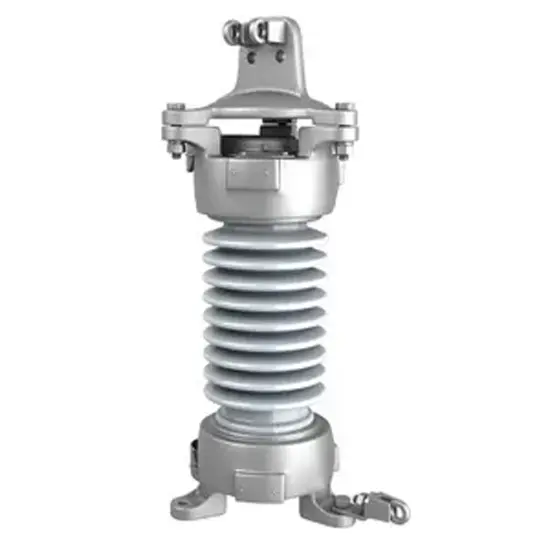
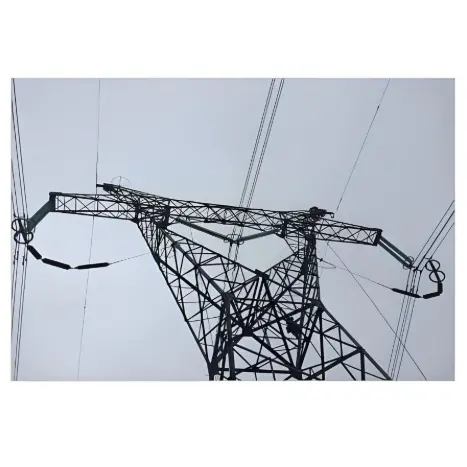
110 - 500kV Composite-Housed Line Surge Arresters are specialized protective devices designed for high-voltage transmission lines operating within the 110kV to 500kV range. Encased in durable composite housings (typically silicone rubber), they integrate advanced metal oxide varistor (MOV) technology. Installed directly on transmission lines, these arresters serve as a critical defense against overvoltages caused by lightning strikes, switching transients, and other electrical disturbances. By rapidly diverting surge currents to the ground and clamping voltage levels to safe thresholds, they prevent damage to line components, minimize power outages, and ensure the stable and efficient operation of 110 - 500kV transmission networks.

Features

Broad Voltage CompatibilityTailored to cover the 110kV to 500kV range, these arresters are engineered to match the specific voltage requirements of high-voltage transmission lines. This versatility allows them to provide consistent and reliable protection across various segments of the power grid within this voltage spectrum.

Durable Composite HousingThe composite (silicone rubber) housing offers exceptional performance. It exhibits strong resistance to environmental factors such as UV radiation, extreme temperatures, moisture, and pollution, ensuring long-term stability even in harsh outdoor conditions. Additionally, its lightweight nature simplifies installation and reduces the load on transmission line structures.

High-Performance MOVsEquipped with high-quality metal oxide varistors, these arresters feature excellent nonlinear resistance characteristics. During overvoltage events, the MOVs quickly conduct large surge currents, effectively limiting voltage spikes. In normal operation, they maintain a high-resistance state, minimizing leakage current and energy loss.

Line-Specific DesignDesigned specifically for integration with transmission lines, they have a compact and streamlined structure that fits seamlessly into line configurations. This design ensures minimal impact on line performance while providing optimal protection, making them suitable for both overhead and certain underground transmission line setups.

Superior Surge HandlingCapable of withstanding high impulse currents generated by severe lightning strikes and switching surges. Their robust surge handling capacity ensures that even under extreme electrical disturbances, the arresters can effectively mitigate the impact, safeguarding line insulators, conductors, and other critical components.

Low Maintenance RequirementsThe composite housing is resistant to aging and corrosion, reducing the need for frequent maintenance. The MOVs are designed for long-term reliability, with stable performance over extended periods, minimizing downtime and operational costs associated with upkeep.

Compliance with StandardsAdheres to international industry standards such as IEC 60099 - 4 and ANSI/IEEE C62.11, ensuring compatibility with global transmission systems. Compliance with these standards guarantees that the arresters meet strict safety and performance criteria, providing confidence in their operational effectiveness.

Enhanced Grid Reliability:By preventing line tripping and equipment damage caused by overvoltages, these arresters contribute significantly to the overall reliability of the power grid. They help maintain continuous power transmission, reducing the frequency and duration of outages, which is crucial for meeting the demands of industrial, commercial, and residential users.

Model 

Arrester

System

Arrester Continuous Operation

DC 1mA

Switching Impulse

Nominal Impulse

Steep - Front Impulse

2ms Square Wave

Nominal

Rated Voltage

Nominal Voltage

Operating Voltage

Reference Voltage

Voltage Residual (Switching Impulse)

Voltage Residual (Nominal Impulse)

Current Residual Voltage

Current - Withstand Capacity

Creepage Distance

kV

kV

kV

kV

kV

kV

kV

A

mm

(RMS Value)

(RMS Value)

(RMS Value)

Not Less Than

Not Greater Than

Not Greater Than

Not Greater Than

20 Times


(Peak Value

(Peak Value

(Peak Value

(Peak Value


YH10CX1-102/296

102

110

81.6

148


296


600

5438

YH10CX1-204/592

204

220

159

296


592


600

10600

YH20CX1-396/1050

396

500

297

561


1050


1200

23310

YH10CX1-204/592K

204

220

159

296


592


600

5400

YH10CX1-288/755

220

330

216

408


755


600

16100

Know your supplier
Online store
On-time delivery rate
Response time
100.0%
≤4h
Company overview
Workplace: 108000m²m² Total staff: 700+ Highest Annual Export(usD): 150000000
Workplace: 108000m²m²
Total staff: 700+
Highest Annual Export(usD): 150000000
Services
Business Type: Design/Manufacture/Sales
Main Categories: High Voltage Electrical Apparatus/Electric transformer
Whole life care manager
Whole-life care management services for equipment procurement, use, maintenance, and after-sales, ensuring safe operation of electrical equipment, continuous control, and worry-free electricity consumption.
The equipment supplier has passed platform qualification certification and technical evaluation, ensuring compliance, professionalism, and reliability from the source.

Related Products

Related Knowledges

  • Faults and Handling of Single-phase Grounding in 10kV Distribution Lines
    Characteristics and Detection Devices for Single-Phase Ground Faults1. Characteristics of Single-Phase Ground FaultsCentral Alarm Signals:The warning bell rings, and the indicator lamp labeled “Ground Fault on [X] kV Bus Section [Y]” illuminates. In systems with a Petersen coil (arc suppression coil) grounding the neutral point, the “Petersen Coil Operated” indicator also lights up.Insulation Monitoring Voltmeter Indications:The voltage of the faulted phase decreases (in
    01/30/2026
  • Neutral point grounding operation mode for 110kV~220kV power grid transformers
    The arrangement of neutral point grounding operation modes for 110kV~220kV power grid transformers shall meet the insulation withstand requirements of transformer neutral points, and shall also strive to keep the zero-sequence impedance of substations basically unchanged, while ensuring that the zero-sequence comprehensive impedance at any short-circuit point in the system does not exceed three times the positive-sequence comprehensive impedance.For 220kV and 110kV transformers in new constructi
    01/29/2026
  • Why Do Substations Use Stones, Gravel, Pebbles, and Crushed Rock?
    Why Do Substations Use Stones, Gravel, Pebbles, and Crushed Rock?In substations, equipment such as power and distribution transformers, transmission lines, voltage transformers, current transformers, and disconnect switches all require grounding. Beyond grounding, we will now explore in depth why gravel and crushed stone are commonly used in substations. Though they appear ordinary, these stones play a critical safety and functional role.In substation grounding design—especially when multiple gr
    01/29/2026
  • Why Must a Transformer Core Be Grounded at Only One Point? Isn't Multi-Point Grounding More Reliable?
    Why Does the Transformer Core Need to Be Grounded?During operation, the transformer core, along with the metal structures, parts, and components that fix the core and windings, are all situated in a strong electric field. Under the influence of this electric field, they acquire a relatively high potential with respect to ground. If the core is not grounded, a potential difference will exist between the core and the grounded clamping structures and tank, which may lead to intermittent discharge.I
    01/29/2026
  • Understanding Transformer Neutral Grounding
    I. What is a Neutral Point?In transformers and generators, the neutral point is a specific point in the winding where the absolute voltage between this point and each external terminal is equal. In the diagram below, pointOrepresents the neutral point.II. Why Does the Neutral Point Need Grounding?The electrical connection method between the neutral point and earth in a three-phase AC power system is called theneutral grounding method. This grounding method directly affects:The safety, reliabilit
    01/29/2026
  • What’s the Difference Between Rectifier Transformers and Power Transformers?
    What is a Rectifier Transformer?"Power conversion" is a general term encompassing rectification, inversion, and frequency conversion, with rectification being the most widely used among them. Rectifier equipment converts input AC power into DC output through rectification and filtering. A rectifier transformer serves as the power supply transformer for such rectifier equipment. In industrial applications, most DC power supplies are obtained by combining a rectifier transformer with rectifier equ
    01/29/2026

Related Solutions

  • Intelligent Operation Solution for 12kV Vacuum Circuit Breakers: Integrating Real-time Monitoring & Lifetime Optimization
    Ⅰ. Equipment Operation & MaintenanceIntelligent Monitoring System Integration​Multi-parameter Real-time Monitoring: Embedded sensors (temperature, displacement, Hall effect current sensors) track contact temperature rise, mechanical characteristics (opening/closing speed, overtravel), coil current, and partial discharge signals. Data undergoes preprocessing via edge computing prior to cloud upload.​Lifetime Prediction Model: Dynamically evaluates remaining lifespan using electrical wear data
    06/10/2025
  • SF6 Circuit Breaker Solutions for Outdoor Installation (Anti-Pollution & Seismic Resistance)
    I.Core Challenges in Outdoor Installation​In high-voltage transmission and distribution systems, SF6 circuit breakers are exposed to complex outdoor environments for extended periods, facing the following critical issues:​Pollution & Insulation Degradation​Dust, salt fog, and industrial pollutants in outdoor environments easily adhere to equipment surfaces. In coastal or industrial areas, pollution levels may reach ​Class IV, resulting in insufficient creepage distance and triggering ​flasho
    05/12/2025
  • 12kV Indoor Vacuum Circuit Breaker Southeast Asia Solution: Anti-Corrosion Compact Design
    12kV Indoor Vacuum Circuit Breaker Southeast Asia Solution: Anti-Corrosion Compact DesignⅠ. Executive Summary​Southeast Asia faces rapidly growing electricity demand alongside environmental challenges including high temperatures, humidity, salt spray corrosion, and grid instability. This solution recommends ​Solid Insulated Pole-Mounted Vacuum Circuit Breakers (VCB)​​ featuring ​high reliability, ​compact design, and ​smart monitoring. Tailored for tropical climates and industrial scenarios, it
    06/10/2025
Haven't found the right supplier yet? Let matching verified suppliers find you. Get Quotation Now
Haven't found the right supplier yet? Let matching verified suppliers find you.
Get Quotation Now
Send inquiry
+86
Click to upload file
Download
Get the IEE Business Application
Use the IEE-Business app to find equipment, obtain solutions, connect with experts, and participate in industry collaboration anytime, anywhere—fully supporting the development of your power projects and business.