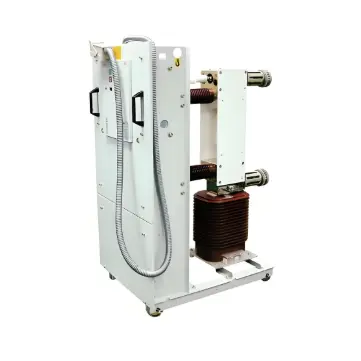
31.5kV indoor railways vacuum circuit breaker
Key attributes
| Brand | ABB |
| Model NO. | 31.5kV indoor railways vacuum circuit breaker |
| Rated voltage | 31.5kV |
| Rated normal current | 2500A |
| Rated frequency | 50/60Hz |
| Series | GSR+ |
Product descriptions from the supplier
Description:
Medium Voltage single-phase circuit breaker with magnetic actuator, designed for railway power supply up to 27.5 kV, 2500 A, 31.5 kA
With a rated voltage of 31.5kV, it can effectively handle the electrical loads in railway applications. Equipped with brushless servomotors (one per phase) and double encoders, it enables precise control over switching operations. Each phase also has an electronic controller that communicates hierarchically, ensuring coordinated and reliable system operation. This breaker is designed to safeguard the railway electrical network from overloads and short - circuits, ensuring stable and safe power supply for trains and related facilities.
The GSR+ II range is the first commercially available single-phase vacuum circuit breaker for railway power supply applications to feature a vacuum interrupter, magnetic actuator and electronic controller. This solution is robust, reliable and essentially maintenance-free.
Feature:
High Voltage Adaptability and Stable Insulation: With a rated voltage of 31.5kV, it is suitable for high-voltage environments in railway power systems. The three-pole structure encapsulated in epoxy resin, with built-in vacuum interrupters, offers excellent insulation performance and can withstand harsh environmental factors such as moisture and dust.
Precision Control Operation: Each phase is equipped with a brushless servo motor and dual encoders to achieve high-precision control of switching operations. It can quickly and stably respond to the on/off demands of the power system, ensuring the timeliness of power supply.
Intelligent Collaborative Operation: The electronic controllers of each phase have hierarchical communication functions, enabling mutual collaboration and linkage with the main control unit. This ensures that the circuit breaker can coordinate consistently and operate stably and reliably under complex working conditions.
Efficient Fault Protection: It has the ability to quickly cut off overloads, short circuits, and other faults, effectively protecting the railway electrical network. This avoids the impact of power faults on train operation safety and ensures the stability of the railway power supply system.
Compact Indoor Design: Optimized for indoor installation, its compact structure saves space, adapts to the limited installation environments in railway substations and control rooms, and facilitates integration and maintenance.
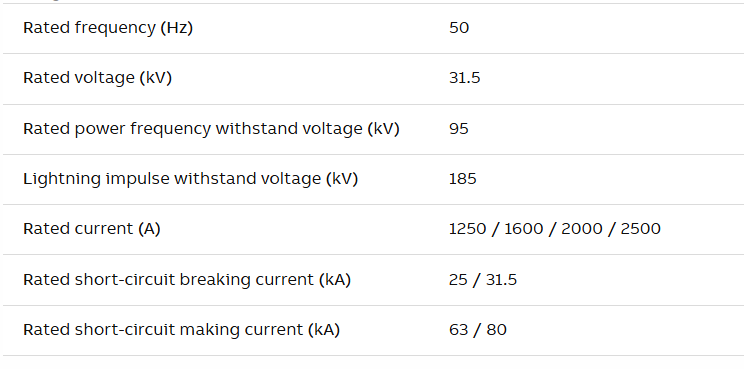
Technical Characteristics:

Related Products
-
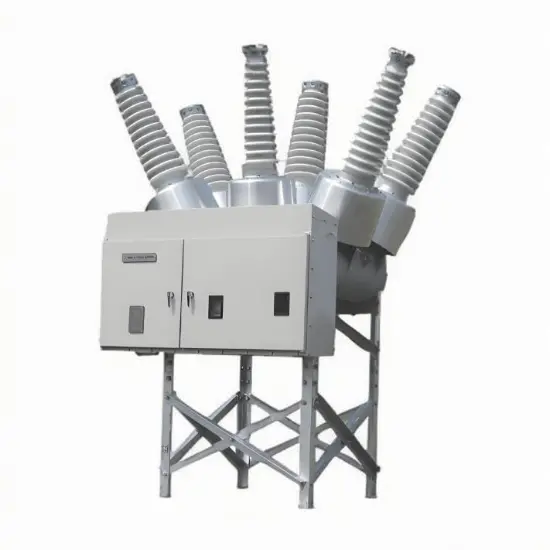
Customization 145kV/138kV/230kV or Other Dead tank Vacuum Circuit-Breaker
-
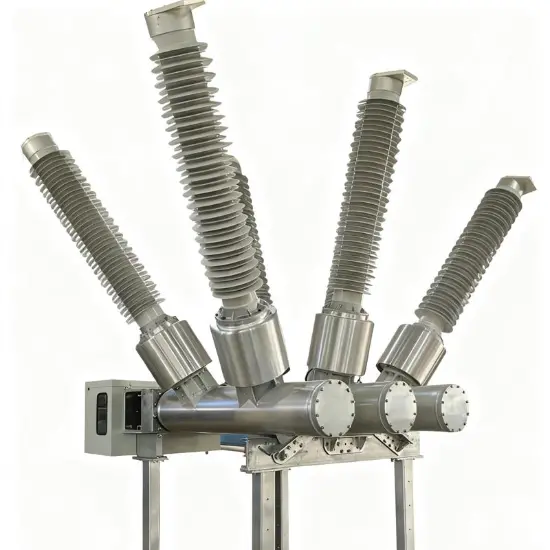
40.5kV 72.5kV 145kV 170kV 245kV Dead tank Vacuum Circuit-Breaker
-
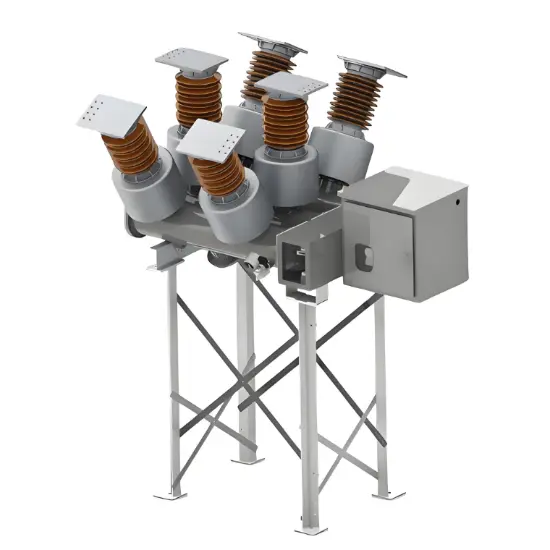
36kV 72.5kV Dry Air Insulated Dead Tank Vacuum Circuit Breaker(VCB)
-
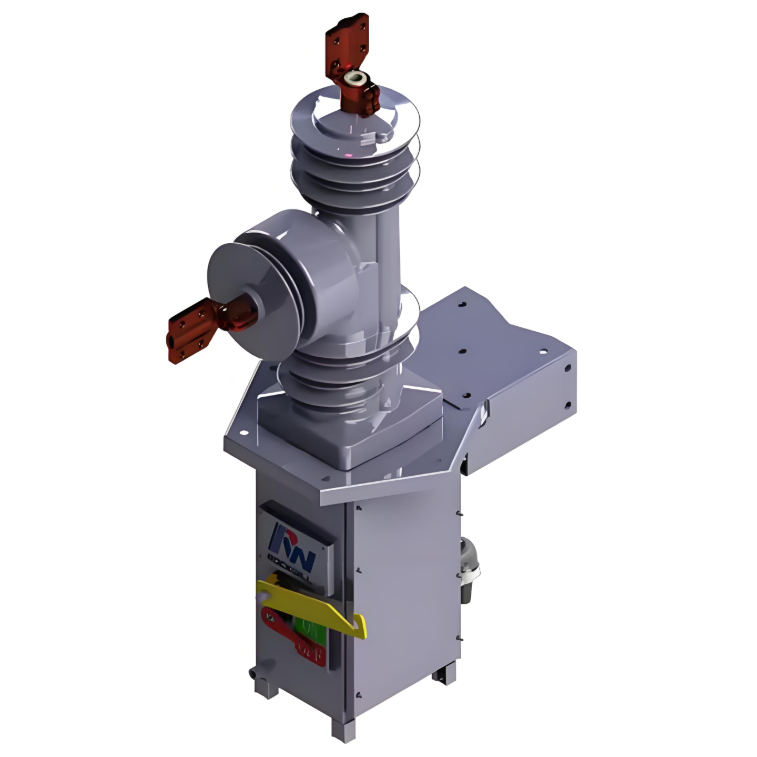
RCW-S21.9M 21.9kV MV outdoor vacuum recloser
-
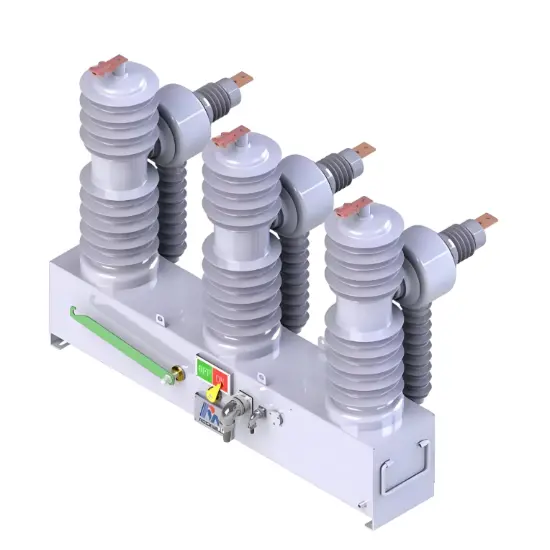
12kV 13.2kV 13.8kV 14.5kV 15kV MV outdoor Three phase Smart recloser/reclosure Source Manufacturer
-
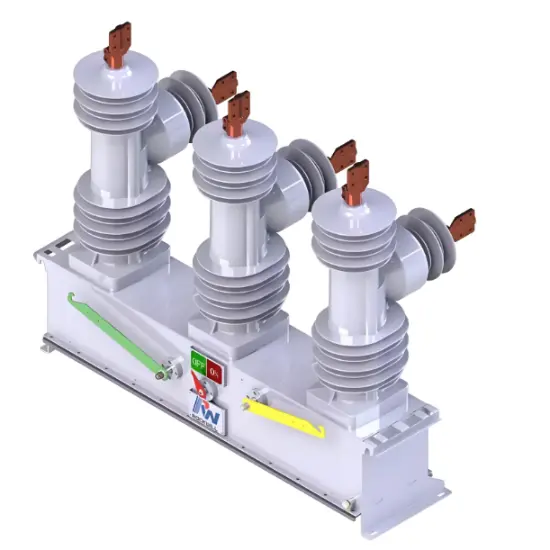
Customization 15kV 15.6kV 17.5kV 20kV MV outdoor Three-phase vacuum Auto Circuit Recloser/reclosure
-
Customization 27kV 33kV 33.5kV 34.5kV 35kV Outdoor High - Voltage Vacuum Three-phase recloser/reclosure
Related Knowledges
-
 Main Transformer Accidents and Light Gas Operation Issues1. Accident Record (March 19, 2019)At 16:13 on March 19, 2019, the monitoring background reported a light gas action of No. 3 main transformer. In accordance with the Code for Operation of Power Transformers (DL/T572-2010), operation and maintenance (O&M) personnel inspected the on-site condition of No. 3 main transformer.On-site confirmation: The WBH non-electrical protection panel of No. 3 main transformer reported a Phase B light gas action of the transformer body, and the reset was ineff02/05/2026
 -
 Faults and Handling of Single-phase Grounding in 10kV Distribution LinesCharacteristics and Detection Devices for Single-Phase Ground Faults1. Characteristics of Single-Phase Ground FaultsCentral Alarm Signals:The warning bell rings, and the indicator lamp labeled “Ground Fault on [X] kV Bus Section [Y]” illuminates. In systems with a Petersen coil (arc suppression coil) grounding the neutral point, the “Petersen Coil Operated” indicator also lights up.Insulation Monitoring Voltmeter Indications:The voltage of the faulted phase decreases (in01/30/2026
 -
 Neutral point grounding operation mode for 110kV~220kV power grid transformersThe arrangement of neutral point grounding operation modes for 110kV~220kV power grid transformers shall meet the insulation withstand requirements of transformer neutral points, and shall also strive to keep the zero-sequence impedance of substations basically unchanged, while ensuring that the zero-sequence comprehensive impedance at any short-circuit point in the system does not exceed three times the positive-sequence comprehensive impedance.For 220kV and 110kV transformers in new constructi01/29/2026
 -
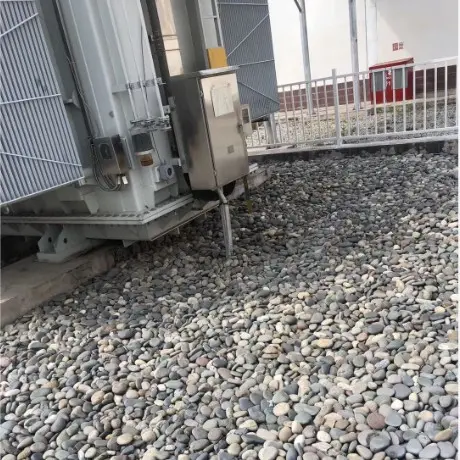 Why Do Substations Use Stones, Gravel, Pebbles, and Crushed Rock?Why Do Substations Use Stones, Gravel, Pebbles, and Crushed Rock?In substations, equipment such as power and distribution transformers, transmission lines, voltage transformers, current transformers, and disconnect switches all require grounding. Beyond grounding, we will now explore in depth why gravel and crushed stone are commonly used in substations. Though they appear ordinary, these stones play a critical safety and functional role.In substation grounding design—especially when multiple gr01/29/2026
 -
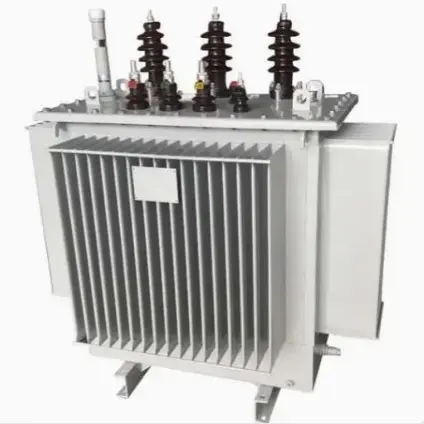 Why Must a Transformer Core Be Grounded at Only One Point? Isn't Multi-Point Grounding More Reliable?Why Does the Transformer Core Need to Be Grounded?During operation, the transformer core, along with the metal structures, parts, and components that fix the core and windings, are all situated in a strong electric field. Under the influence of this electric field, they acquire a relatively high potential with respect to ground. If the core is not grounded, a potential difference will exist between the core and the grounded clamping structures and tank, which may lead to intermittent discharge.I01/29/2026
 -
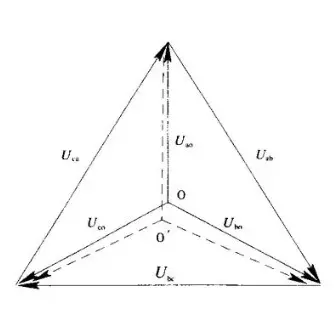 Understanding Transformer Neutral GroundingI. What is a Neutral Point?In transformers and generators, the neutral point is a specific point in the winding where the absolute voltage between this point and each external terminal is equal. In the diagram below, pointOrepresents the neutral point.II. Why Does the Neutral Point Need Grounding?The electrical connection method between the neutral point and earth in a three-phase AC power system is called theneutral grounding method. This grounding method directly affects:The safety, reliabilit01/29/2026
Related Solutions
-
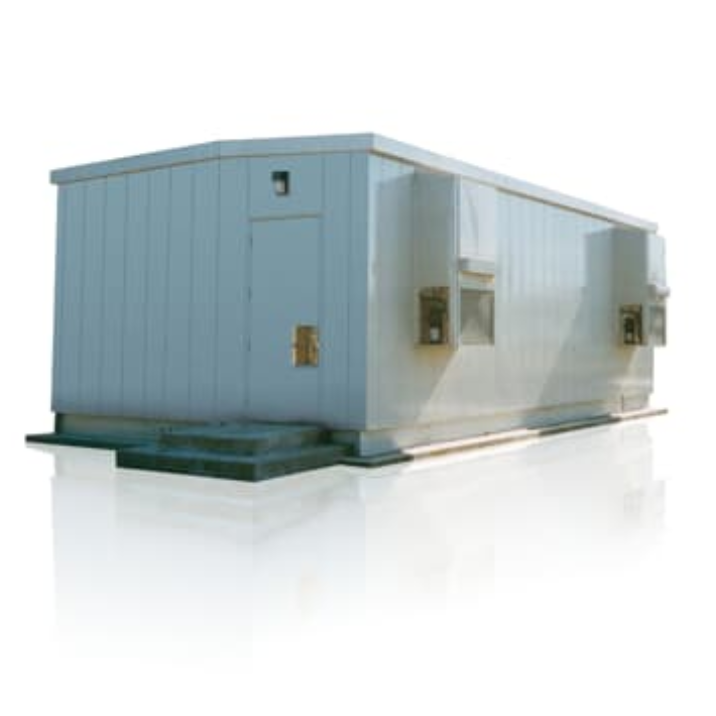 Electrical House (eHouse) SolutionsReduce site complexity, improve lead timeABB eHouses are prefabricated transportable substations, designed to house medium voltage and low voltage switchgear, critical power equipment and automation cabinets.An eHouse solution is a cost effective, risk reduced alternative to conventional concrete block and brick construction. Each eHouse module is custom engineered to meet application requirements with respect to equipment layout, site footprint limitations and logistics considerations.Installat04/16/2025
 -
 Improve speed to deployment Modular prefabricated and pre-engineered solutionsReduce site works and risk of schedule delays and cost overrunsOverview:With a complicated data center project that has short delivery timelines, prefabricated modular solutions and pre-engineered modular solutions may be the answer.Modular solutions are ideal for enterprise, colocation, edge and cloud data centers, where project replicability and expandability are critical, alongside fast deployment time.Reduce risk by leveraging prefabricated and integrated solutions:Fast track projects with p04/16/2025






