• Product
  • Suppliers
  • Manufacturers
  • Solutions
  • Free tools
  • Knowledges
  • Experts
  • Communities
Search


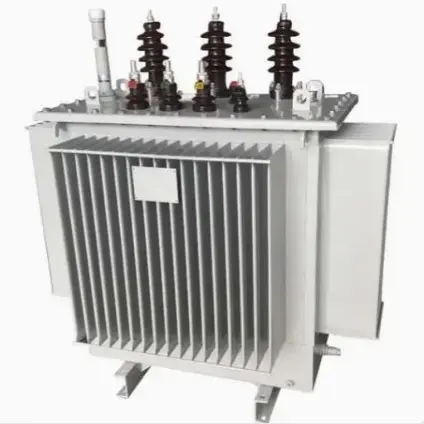
Converter transformers are used for long-distance DC transmission or between power grids

  • Converter transformers are used for long-distance DC transmission or between power grids

Key attributes

Brand ROCKWILL
Model NO. Converter transformers are used for long-distance DC transmission or between power grids
Rated frequency 50/60Hz
Series ZZDPFZ

Product descriptions from the supplier

Description

Description of Converter Transformer
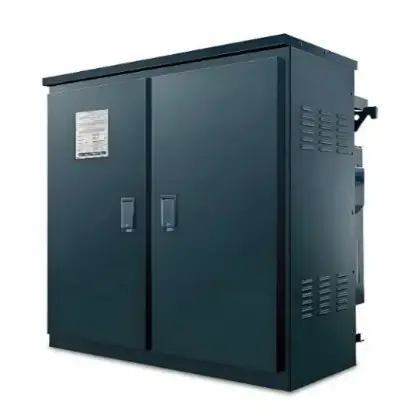
The converter transformer is a key interface device between high-voltage direct current (HVDC) transmission systems and AC power grids, with its core function being to realize the conversion and transmission of electrical energy between AC and DC forms. It is mainly used in long-distance DC transmission projects (such as cross-regional power transmission) and scenarios of interconnection between different power grids. Through electrical isolation and voltage adaptation, it converts electrical energy from the AC grid into a form suitable for DC transmission, or conversely converts DC electrical energy back into AC electrical energy for integration into the grid. It is a core device ensuring efficient transmission of large-capacity power across regions.

  • Purpose:Used for power conversion in long - distance DC transmission or power grid interconnection.

  • Features:In addition to withstanding AC voltage, it also has to endure the DC voltage generated during the AC - to - DC conversion process.

  • Scope:Capacity: Below 610 MVA; Voltage: Valve - side below ±1100 kV; Grid - side below 750 kV.

Features of Converter Transformer

  • Withstanding composite voltages: It not only needs to withstand high voltages on the AC side but also the DC voltage generated during AC-to-DC conversion. Therefore, its insulation design must meet the dual challenges of both AC and DC voltages, with insulation performance requirements far higher than those of conventional AC transformers.

  • Adapting to complex working conditions: Its operating environment involves special electrical stresses such as harmonics and commutation pulsations caused by AC-DC conversion. It must have strong anti-harmonic interference capability and stable electromagnetic compatibility to minimize energy loss during energy conversion.

  • Large capacity and wide voltage coverage: It can cover capacities below 610 MVA, with voltage ranges including the valve side below ±1100 kV and the grid side below 750 kV. It can meet the power and voltage requirements of DC transmission projects of different scales, adapting to diverse scenarios from regional interconnection to ultra-high-voltage long-distance transmission.

  • High-reliability design: As the "hub" of the DC transmission system, its operational stability directly affects the safety of the entire power grid. Therefore, reinforced designs are adopted in structural strength, cooling systems (such as forced oil circulation), and insulation materials to adapt to long-term heavy-load operation.

Know your supplier
Online store
On-time delivery rate
Response time
100.0%
≤4h
Company overview
Workplace: 108000m²m² Total staff: 700+ Highest Annual Export(usD): 150000000
Workplace: 108000m²m²
Total staff: 700+
Highest Annual Export(usD): 150000000
Services
Business Type: Design/Manufacture/Sales
Main Categories: High Voltage Electrical Apparatus/Electric transformer
Whole life care manager
Whole-life care management services for equipment procurement, use, maintenance, and after-sales, ensuring safe operation of electrical equipment, continuous control, and worry-free electricity consumption.
The equipment supplier has passed platform qualification certification and technical evaluation, ensuring compliance, professionalism, and reliability from the source.

Related Knowledges

  • Main Transformer Accidents and Light Gas Operation Issues
    1. Accident Record (March 19, 2019)At 16:13 on March 19, 2019, the monitoring background reported a light gas action of No. 3 main transformer. In accordance with the Code for Operation of Power Transformers (DL/T572-2010), operation and maintenance (O&M) personnel inspected the on-site condition of No. 3 main transformer.On-site confirmation: The WBH non-electrical protection panel of No. 3 main transformer reported a Phase B light gas action of the transformer body, and the reset was ineff
    02/05/2026
  • Faults and Handling of Single-phase Grounding in 10kV Distribution Lines
    Characteristics and Detection Devices for Single-Phase Ground Faults1. Characteristics of Single-Phase Ground FaultsCentral Alarm Signals:The warning bell rings, and the indicator lamp labeled “Ground Fault on [X] kV Bus Section [Y]” illuminates. In systems with a Petersen coil (arc suppression coil) grounding the neutral point, the “Petersen Coil Operated” indicator also lights up.Insulation Monitoring Voltmeter Indications:The voltage of the faulted phase decreases (in
    01/30/2026
  • Neutral point grounding operation mode for 110kV~220kV power grid transformers
    The arrangement of neutral point grounding operation modes for 110kV~220kV power grid transformers shall meet the insulation withstand requirements of transformer neutral points, and shall also strive to keep the zero-sequence impedance of substations basically unchanged, while ensuring that the zero-sequence comprehensive impedance at any short-circuit point in the system does not exceed three times the positive-sequence comprehensive impedance.For 220kV and 110kV transformers in new constructi
    01/29/2026
  • Why Do Substations Use Stones, Gravel, Pebbles, and Crushed Rock?
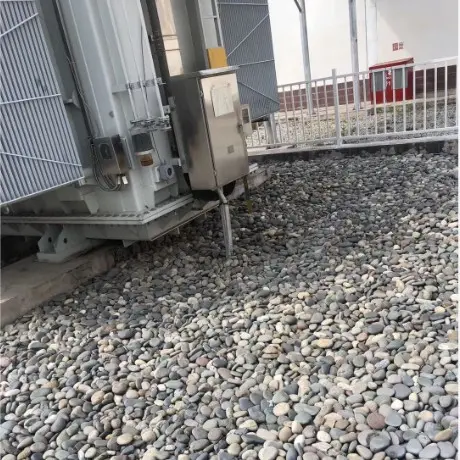
    Why Do Substations Use Stones, Gravel, Pebbles, and Crushed Rock?In substations, equipment such as power and distribution transformers, transmission lines, voltage transformers, current transformers, and disconnect switches all require grounding. Beyond grounding, we will now explore in depth why gravel and crushed stone are commonly used in substations. Though they appear ordinary, these stones play a critical safety and functional role.In substation grounding design—especially when multiple gr
    01/29/2026
  • Why Must a Transformer Core Be Grounded at Only One Point? Isn't Multi-Point Grounding More Reliable?
    Why Does the Transformer Core Need to Be Grounded?During operation, the transformer core, along with the metal structures, parts, and components that fix the core and windings, are all situated in a strong electric field. Under the influence of this electric field, they acquire a relatively high potential with respect to ground. If the core is not grounded, a potential difference will exist between the core and the grounded clamping structures and tank, which may lead to intermittent discharge.I
    01/29/2026
  • Understanding Transformer Neutral Grounding
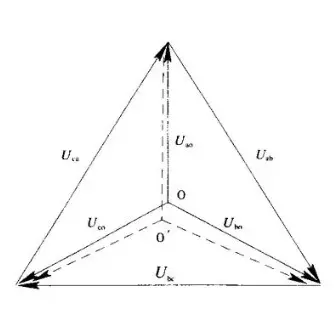
    I. What is a Neutral Point?In transformers and generators, the neutral point is a specific point in the winding where the absolute voltage between this point and each external terminal is equal. In the diagram below, pointOrepresents the neutral point.II. Why Does the Neutral Point Need Grounding?The electrical connection method between the neutral point and earth in a three-phase AC power system is called theneutral grounding method. This grounding method directly affects:The safety, reliabilit
    01/29/2026

Related Solutions

  • Implementation Scheme for Installing Lightning Arresters or Voltage Transformers in Gas-Insulated Ring Main Units
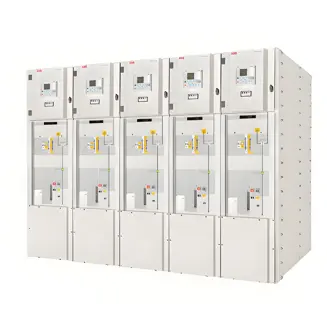
    According to insulation type, ring main units (RMUs) can be categorized as gas-insulated or air-insulated. The former installs primary circuit components in a sealed metal enclosure filled with low-pressure gas (primarily SF₆ or mixed gases) as the insulating medium, using cable terminals for incoming and outgoing lines. Due to superior insulation, compact size, and modular design, they are widely used in 10kV outdoor distribution substations and prefabricated transformer stations. However, thei
    08/16/2025
  • High-Temperature Insulating Material Solution for Electric Furnace Transformers
    Background & Challenge​Electric furnaces operate for extended periods under harsh conditions involving high temperatures, dust, etc. Traditional transformer insulation materials experience accelerated aging in these environments, leading to insulation failure, reduced lifespan, and even unplanned furnace shutdowns, significantly impacting production efficiency.​Core Strategy​Implement a dual-pronged approach to ensure transformer reliability and long-term operation under extreme high tempera
    08/09/2025
  • Eco-Friendly Electric Furnace Transformer Solutions
    Eco-Friendly Electric Furnace Transformer Solutions​Eco-friendly electric furnace transformers have become key equipment driving the green transformation of the electric furnace smelting industry. This solution, through innovative design and strict material selection, establishes an environmentally friendly system covering the product's entire life cycle:​Core Eco-Material Applications:​​​Halogen-Free Flame-Retardant Insulation Materials:​​ Fully adopts halogen-free materials such as ceramifiabl
    08/09/2025
Related Free tools
Haven't found the right supplier yet? Let matching verified suppliers find you. Get Quotation Now
Haven't found the right supplier yet? Let matching verified suppliers find you.
Get Quotation Now
Send inquiry
+86
Click to upload file
Download
Get the IEE Business Application
Use the IEE-Business app to find equipment, obtain solutions, connect with experts, and participate in industry collaboration anytime, anywhere—fully supporting the development of your power projects and business.