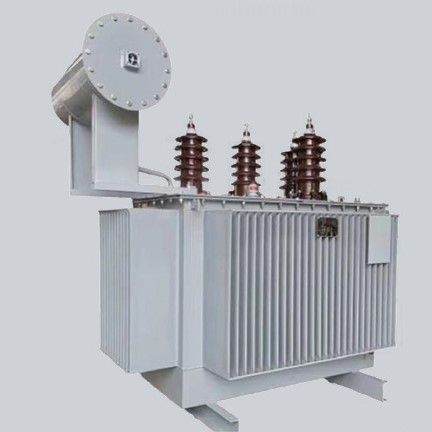
Intelligent Maintenance Services and Sustainable Solutions for Z-Type Grounding Transformers
Z-type grounding transformers are critical for stabilizing ungrounded or delta-connected power systems by providing a low-impedance path for zero-sequence currents during faults. Integrating intelligent maintenance and sustainability practices enhances their reliability while minimizing environmental impact. Below is a structured analysis of advanced solutions:
I. Intelligent Maintenance Services
Real-Time Condition Monitoring
IoT-Based Sensors: Track real-time parameters like temperature, partial discharge, winding deformation, and oil quality (for oil-immersed units). Data is transmitted to centralized platforms for anomaly detection.
Online Zero-Sequence Current Monitoring: Detects insulation degradation or neutral resistor faults by analyzing current imbalances during normal operations, reducing dependency on fault-triggered inspections.
Predictive Analytics and AI-Driven Diagnostics
Machine Learning Algorithms: Analyze historical data to predict failures (e.g., insulation breakdown or core deformation) using vibration patterns, thermal imaging, and partial discharge trends.
Digital Twins: Simulate transformer behavior under varying loads and fault scenarios to optimize maintenance schedules and spare parts inventory.
Automated Protection Systems
Delta-Connected CT Configurations: Improve sensitivity by filtering out zero-sequence currents during external faults, preventing false tripping and enhancing relay coordination.
Adaptive Zero-Sequence Overcurrent Protection: Adjusts tripping thresholds based on real-time fault current magnitude, ensuring selective isolation of faulty sections.
Remote Maintenance and Troubleshooting
Cloud Platforms: Enable technicians to diagnose issues remotely via data dashboards, reducing on-site visits and carbon footprint.
II. Sustainable Solutions
Eco-Design and Materials
Dry-Type Transformers: Use recyclable epoxy resin instead of mineral oil, eliminating fire risks and soil contamination.
High-Efficiency Core Materials: Amorphous metal cores reduce no-load losses by 70–80%, cutting energy waste during prolonged idle states.
Lifecycle Management
Remanufacturing Programs: Refurbish retired units by replacing worn components (e.g., windings), extending service life by 10–15 years.
End-of-Life Recycling: Recover >95% of copper and steel for reuse, minimizing resource extraction.
Renewable Energy Integration
Grid Stability for Renewables: Provide artificial neutral points in wind/solar farms, mitigating DC offset and harmonics from inverters.
Fast Fault Current Suppression: Limit ground faults in <100 ms, preventing cascading outages in distributed generation networks.
Energy-Efficient Operations
Low No-Load Losses: Optimized winding designs (e.g., ZNyn11 connections) reduce idle energy consumption to <0.2% of rated capacity.
Cooling System Upgrades: ONAN/ONAF cooling with biodegradable fluids cuts fan energy use by 30%.
III. Implementation Framework
Phase |
Actions |
Outcomes |
Design |
Use recycled materials; select dry-type or amorphous cores |
40% lower carbon footprint; compliance with IEC 60076 |
Monitoring |
Install IoT sensors; deploy AI analytics platforms |
50% reduction in unplanned downtime; predictive accuracy >90% |
Maintenance |
Adopt delta-CT protection; remote diagnostics |
30% fewer on-site interventions; fault resolution in <4 hours |
End-of-Life |
Partner with certified recyclers; remanufacture components |
>90% material recovery rate; 60% cost savings vs. new units |
IV. Stakeholder Collaboration
Utilities: Fund R&D for biodegradable insulation fluids and fault-tolerant algorithms.
Manufacturers: Standardize modular designs (e.g., Winley Electric’s 36 kV units) to simplify upgrades.
Regulators: Enforce lifecycle carbon accounting and tax incentives for low-loss transformers.