1 Core Technical Architecture of C&I BESS
1.1 All-in-One Integrated Design
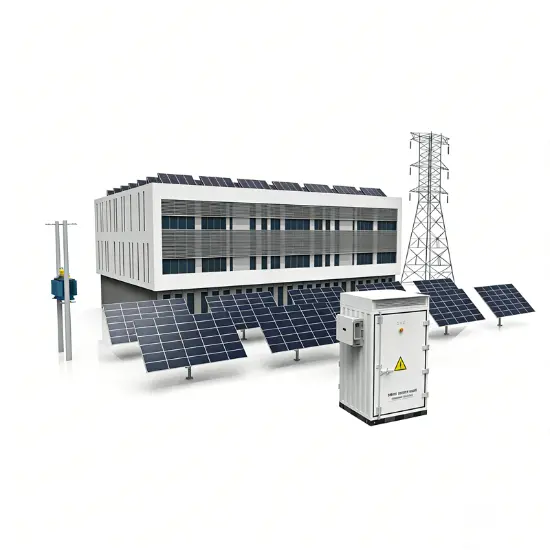
Modern Commercial & Industrial Battery Energy Storage Systems (BESS) employ a highly integrated architecture, combining battery packs, bidirectional power conversion systems (PCS), energy management systems (EMS), thermal management, and fire suppression systems within a single cabinet or container. This integrated design significantly reduces interconnection wiring, increases system energy conversion efficiency to 95%-97%, and substantially decreases installation complexity and footprint. For instance, the Greensoul GSL-BESS series utilizes a modular design supporting capacity expansion from 30kWh to 180kWh. Each battery pack features an independent Battery Management System (BMS) enabling real-time status monitoring and flexible capacity upgrades, meeting the dual requirements of space utilization and investment flexibility for C&I users.
1.2 Intelligent Thermal Management
Thermal management technology is a core element ensuring BESS safety and lifespan. Modern systems adopt differentiated thermal control strategies for various application scenarios:
Liquid Cooling Technology: Applied in high-power scenarios (e.g., Mennete ESS-C-JG261-L system), coolant circulation ensures battery pack temperature differentials ≤5°C. Compared to traditional air-cooling, heat dissipation efficiency increases by 40%, making it especially suitable for high-temperature, high-dust industrial environments. Its IP54 protection rating ensures stable operation under harsh conditions.
Intelligent Air-Cooling System: For small/medium C&I scenarios (e.g., ESS-C-JG229-F), multi-stage fan speed adjustment and zonal temperature control, combined with environmental humidity adaptive algorithms, optimize annual energy efficiency by ensuring heat dissipation while reducing auxiliary power consumption.
1.3 Multi-Layered Safety Protection
C&I BESS incorporates a multi-tiered safety protection system:
Cell-Level Protection: Utilizes lithium iron phosphate (LFP) batteries with superior thermal stability. Their thermal runaway onset temperature is significantly higher than NCM batteries, fundamentally reducing fire and explosion risks.
Pack-Level Fire Suppression: Equipped with perfluorohexanone or aerosol fire extinguishing agents. Temperature-smoke-gas composite detectors enable millisecond-level response, achieving localized suppression before thermal runaway propagation.
System-Level Protection: Integrates arc fault detection and insulation monitoring, coupled with grid anti-islanding protection mechanisms (compliant with GB/T 34120 standard), ensuring grid connection safety.
1.4 Efficient Energy Management
The BESS's "Smart Brain" – the EMS system maximizes energy value through multi-strategy collaborative optimization:
Dynamic Electricity Pricing Strategy: Charges during off-peak periods (typically ¥0.3-0.4/kWh) and discharges during peak periods (¥1.0-1.5/kWh), achieving fundamental peak-valley arbitrage.
Demand Charge Management: Smoothes 15-minute peak demand power through load forecasting algorithms, reducing basic electricity costs (cutting enterprise electricity bills by 15%-30%).
PV-Storage Coordination: Dynamically adjusts the ratio between PV generation and battery charge/discharge, increasing the self-consumption rate to over 80%.
Table: Comparison of Typical C&I BESS Technical Parameters
Parameter |
Liquid-cooled Container (ESS-C-20-5015D-L) |
Air-cooled C&I Storage (ESS-C-JG229-F) |
All-in-One Unit (AP-5096) |
Installed Capacity |
5015 kWh |
229 kWh |
9.6 kWh |
Output Power |
2508 kW |
115 kW |
5 kW |
Cooling Method |
Liquid Cooling (ΔT≤5°C) |
Air Cooling |
Passive Cooling |
Fire Suppression System |
Pack-level Perfluorohexanone |
Aerosol |
Cabinet-level Extinguishing |
Applicable Scenario |
Grid-side Frequency Regulation / PV Farms |
Factories/Parks (Peak Shaving) |
Small Commercial/Charging Stations |
2 Analysis of Diversified Application Scenarios
2.1 Peak Shaving, Valley Filling & Demand Management
In manufacturing and large commercial facilities, BESS delivers significant economic benefits through precise load adjustment:
Electricity Cost Optimization: A deployed 1MW/2MWh system at an automotive factory using a twice-daily discharge strategy (midday + evening peaks) reduced annual electricity costs by 37%, shortening the payback period to 4.2 years.
Demand Charge Control: A Shenzhen data center used BESS to smooth burst loads from server clusters, reducing the monthly peak demand from 8.3MW to 6.7MW, saving over ¥1.8 million annually on this cost alone.
Transformer Upgrade Deferral: A Shanghai commercial complex delayed its transformer upgrade plan by 8 years using a distributed BESS cluster, saving ¥6.5 million in infrastructure investment.
2.2 Integrated PV-Storage-Charging Systems
With EV proliferation, BESS plays a central regulatory role in charging infrastructure:
Power Buffering: In 120kW fast-charging station scenarios, the BESS absorbs 80% of grid surge currents, preventing demand charge penalties triggered by charging peaks.
PV Utilization: Data from a Hangzhou PV-Storage-Charging demo station shows that using the "PV → Storage → Charging" chain reduced PV curtailment from 18% to below 3% and lowered overall electricity costs by 52%.
V2G Application: New bidirectional BESS support Vehicle-to-Grid (V2G) technology, dispatching EV battery energy during grid peak hours to create additional revenue for operators.
2.3 Microgrid Energy Autonomy
In off-grid or weak-grid areas, BESS becomes the cornerstone for stable microgrid operation:
Island Microgrid: A Hainan island project combining 500kW PV with 1.2MWh storage reduced diesel generator runtime from 24 hours/day to 4.5 hours, cutting annual CO2 emissions by 820 tons.
Industrial Park Microgrid: A Jiangsu electronics industrial park established a PV-Storage-Hydrogen integrated microgrid, achieving 65% renewable energy penetration through BESS. It participates in demand response in grid-connected mode, generating ¥2.3 million in annual subsidy revenue.
2.4 Emergency Backup Power
BESS provides highly reliable backup power for continuous production facilities:
Data Centers: Replacing traditional diesel generators, enabling millisecond-level switching (e.g., Hitachi project), ensuring server uptime while reducing backup power emissions by 90%.
Healthcare Systems: A Wuhan Tier-3 hospital deployed a 400kWh system to prioritize power supply to operating rooms and ICUs for ≥4 hours during grid failures, avoiding significant safety risks.
Semiconductor Manufacturing: A Wuxi wafer fab utilizes BESS to mitigate sub-0.1-second voltage sags, preventing potential single-event losses worth millions of RMB in scrapped wafers.
3 Critical Design Standards
3.1 Safety & Compliance Requirements
C&I BESS must comply with multi-level safety regulations:
International Certifications: Pass UL9540A (Thermal Runaway Test), IEC62619 (Safety Requirements), etc., ensuring cell, module, and system-level safety.
Grid Interconnection Standards: Comply with GB/T 34120 "Technical Specification for Grid-Connected Electrochemical Energy Storage Systems," possessing Low Voltage Ride-Through (LVRT) and frequency disturbance response capabilities.
Building Compliance: Containerized systems must meet NFPA 855 fire separation distance requirements (e.g., ≥3 meters for a 3MWh system).
3.2 Environmental Adaptability Design
Differentiated design strategies are required for diverse deployment environments:
High Temperature: Experience from Saudi projects (50°C) necessitates liquid cooling + phase change material composite cooling to ensure battery temperature ≤35°C.
High Altitude: Projects in Tibet (4,500m altitude) require air density compensation coefficients, with PCS output power derating reaching 15%.
Corrosive Environments: Systems in coastal areas must meet salt spray standard IEC60068-2-52, with enclosure protection rating ≥ IP54.
3.3 Economic Optimization
Project feasibility relies on detailed revenue models:
Investment Return Calculation: A typical model includes: Payback Period (years) = (Initial Investment - Subsidies) / (Annual Peak-Valley Revenue + Demand Management Revenue + Ancillary Service Revenue). E.g., a Shenzhen project: Initial Investment = ¥4.2M, Subsidies = ¥1.5M, Annual Revenue = ¥1.78M, Payback = 2.8 years.
Equipment Selection Optimization: For a 250kW/500kWh system, liquid cooling increases investment by 18% compared to air cooling, but extends lifespan by 3 years, reducing Levelized Cost of Storage (LCOS) by ¥0.12/kWh.
Table: Typical C&I Energy Storage Revenue Structure
Revenue Source |
Implementation Mechanism |
Share |
Case Value |
Peak-Valley Price Arbitrage |
Charge off-peak, Discharge on-peak |
55%-70% |
¥0.68/kWh (Shenzhen) |
Demand Charge Management |
Peak load curtailment |
15%-25% |
Monthly saving: ¥42,000 |
Demand Response Subsidies |
Responding to grid peak-shaving signals |
10%-20% |
Annual revenue: ¥530,000 |
Carbon Emission Trading |
Selling carbon reduction credits |
5%-10% |
Annual: 28k tons CO₂ quota |
4 Real-World Application Cases
4.1 Xinjiang Corps PV Base Project
Mennete's large-scale PV-Storage integration project at the northern edge of the Taklamakan Desert demonstrates the core value of BESS in renewable energy integration:
System Configuration: Deployed 224 sets of 20ft liquid-cooled containers (Total Capacity: 1GWh), with individual unit capacity of 5015kWh. Utilizes advanced thermal management (IP54) and pack-level fire suppression.
Operational Results:
PV curtailment rate reduced from 22% to below 5%.
Achieved twice-daily charge-discharge cycles daily (discharge at midday + night).
Annual grid feed-in reached 1.22 billion kWh, equivalent to reducing CO2 emissions by 1.07 million tons.
Technical Highlights: Battery pack ΔT ≤5°C, system availability maintained at 99.2%, adapted to desert extremes (-25°C ~ 45°C).
4.2 Malaysia Business Park Project
Greensoul's modular BESS solution in Southeast Asia showcases flexible application of small/medium systems:
Scenario: Provides 100 sets of 50kW/100kWh All-in-One units for energy-intensive industries and schools, solving power rationing issues in grid-weak areas.
System Advantages:
All-in-One design reduced installation time by 60%.
Supports multi-unit parallel connection, expandable up to 1.5MWh.
Intelligent dehumidification system adapts to tropical rainforest climate (humidity >80%).
Economic Benefits: Users achieved average electricity cost reduction of 31% using a "Peak-Valley Arbitrage + Demand Control" strategy, with a project payback period of 3.7 years.
4.3 Green Data Center Project
A hyperscale data center upgraded its energy system using BESS, demonstrating multiple technical benefits:
System Architecture:
2.4MW/4.8MWh Li-ion BESS replaced 50% of diesel generator capacity.
Synchronized controller with rooftop PV.
Integrated AI-driven EMS platform.
Comprehensive Benefits:
Black-start time reduced from 120 seconds (diesel) to 0.5 seconds.
Annual revenue from grid frequency regulation services reached $320,000.
PUE (Power Usage Effectiveness) optimized from 1.45 to 1.28.
Sustainability: Reduced annual diesel consumption by 480,000 liters, achieved LEED Zero Carbon certification, and enhanced the company's ESG rating.
5 Technology Evolution and Future Trends
Case |
Country |
Technology/Model Feature |
Application Effect |
Policy Support |
Gemasolar CSP Plant |
Spain |
Molten Salt Storage + PV Integration |
24-hour continuous power, 300k ton CO2 reduction/yr |
EU Renewable Energy Subsidies |
Enertrag H2 Plant |
Germany |
Wind-to-Hydrogen + Storage + Fuel Cell |
Increased wind utilization 18%, H2 supply 1200 tons/yr |
Germany National Hydrogen Strategy Funding |
Aggreko FFR Service |
UK |
VPP Aggregated Storage in FFR Market |
£15k/MW/year revenue |
UK Capacity Market Mechanism |
Stem REC Trading |
US (CA) |
PV Storage for RECs + AI Optimization |
Annual REC trading: $1.2 million |
California Renewable Portfolio Standard |