How does a magnet affect an electron moving through a wire and producing an electrical current?

How Do Magnets Affect the Movement of Electrons in a Wire and Generate Current?
Magnets can influence the movement of electrons in a wire and generate current through several mechanisms, primarily based on Faraday's law of electromagnetic induction and the Lorentz force. Here is a detailed explanation:
1. Faraday's Law of Electromagnetic Induction
Faraday's law of electromagnetic induction states that when the magnetic flux through a closed loop changes, an electromotive force (EMF) is induced in the loop, which can cause a current to flow. Specifically:
Changing Magnetic Field: When a magnet moves near a wire or when a wire moves in a magnetic field, the magnetic flux through the wire loop changes.
Induced EMF: According to Faraday's law, the change in magnetic flux induces an EMF E, given by the formula:
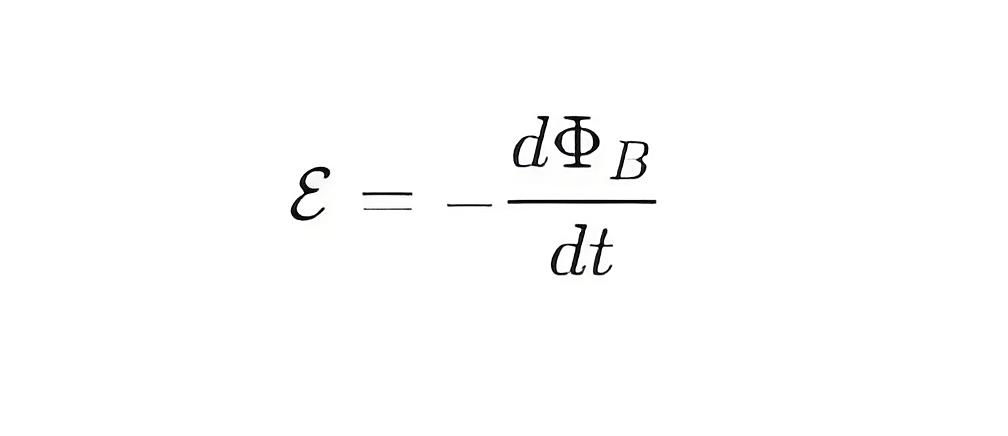
where ΦB is the magnetic flux and t is time.
Current: The induced EMF causes electrons to move in the wire, creating a current I. If the wire forms a closed loop, the current will continue to flow.
2. Lorentz Force
The Lorentz force describes the force experienced by a charged particle in a magnetic field. When electrons move in a wire, they experience the Lorentz force if a magnetic field is present. Specifically:
Lorentz Force Formula: The Lorentz force F is given by:
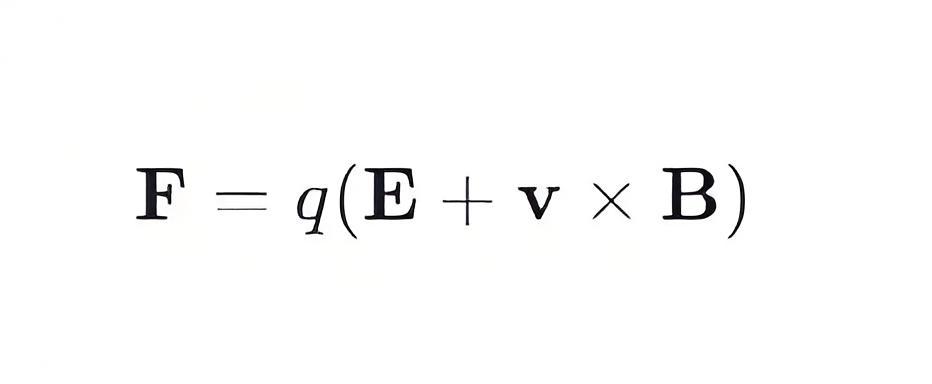
where q is the charge, E is the electric field, v is the velocity of the charge, and B is the magnetic field.
Electron Motion in a Magnetic Field**: When electrons move in a magnetic field, the Lorentz force F=qv×B causes the electrons to deflect. This deflection changes the path of the electrons, affecting the direction and magnitude of the current.
3. Specific Applications
Generators
Principle: Generators utilize Faraday's law of electromagnetic induction by rotating magnets or wires to produce changing magnetic flux, which induces an EMF and current in the wires.
Application: Generators in power stations use large rotating magnets and wire coils to produce large-scale currents.
Motors
Principle: Motors use the Lorentz force to convert electrical energy into mechanical energy. When current flows through a wire in a magnetic field, the wire experiences a force that causes it to rotate.
Application: Motors are widely used in various mechanical devices, such as household appliances, industrial equipment, and vehicles.
Transformers
Principle: Transformers use Faraday's law of electromagnetic induction to transfer energy between primary and secondary coils through a changing magnetic field, thereby altering the voltage and current.
Application: Transformers are used in power transmission and distribution systems to step up or step down voltages.
4. Experimental Example
Faraday Disk Experiment
Setup: A metal disk is fixed on an axle, which is connected to a galvanometer. The metal disk is placed in a strong magnetic field.
Process: When the metal disk rotates, the magnetic flux through the disk changes, inducing an EMF according to Faraday's law, which causes a current to flow through the axle and the galvanometer.
Observation: The galvanometer shows a current flowing, demonstrating that the changing magnetic flux has generated an EMF.
Summary
Magnets affect the movement of electrons in a wire and generate current through Faraday's law of electromagnetic induction and the Lorentz force. A changing magnetic field induces an EMF in the wire, causing electrons to move and form a current. The Lorentz force deflects the path of moving electrons in a magnetic field, influencing the direction and magnitude of the current. These principles are widely applied in generators, motors, and transformers.