• Product
  • Suppliers
  • Manufacturers
  • Solutions
  • Free tools
  • Knowledges
  • Experts
  • Communities
Search


According to the IEEE C37.122 standard, what are the routine tests for high-voltage gas-insulated substations (GIS)?

Dyson
Field: Electrical Standards
China

As required for routine tests of gas-insulated metal-enclosed switchgear, it is necessary to ensure that each equipment unit undergoes systematic routine tests before leaving the factory. These tests (also known as production tests) core on confirming the consistency between the equipment's operating status and design requirements as well as type-test parameters, serving as an indispensable quality control link after assembly. Test parameters are directly derived from type-test data, so routine test results must align with type-test data within specific tolerance ranges.

Implementation Specifications for Dielectric Tests

Dielectric tests shall be carried out after completing mechanical routine tests, aiming to verify the dielectric performance of GIS, ensure correct equipment assembly and qualified dielectric manufacturing quality of components, and inspect for internal particles or contaminants.
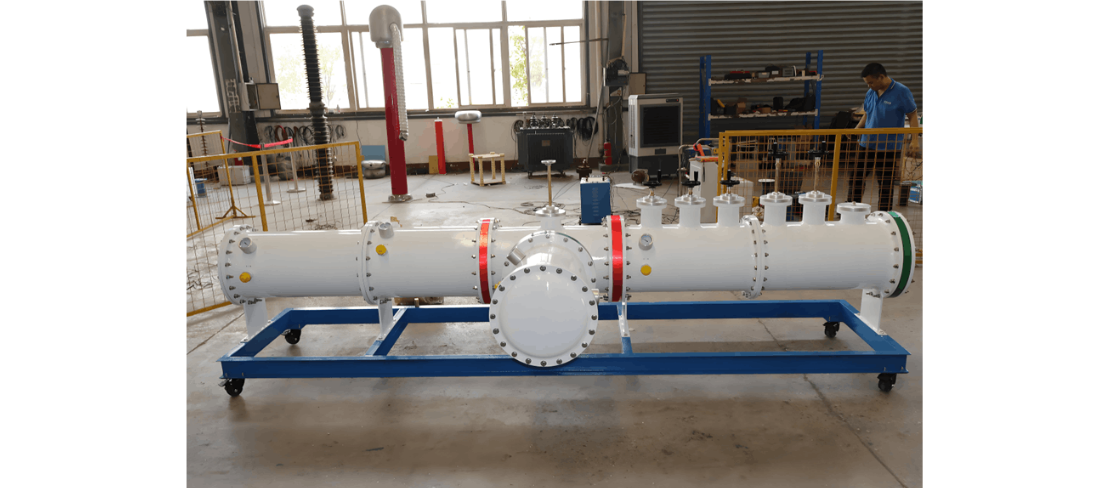
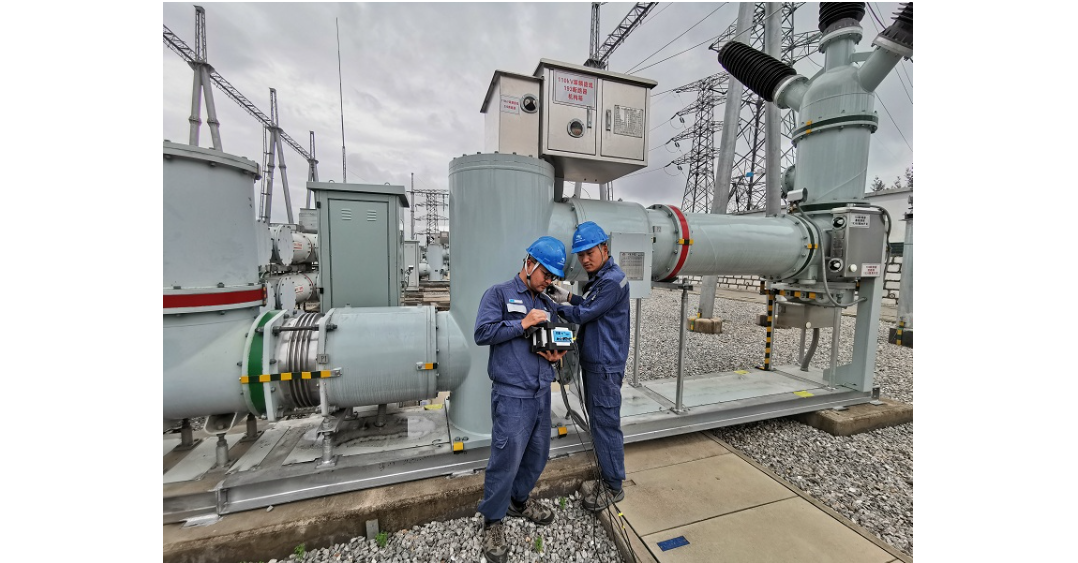
  • Power Frequency Dielectric Test: Routine tests adopt the form of power frequency withstand voltage tests, excluding impulse tests such as lightning and switching impulse tests. Under the minimum functional SF₆ pressure, the following parts shall be tested: phase-to-ground, phase-to-phase (for three-phase-in-one-enclosure designs), and the breaks of open switching devices. The main criterion for passing the test is that the equipment can withstand the one-minute withstand voltage value without disruptive discharge.

  • Partial Discharge Measurement: This item is used to detect material or manufacturing defects, and shall be conducted simultaneously with dielectric tests after mechanical routine tests, covering all components of GIS.

Requirements for Main Circuit Resistance Measurement

A 100A DC current shall be used to measure the voltage drop or resistance value of the main circuit, with the allowable deviation of test data from type-test data controlled within ±20%.

Operation Procedures for Tightness Tests

During the test, SF₆ pipelines, leakage detectors, full-area inspection tools for enclosure components, SF₆ pressure gauges, and density monitoring devices shall be used to inspect for leaks in all parts of the equipment.

Standards for Enclosure Pressure Tests

Enclosures shall undergo pressure tests after machining:

  • The test pressure for welded aluminum and steel enclosures is 1.3 times the design pressure;

  • The test pressure for cast enclosures is 2 times the design pressure.

Automated test stations can immediately perform tightness tests with helium after the enclosure pressure tests. The specific standards are as follows:

  • Welded aluminum/steel enclosures: 1.3 times the design pressure;

  • Cast aluminum/composite aluminum enclosures: 2 times the design pressure.

The test pressure shall be maintained for at least 1 minute, and no rupture or permanent deformation of the enclosure is allowed.

The above test procedures are all implemented in accordance with the IEEE C37.122 standard to ensure that the mechanical strength, dielectric performance, and sealing reliability of each GIS equipment meet the factory requirements.
Give a tip and encourage the author!

Recommended

Quality Standards for Core Maintenance of Power Transformers
Transformer Core Inspection and Assembly Requirements The iron core should be flat with intact insulation coating, tightly stacked laminations, and no curling or waviness at the edges of silicon steel sheets. All core surfaces must be free of oil, dirt, and impurities. There should be no short circuits or bridging between laminations, and joint gaps must meet specifications. Good insulation must be maintained between the core and upper/lower clamping plates, square iron pieces, pressure plates,
12/17/2025
GIS Dual Grounding & Direct Grounding: State Grid 2018 Anti-Accident Measures
1. Regarding GIS, how should the requirement in Clause 14.1.1.4 of the State Grid’s "Eighteen Anti-Accident Measures" (2018 Edition) be understood?14.1.1.4: The neutral point of a transformer shall be connected to two different sides of the main mesh of the grounding grid via two grounding down conductors, and each grounding down conductor shall meet the thermal stability verification requirements. Main equipment and equipment structures shall each have two grounding down conductors connected to
12/05/2025
Three IEC standards in the insulator field, led by China, have been released.
Recently, three IEC standards on insulators, led by China for the first time, have been officially published. These standards primarily address the coupling markings, dimensions, and tests of insulator end fittings, specifically including IEC 60120:2020, IEC 60372:2020, and IEC 60471:2020. These three standards were jointly completed under the leadership and coordination of numerous experts from the National Technical Committee on Insulators of China (SAC/TC80). The publication of these standard
11/29/2025
Research on Quality Control and Acceptance Standards for Installation of GW4-126 Disconnector
1.Working Principle and Structural Features of GW4-126 DisconnectorThe GW4-126 disconnector is suitable for AC 50/60 Hz power lines with a rated voltage of 110 kV. It is used to disconnect or connect high-voltage circuits under no-load conditions, enabling circuit switching, operational mode changes, and safe electrical isolation of busbars, circuit breakers, and other high-voltage equipment during maintenance. Disconnectors typically feature a clearly visible open point to ensure safe current i
11/17/2025
Send inquiry
+86
Click to upload file
Download
Get the IEE Business Application
Use the IEE-Business app to find equipment, obtain solutions, connect with experts, and participate in industry collaboration anytime, anywhere—fully supporting the development of your power projects and business.