• Product
  • Suppliers
  • Manufacturers
  • Solutions
  • Free tools
  • Knowledges
  • Experts
  • Communities
Search


Quality Standards for Core Maintenance of Power Transformers

Oliver Watts
Field: Inspection and testing
China

Transformer Core Inspection and Assembly Requirements

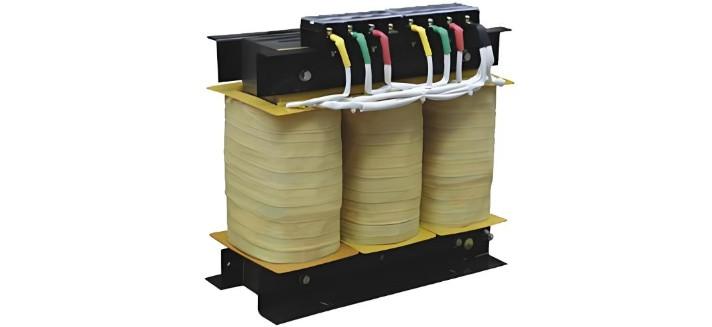
  • The iron core should be flat with intact insulation coating, tightly stacked laminations, and no curling or waviness at the edges of silicon steel sheets. All core surfaces must be free of oil, dirt, and impurities. There should be no short circuits or bridging between laminations, and joint gaps must meet specifications.

  • Good insulation must be maintained between the core and upper/lower clamping plates, square iron pieces, pressure plates, and base plates.

  • There must be a clear, uniform gap between steel pressure plates and the core. Insulated pressure plates must remain intact without damage or cracks, and maintain appropriate tightness.

  • Steel pressure plates must not form closed loops and should be grounded at a single point.

  • After disconnecting the connection strips between the upper clamping plate and core, and between the steel pressure plate and upper clamping plate, measure the insulation resistance between the core and clamping plates, and between the steel pressure plate and core. Results should show no significant changes compared to previous tests.

  • All bolts must be securely tightened. Forward and reverse pressure pins and lock nuts on clamping plates must not be loose, should maintain good contact with insulating washers, and show no discharge burn marks. Reverse pressure pins must maintain adequate distance from the upper clamping plate.

  • Core-through bolts must be tightly secured with insulation resistance values showing no significant changes compared to previous test results.

  • Oil channels must remain unobstructed with oil duct spacer blocks properly secured, free from blockages, and neatly arranged.

  • The core must be grounded at only one point using a purple copper strip 0.5mm thick and no less than 30mm wide, inserted between 3-4 layers of core laminations. For large transformers, insertion depth must be no less than 80mm. Exposed portions must be insulated to prevent core short circuits.

  • Components must be securely fastened with sufficient mechanical strength, maintain good insulation without forming electrical loops, and must not contact the core.

  • Insulation must be in good condition with reliable grounding.
Power transformer core.jpg

Give a tip and encourage the author!

Recommended

What’s the Difference Between Rectifier Transformers and Power Transformers?
What is a Rectifier Transformer?"Power conversion" is a general term encompassing rectification, inversion, and frequency conversion, with rectification being the most widely used among them. Rectifier equipment converts input AC power into DC output through rectification and filtering. A rectifier transformer serves as the power supply transformer for such rectifier equipment. In industrial applications, most DC power supplies are obtained by combining a rectifier transformer with rectifier equ
01/29/2026
How to Judge, Detect and Troubleshoot Transformer Core Faults
1. Hazards, Causes, and Types of Multi-Point Grounding Faults in Transformer Cores1.1 Hazards of Multi-Point Grounding Faults in the CoreUnder normal operation, a transformer core must be grounded at only one point. During operation, alternating magnetic fields surround the windings. Due to electromagnetic induction, parasitic capacitances exist between the high-voltage and low-voltage windings, between the low-voltage winding and the core, and between the core and the tank. The energized windin
01/27/2026
Analysis of Four Major Power Transformer Burnout Cases
Case OneOn August 1, 2016, a 50kVA distribution transformer at a power supply station suddenly sprayed oil during operation, followed by burning and destruction of the high-voltage fuse. Insulation testing revealed zero megohms from the low-voltage side to ground. Core inspection determined that damage to the low-voltage winding insulation had caused a short circuit. Analysis identified several primary causes for this transformer failure:Overloading: Load management has historically been a weak
12/23/2025
Power Transformer Condition Monitoring: Reducing Outages & Maintenance Costs
1. Definition of Condition-Based MaintenanceCondition-based maintenance refers to a maintenance approach where repair decisions are determined by the real-time operational status and health condition of equipment. There are no fixed schedules or predetermined maintenance dates. The prerequisite for condition-based maintenance is the establishment of equipment parameter monitoring systems and comprehensive analysis of various operational information, enabling reasonable maintenance decisions base
12/22/2025
Related Products
Send inquiry
+86
Click to upload file
Download
Get the IEE Business Application
Use the IEE-Business app to find equipment, obtain solutions, connect with experts, and participate in industry collaboration anytime, anywhere—fully supporting the development of your power projects and business.