• Product
  • Suppliers
  • Manufacturers
  • Solutions
  • Free tools
  • Knowledges
  • Experts
  • Communities
Search


Free Expert Guides on Power Systems, Circuit Design & Electrical Troubleshooting

Access free engineering resources from IEE Business—covering power design, circuit layout, equipment selection, and troubleshooting. Expert-developed guides help engineers, procurement, and project teams make better decisions. Stay ahead on smart grids, renewables, efficiency, and AI tools. Improve reliability, reduce downtime, and enhance outcomes with real-world solutions. Explore our knowledge hub today.
What’s the Difference Between Rectifier Transformers and Power Transformers?
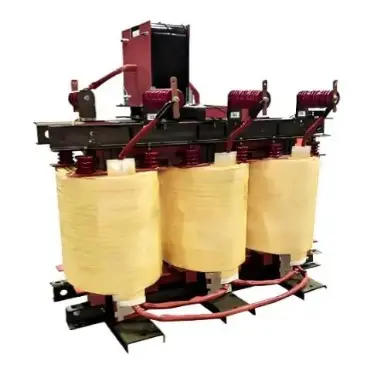
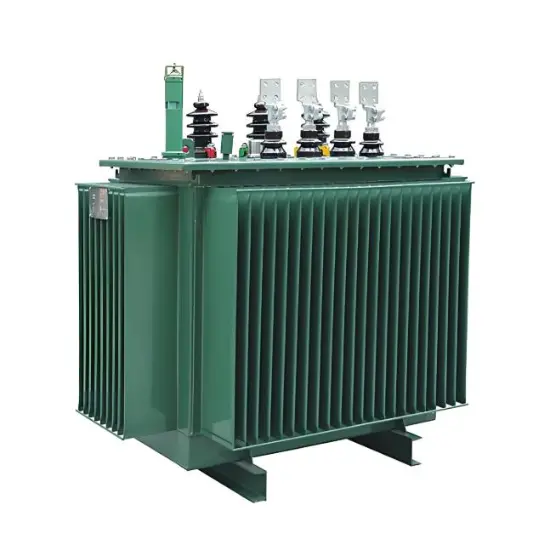
What is a Rectifier Transformer?"Power conversion" is a general term encompassing rectification, inversion, and frequency conversion, with rectification being the most widely used among them. Rectifier equipment converts input AC power into DC output through rectification and filtering. A rectifier transformer serves as the power supply transformer for such rectifier equipment. In industrial applications, most DC power supplies are obtained by combining a rectifier transformer with rectifier equ
01/29/2026
Consult
Tip
Consult
Tip
How to Judge, Detect and Troubleshoot Transformer Core Faults
1. Hazards, Causes, and Types of Multi-Point Grounding Faults in Transformer Cores1.1 Hazards of Multi-Point Grounding Faults in the CoreUnder normal operation, a transformer core must be grounded at only one point. During operation, alternating magnetic fields surround the windings. Due to electromagnetic induction, parasitic capacitances exist between the high-voltage and low-voltage windings, between the low-voltage winding and the core, and between the core and the tank. The energized windin
01/27/2026
Consult
Tip
Consult
Tip
Analysis of Four Major Power Transformer Burnout Cases
Case OneOn August 1, 2016, a 50kVA distribution transformer at a power supply station suddenly sprayed oil during operation, followed by burning and destruction of the high-voltage fuse. Insulation testing revealed zero megohms from the low-voltage side to ground. Core inspection determined that damage to the low-voltage winding insulation had caused a short circuit. Analysis identified several primary causes for this transformer failure:Overloading: Load management has historically been a weak
12/23/2025
Consult
Tip
Consult
Tip
Commissioning Test Procedures for Oil-Immersed Power Transformers
Transformer Commissioning Tests Procedures1. Non-Porcelain Bushing Tests1.1 Insulation ResistanceSuspend the bushing vertically using a crane or support frame. Measure the insulation resistance between the terminal and the tap/flange using a 2500V insulation resistance meter. The measured values should not deviate significantly from factory values under similar environmental conditions. For capacitor-type bushings rated 66kV and above with voltage sampling small bushings, measure the insulation
12/23/2025
Consult
Tip
Consult
Tip
Purpose of Pre-Commissioning Impulse Testing for Power Transformers
No-Load Full-Voltage Switching Impulse Testing for Newly Commissioned TransformersFor newly commissioned transformers, besides conducting necessary tests according to handover test standards and protection/secondary system tests, no-load full-voltage switching impulse tests are typically performed before official energization.Why Perform Impulse Testing?1. Check for Insulation Weaknesses or Defects in the Transformer and Its CircuitWhen disconnecting a no-load transformer, switching overvoltages
12/23/2025
Consult
Tip
Consult
Tip
What are the classification types of power transformers and their applications in energy storage systems?
Power transformers are core primary equipment in power systems that realize electrical energy transmission and voltage conversion. Through the principle of electromagnetic induction, they convert AC power of one voltage level to another or multiple voltage levels. In the transmission and distribution process, they play a critical role in "step-up transmission and step-down distribution," while in energy storage systems, they perform voltage step-up and step-down functions, ensuring efficient pow
12/23/2025
Consult
Tip
Consult
Tip
Power transformers Insulation Resistance & Dielectric Loss Analysis
1 IntroductionPower transformers are among the most critical equipment in power systems, and it is essential to maximize prevention and minimize the occurrence of transformer failures and accidents. Insulation failures of various types account for more than 85% of all transformer accidents. Therefore, to ensure safe transformer operation, regular insulation testing of transformers is necessary to detect insulation defects in advance and promptly address potential accident hazards. Throughout my
12/22/2025
Consult
Tip
Consult
Tip
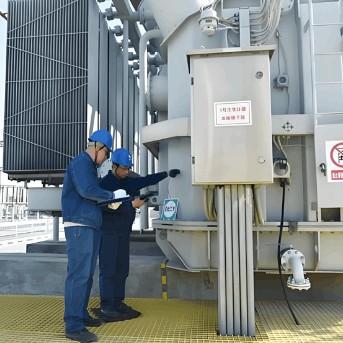
Power Transformer Condition Monitoring: Reducing Outages & Maintenance Costs
1. Definition of Condition-Based MaintenanceCondition-based maintenance refers to a maintenance approach where repair decisions are determined by the real-time operational status and health condition of equipment. There are no fixed schedules or predetermined maintenance dates. The prerequisite for condition-based maintenance is the establishment of equipment parameter monitoring systems and comprehensive analysis of various operational information, enabling reasonable maintenance decisions base
12/22/2025
Consult
Tip
Consult
Tip
Oriented Silicon Steel Impact on Transformer Efficiency & Noise
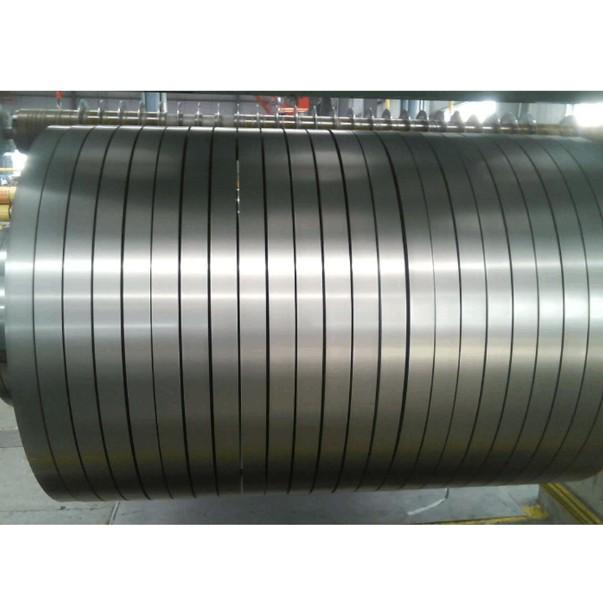
1. Development Trends of Power Transformer Manufacturing Technology in ChinaPower transformers are primarily developing in two directions:First, development toward extra-large ultra-high voltage transformers, with voltage levels advancing from 220kV, 330kV, and 500kV toward 750kV and 1000kV.Second, development toward energy-saving, miniaturized, low-noise, high-impedance, and explosion-proof types. These products are mainly small and medium-sized transformers, such as the new S13 and S15 distrib
12/22/2025
Consult
Tip
Consult
Tip
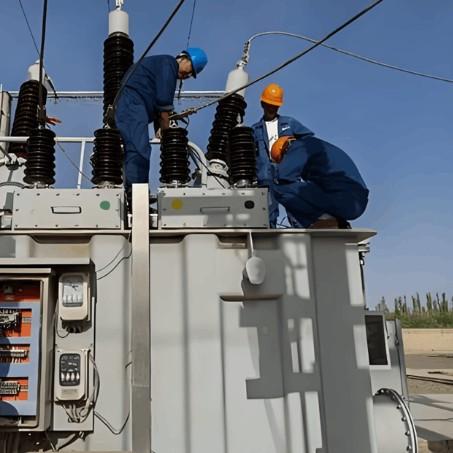
Power Transformer Conservator Tank Failure: Case Study and Repair
1. Judgment and Analysis of Abnormal Transformer SoundsDuring normal operation, a transformer typically emits a uniform and continuous AC humming sound. If abnormal sounds occur, they are generally caused by internal arcing/discharge or external instantaneous short circuits.Increased but uniform transformer sound: This may be caused by single-phase grounding or resonance in the power grid, resulting in overvoltage. Both single-phase grounding and resonant overvoltage in the grid will increase th
12/22/2025
Consult
Tip
Consult
Tip
Send inquiry
+86
Click to upload file
Download
Get the IEE Business Application
Use the IEE-Business app to find equipment, obtain solutions, connect with experts, and participate in industry collaboration anytime, anywhere—fully supporting the development of your power projects and business.