• Product
  • Suppliers
  • Manufacturers
  • Solutions
  • Free tools
  • Knowledges
  • Experts
  • Communities
Search


Free Expert Guides on Power Systems, Circuit Design & Electrical Troubleshooting

Access free engineering resources from IEE Business—covering power design, circuit layout, equipment selection, and troubleshooting. Expert-developed guides help engineers, procurement, and project teams make better decisions. Stay ahead on smart grids, renewables, efficiency, and AI tools. Improve reliability, reduce downtime, and enhance outcomes with real-world solutions. Explore our knowledge hub today.
What should be noted when installing a Type K thermocouple?
Installation precautions for Type K thermocouples are critical to ensuring measurement accuracy and extending service life. Below is an introduction to the installation guidelines for Type K thermocouples, compiled from highly authoritative sources:1.Selection and Inspection Select the appropriate thermocouple type: Choose the right thermocouple based on the temperature range, medium properties, and required accuracy of the measurement environment. Type K thermocouples are suitable for temperatu
11/06/2025
Consult
Tip
Consult
Tip
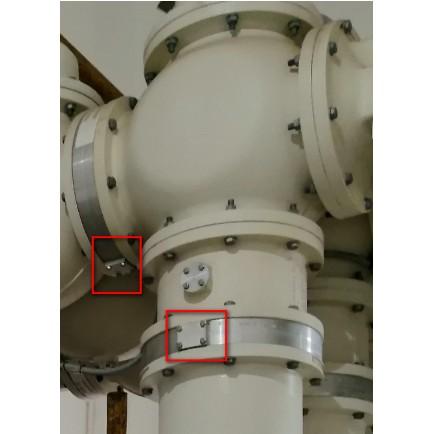
Why You Can't Remove Siemens GIS Bushing Cover for PD Testing
As the title suggests, when performing live partial discharge (PD) testing on Siemens GIS using the UHF method—specifically by accessing the signal through the metal flange of the bushing insulator—you must not directly remove the metal cover on the bushing insulator.Why?You won’t realize the danger until you try. Once removed, the GIS will leak SF₆ gas while energized! Enough talk—let’s go straight to the diagrams.As shown in Figure 1, the small aluminum cover inside the red box is typically th
10/24/2025
Consult
Tip
Consult
Tip
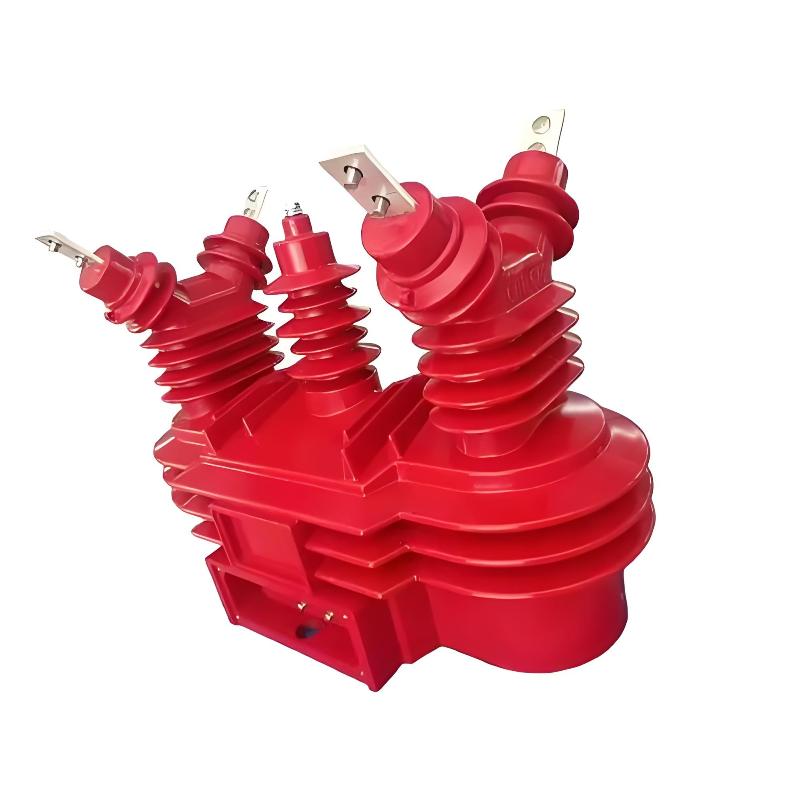
What Are Combined Transformer Standards? Key Specs & Tests
Combined Instrument Transformers: Technical Requirements and Testing Standards Explained with DataA combined instrument transformer integrates a voltage transformer (VT) and a current transformer (CT) into a single unit. Its design and performance are governed by comprehensive standards covering technical specifications, testing procedures, and operational reliability.1. Technical RequirementsRated Voltage:The primary rated voltages include 3kV, 6kV, 10kV, and 35kV, among others. The secondary v
10/23/2025
Consult
Tip
Consult
Tip
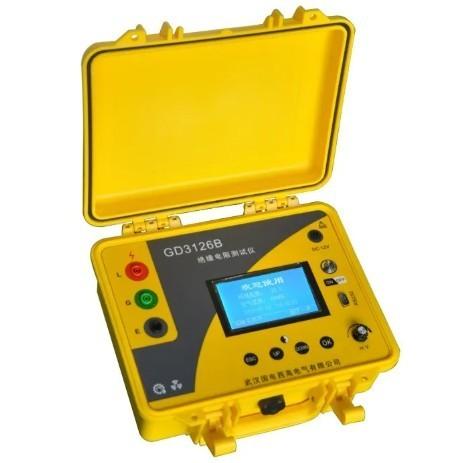
Why is it necessary to measure the absorption ratio of electrical equipment?
The absorption ratio is defined as follows: When operating a megohmmeter (insulation resistance tester), rotate the handle at a speed of 120 revolutions per minute. Record the insulation resistance reading at 15 seconds (R15) and then at 60 seconds (R60). The absorption ratio is calculated using the formula:Absorption Ratio = R60 / R15, which should be greater than or equal to 1.3.Measuring the absorption ratio helps determine whether the insulation of electrical equipment is damp. When insulati
09/26/2025
Consult
Tip
Consult
Tip
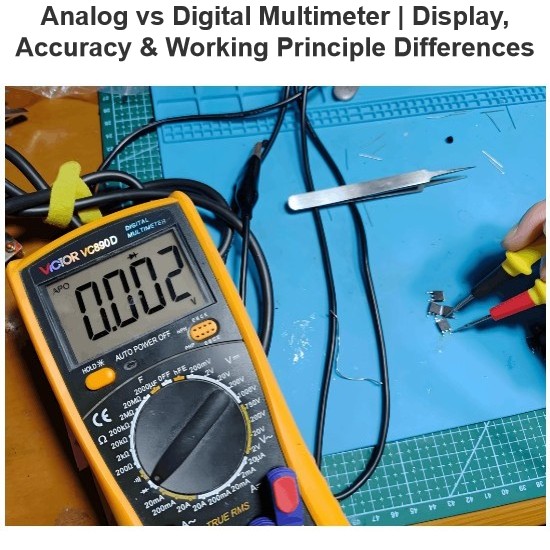
Analog vs Digital Multimeter | Display, Accuracy & Working Principle Differences
We know that multimeters are essential electronic test instruments used to measure various electrical quantities such as voltage, current, and resistance. Multimeters are broadly categorized into two types: analog and digital. The key difference between analog and digital multimeters lies in how they display the measured values—analog multimeters use a moving pointer on a scale, while digital multimeters show readings numerically using digits. In this discussion, we will explore furthe
08/27/2025
Consult
Tip
Consult
Tip
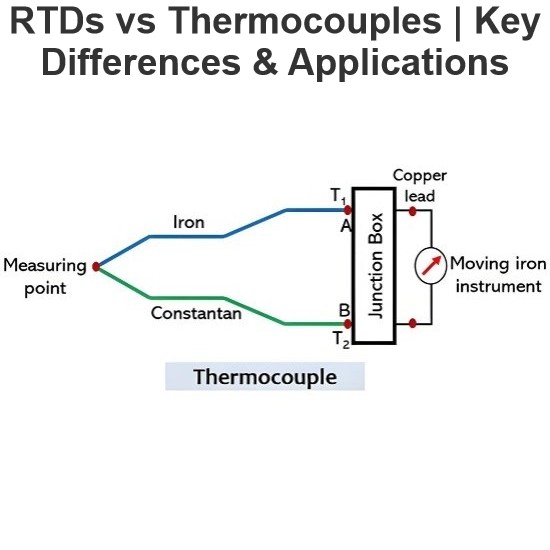
RTDs vs Thermocouples | Key Differences & Applications
RTDs and Thermocouples: Key Temperature SensorsResistance Temperature Detectors (RTDs) and thermocouples are two fundamental types of temperature sensors. While both serve the primary function of measuring temperature, their operational principles differ significantly.An RTD relies on the predictable change in electrical resistance of a single metal element as temperature varies. In contrast, a thermocouple operates based on the Seebeck effect, where a voltage difference (electromotive force, EM
08/26/2025
Consult
Tip
Consult
Tip
The two main types of instrument transformers in a power system.
I. Voltage Transformer (VT)Voltage Transformer (Potential Transformer, abbreviated as PT; Voltage Transformer, abbreviated as VT) is an electrical device used to transform voltage levels in power circuits.1. Operating PrincipleThe voltage transformer operates on the principle of electromagnetic induction and has a structure similar to that of a conventional transformer, consisting primarily of a primary winding, a secondary winding, and a core. The primary winding is connected in parallel to the
08/25/2025
Consult
Tip
Consult
Tip
Why should electrical equipment be tested for insulation?
Purpose of Measuring Insulation ResistanceThe primary reason for performing insulation testing on electrical equipment is to ensure public and personal safety. By conducting insulation tests between disconnected current-carrying conductors, grounding conductors, and conductors intended for grounding, the possibility of fires caused by short circuits can be eliminated.Why Perform Insulation Testing?Safety The most important reason for performing insulation testing is to ensure public and personal
08/23/2025
Consult
Tip
Consult
Tip
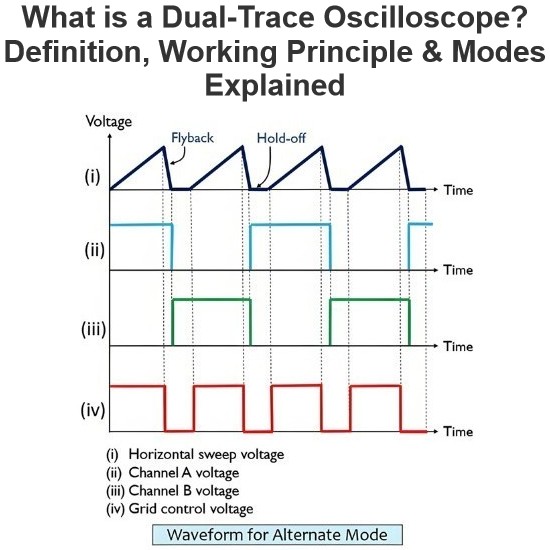
What is a Dual-Trace Oscilloscope? Definition, Working Principle & Modes Explained
What is Dual Trace Oscilloscope?DefinitionA dual-trace oscilloscope uses a single electron beam to generate two separate traces, each deflected by an independent input source. To produce these two traces, it primarily employs two operating modes—alternate mode and chopped mode—controlled by a switch.Purpose of a Dual-Trace OscilloscopeWhen analyzing or studying multiple electronic circuits, comparing their voltage characteristics is often critical. While one could use multiple oscilloscopes for
07/25/2025
Consult
Tip
Consult
Tip
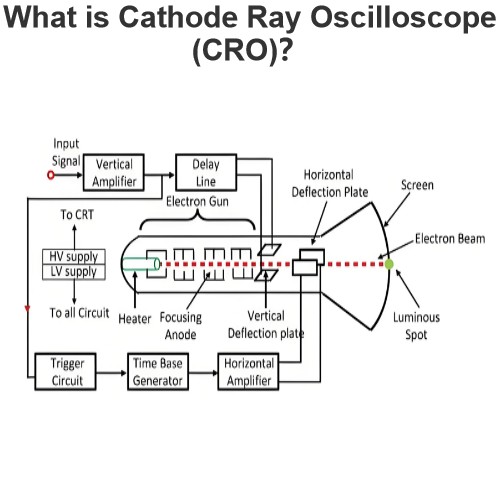
What is Cathode Ray Oscilloscope (CRO)?
What is Cathode Ray Oscilloscope (CRO)?DefinitionA cathode ray oscilloscope (CRO) is an electrical instrument for measuring, analyzing and visualizing waveforms and other electronic/electrical phenomena. As a high - speed X - Y plotter, it shows an input signal against another signal or time. Capable of analyzing waveforms, transient phenomena and time - varying quantities across a wide frequency range (from very low to radio frequencies), it mainly operates on voltage. Other physical quantities
07/25/2025
Consult
Tip
Consult
Tip
Send inquiry
+86
Click to upload file
Download
Get the IEE Business Application
Use the IEE-Business app to find equipment, obtain solutions, connect with experts, and participate in industry collaboration anytime, anywhere—fully supporting the development of your power projects and business.