• Product
  • Suppliers
  • Manufacturers
  • Solutions
  • Free tools
  • Knowledges
  • Experts
  • Communities
Search


Free Expert Guides on Power Systems, Circuit Design & Electrical Troubleshooting

Access free engineering resources from IEE Business—covering power design, circuit layout, equipment selection, and troubleshooting. Expert-developed guides help engineers, procurement, and project teams make better decisions. Stay ahead on smart grids, renewables, efficiency, and AI tools. Improve reliability, reduce downtime, and enhance outcomes with real-world solutions. Explore our knowledge hub today.
SST Technology: Full-Scenario Analysis in Power Generation, Transmission, Distribution, and Consumption
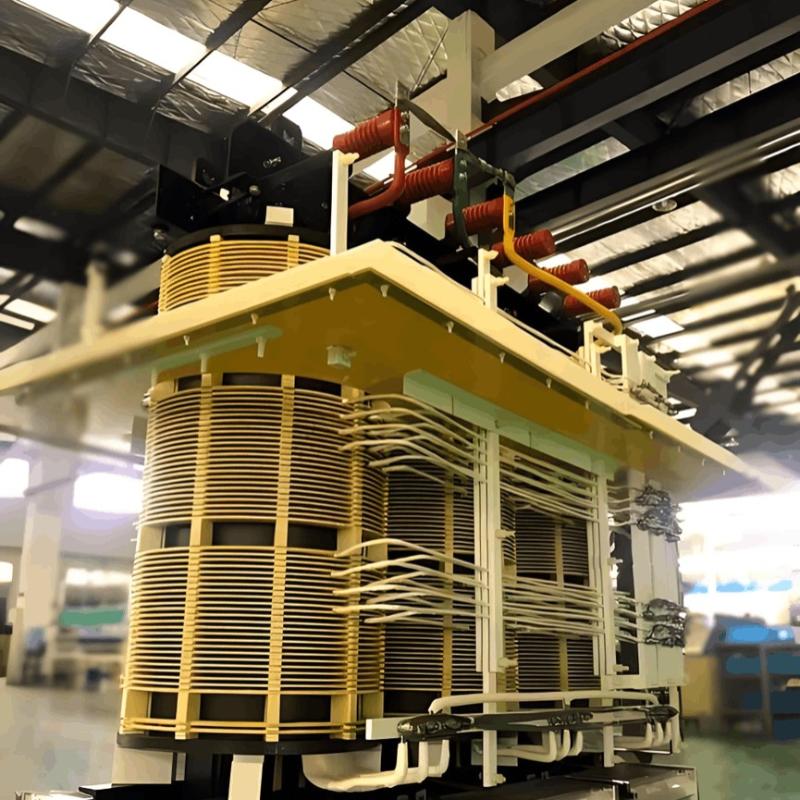
I. Research BackgroundPower System Transformation NeedsChanges in energy structure are placing higher demands on power systems. Traditional power systems are transitioning toward new-generation power systems, with the core differences between them outlined as follows: Dimension Traditional Power System New-Type Power System Technical Foundation Form Mechanical Electromagnetic System Dominated by Synchronous Machines and Power Electronic Equipment Generation-Side Form M
10/28/2025
Consult
Tip
Consult
Tip
Rectifier vs Power Transformer: Key Differences
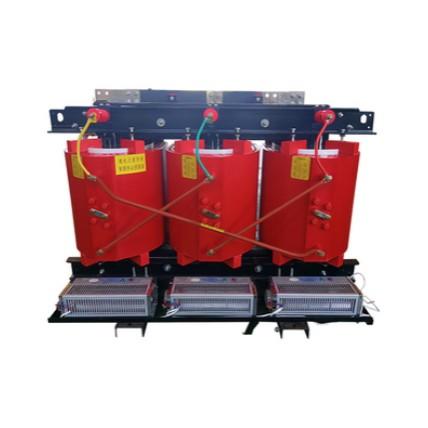
Differences Between Rectifier Transformers and Power TransformersRectifier transformers and power transformers both belong to the transformer family, but they differ fundamentally in application and functional characteristics. The transformers commonly seen on utility poles are typically power transformers, while those supplying electrolytic cells or electroplating equipment in factories are usually rectifier transformers. Understanding their differences requires examining three aspects: working
10/27/2025
Consult
Tip
Consult
Tip
SST Transformer Core Loss Calculation and Winding Optimization Guide
SST High-Frequency Isolated Transformer Core Design and Calculation Material Characteristics Impact:Core material exhibits varying loss behavior under different temperatures, frequencies, and flux densities. These characteristics form the foundation of overall core loss and require precise understanding of nonlinear properties. Stray Magnetic Field Interference:High-frequency stray magnetic fields around windings can induce additional core losses. If not properly managed, these parasitic losses
10/27/2025
Consult
Tip
Consult
Tip
Upgrade Traditional Transformers: Amorphous or Solid-State?
I. Core Innovation: A Dual Revolution in Materials and StructureTwo key innovations:Material Innovation: Amorphous AlloyWhat it is: A metallic material formed by ultra-rapid solidification, featuring a disordered, non-crystalline atomic structure.Key Advantage: Extremely low core loss (no-load loss), which is 60%–80% lower than that of traditional silicon steel transformers.Why it matters: No-load loss occurs continuously, 24/7, throughout a transformer’s lifecycle. For transformers with low loa
10/27/2025
Consult
Tip
Consult
Tip
Design of a Four-Port Solid-State Transformer: Efficient Integration Solution for Microgrids
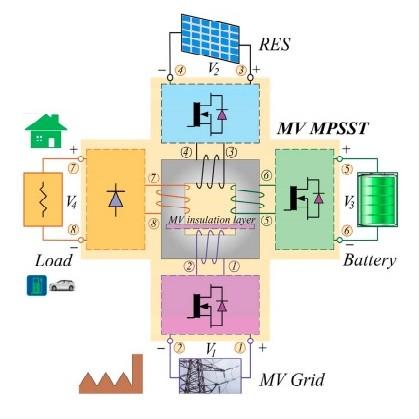
The use of power electronics in industry is increasing, ranging from small-scale applications such as chargers for batteries and LED drivers, to large-scale applications like photovoltaic (PV) systems and electric vehicles. Typically, a power system consists of three parts: power plants, transmission systems, and distribution systems. Traditionally, low-frequency transformers are used for two purposes: electrical isolation and voltage matching. However, 50-/60-Hz transformers are bulky and heavy
10/27/2025
Consult
Tip
Consult
Tip
SST vs Traditional Transformer: Key Advantages
Solid-State Transformers (SST): The Future of Intelligent Power ConversionA solid-state transformer (SST), also known as a power electronic transformer (PET), is a static power conversion device that integrates power electronics, high-frequency transformation, and advanced control systems based on electromagnetic induction. It enables the conversion of electrical energy from one set of voltage, current, and frequency characteristics to another—while offering active control, bidirectional power f
10/27/2025
Consult
Tip
Consult
Tip
Solid-State Transformer Development Cycle and Core Materials Explained
Development Cycle of Solid-State TransformersThe development cycle for solid-state transformers (SST) varies depending on the manufacturer and technical approach, but it generally includes the following stages: Technology Research and Design Phase: The duration of this phase depends on the complexity and scale of the product. It involves researching relevant technologies, designing solutions, and conducting experimental validations. This phase can take several months to several years. Prototype
10/27/2025
Consult
Tip
Consult
Tip
How to Choose & Maintain Electric Motors: 6 Key Steps
"Selecting a High-Quality Motor" – Remember the Six Key Steps Inspect (Look): Check the motor’s appearanceThe motor’s surface should have a smooth, even paint finish. The nameplate must be properly installed with complete and clear markings, including: model number, serial number, rated power, rated current, rated voltage, allowable temperature rise, connection method, speed, noise level, frequency, protection rating, weight, standard code, duty type, insulation class, manufacturing date, and ma
10/21/2025
Consult
Tip
Consult
Tip
 What Is the Working Principle of a Power Plant Boiler?
The working principle of a power plant boiler is to utilize the thermal energy released from fuel combustion to heat feedwater, producing a sufficient quantity of superheated steam that meets specified parameters and quality requirements. The amount of steam produced is known as the boiler's evaporation capacity, typically measured in tons per hour (t/h). Steam parameters primarily refer to pressure and temperature, expressed in megapascals (MPa) and degrees Celsius (°C), respectively. Steam qua
10/10/2025
Consult
Tip
Consult
Tip
What is the principle of live-line washing for substations?
Why Do Electrical Equipment Need a "Bath"?Due to atmospheric pollution, contaminants accumulate on insulating porcelain insulators and posts. During rain, this can lead to pollution flashover, which in severe cases may cause insulation breakdown, resulting in short circuits or grounding faults. Therefore, the insulating parts of substation equipment must be periodically washed with water to prevent flashover and avoid insulation degradation that could lead to equipment failure.Which Equipment Is
10/10/2025
Consult
Tip
Consult
Tip
Send inquiry
+86
Click to upload file
Download
Get the IEE Business Application
Use the IEE-Business app to find equipment, obtain solutions, connect with experts, and participate in industry collaboration anytime, anywhere—fully supporting the development of your power projects and business.