• Product
  • Suppliers
  • Manufacturers
  • Solutions
  • Free tools
  • Knowledges
  • Experts
  • Communities
Search


Free Expert Guides on Power Systems, Circuit Design & Electrical Troubleshooting

Access free engineering resources from IEE Business—covering power design, circuit layout, equipment selection, and troubleshooting. Expert-developed guides help engineers, procurement, and project teams make better decisions. Stay ahead on smart grids, renewables, efficiency, and AI tools. Improve reliability, reduce downtime, and enhance outcomes with real-world solutions. Explore our knowledge hub today.
Rectifier vs Power Transformer: Key Differences
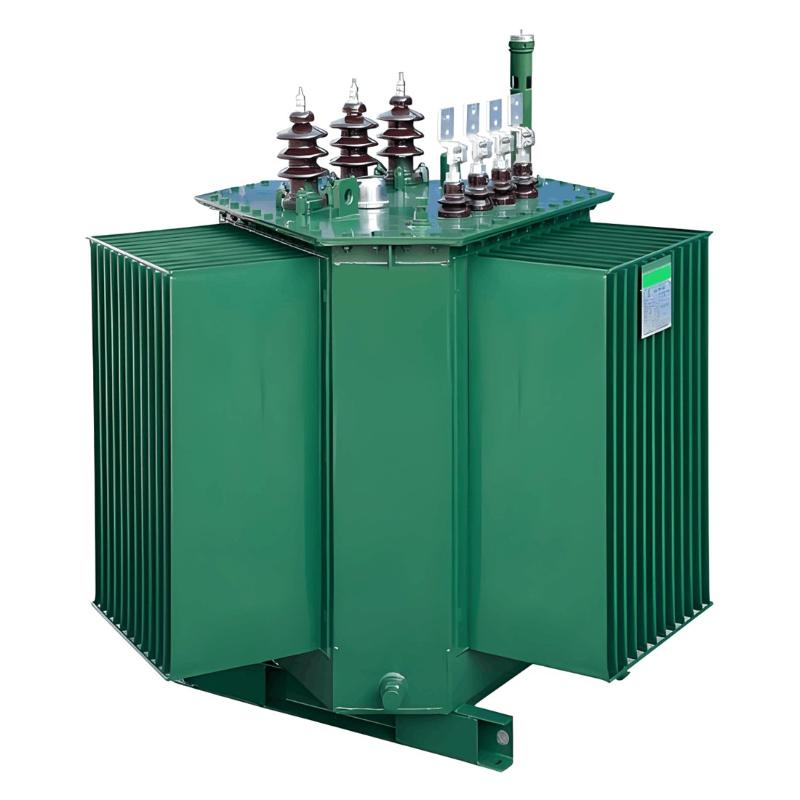
Differences Between Rectifier Transformers and Power TransformersRectifier transformers and power transformers both belong to the transformer family, but they differ fundamentally in application and functional characteristics. The transformers commonly seen on utility poles are typically power transformers, while those supplying electrolytic cells or electroplating equipment in factories are usually rectifier transformers. Understanding their differences requires examining three aspects: working
10/27/2025
Consult
Tip
Consult
Tip
3D Wound-Core Transformers in China: Technical Trends for Utility Companies
Technical Requirements and Development Trends for Distribution Transformers Low losses, especially low no-load losses; highlighting energy-saving performance. Low noise, particularly during no-load operation, to meet environmental protection standards. Fully sealed designto prevent transformer oil from contacting external air, enabling maintenance-free operation. Integrated protection devices within the tank, achieving miniaturization; reducing transformer size for easier on-site installation. C
10/20/2025
Consult
Tip
Consult
Tip
Understanding Transformer Tap Changer Operation
I. Transformer Operating Tap PositionsIs the number of tap positions on a transformer equal to its number of operating tap positions?In China, on-load tap-changing (OLTC) transformers typically have 17 taps, while off-load tap-changing transformers usually have 5 taps—some may have 3 or 2.Theoretically, the number of tap positions equals the number of available operating positions. During operation, the tap position of an OLTC transformer can be adjusted under load to regulate voltage. However,
10/20/2025
Consult
Tip
Consult
Tip
How does temperature affect transformer insulation condition and service life?
1. The Hydraulic Transformer: Filling a Critical Gap in Fluid Power TechnologyConventional hydraulic systems consist of a pump, actuators (cylinders or motors), control valves, and auxiliary components—but they have long lacked a functional equivalent to the electrical transformer: the hydraulic transformer. Given the strong analogies between hydraulic and electrical systems—where pressure corresponds to voltage, flow to current, and power transmission principles align closely—the absence of suc
10/20/2025
Consult
Tip
Consult
Tip
Hydraulic Transformer: Revolutionizing Fluid Power Systems
Hydraulic Transformer: The Missing Link in Modern Fluid Power SystemsFor decades, hydraulic systems have lacked a true functional counterpart to the electrical transformer—until now. The hydraulic transformer bridges this critical gap, enabling constant-pressure fluid networks, multi-pressure actuation, energy recovery, and even integration of hydraulics with pneumatics. This breakthrough is not just theoretical—it’s a patented, prototype-validated technology poised to redefine industrial fluid
10/20/2025
Consult
Tip
Consult
Tip
Wavelet Analysis of Transformer Inrush Current
During operation, transformers may generate magnetizing inrush currents due to various factors. These inrush currents not only affect the normal operation of the transformer but may also compromise the stability of the power system. Therefore, accurately identifying transformer magnetizing inrush current is crucial for effectively suppressing such inrush.Next, let's explore how wavelet theory is applied in analyzing transformer magnetizing inrush current. Wavelet analysis is a method that provid
10/20/2025
Consult
Tip
Consult
Tip
From 66 kV to 500 kV: The Rise of Eco-Friendly Vegetable Oil Transformers
Vegetable Oil in High-Voltage Power Transformers: Current Status, Technical Challenges, and Market OutlookNatural ester (vegetable) oil is gaining traction as a sustainable alternative to mineral oil in power transformers. Thanks to its biodegradability, high fire point (>300°C), and extended insulation life, vegetable oil transformers are increasingly deployed worldwide—especially in environmentally sensitive or fire-risk areas.As of 2025, over 2 million vegetable oil-filled transformers are
10/20/2025
Consult
Tip
Consult
Tip
The Four Key Aspects of Transformers: Construction, Lightning Protection, Common Faults, and Noise Issues
With the rapid development of China's economy, the power industry has also gradually expanded in scale, increasing the requirements for both the installed capacity and the single-unit capacity of power transformers. This article provides a brief introduction to four aspects: transformer construction, transformer lightning protection, transformer faults, and transformer noise.A transformer is a commonly used electrical device capable of converting AC electrical energy. It can transform one form o
10/20/2025
Consult
Tip
Consult
Tip
How Silicon Steel Minimizes Transformer Core Loss
Why Transformers Use Silicon Steel Laminations to Reduce Eddy Current LossTransformers rely on efficient magnetic cores to transfer energy between windings with minimal loss. One of the most critical design choices is the use of laminated silicon steel sheets—not solid iron or plain steel—for the core. This decision directly addresses a major source of inefficiency: eddy current loss.What Is Eddy Current Loss?When a transformer operates under alternating current (AC), the primary winding generat
10/20/2025
Consult
Tip
Consult
Tip
Comprehensive Guide to Transformer Fault Diagnosis & Testing
Optimized Guide to Transformer Fault Diagnosis and Advanced Testing TechniquesTransformers are core components in power systems, and their operational reliability directly impacts power supply safety. Common types include oil-immersed and dry-type transformers. Failures typically occur in the windings, core, connections, and insulation oil, with typical issues such as inter-turn short circuits, insulation aging, overheated joints, and multi-point core grounding.1. Common Fault IndicatorsImmediat
10/20/2025
Consult
Tip
Consult
Tip
Send inquiry
+86
Click to upload file
Download
Get the IEE Business Application
Use the IEE-Business app to find equipment, obtain solutions, connect with experts, and participate in industry collaboration anytime, anywhere—fully supporting the development of your power projects and business.