• Product
  • Suppliers
  • Manufacturers
  • Solutions
  • Free tools
  • Knowledges
  • Experts
  • Communities
Search


Voltage Regulation Methods and Impacts of Distribution Transformers

James
Field: Electrical Operations
China

Voltage Compliance Rate and Distribution Transformer Tap Changer Adjustment

The voltage compliance rate is one of the main indicators for measuring power quality. However, due to various reasons, electricity consumption during peak and off-peak periods often differs significantly, causing the output voltage of distribution transformers to fluctuate. These voltage fluctuations adversely affect the performance, production efficiency, and product quality of various electrical equipment to varying degrees. Therefore, to ensure voltage compliance, timely adjustment of the distribution transformer tap changer position is one of the effective solutions.
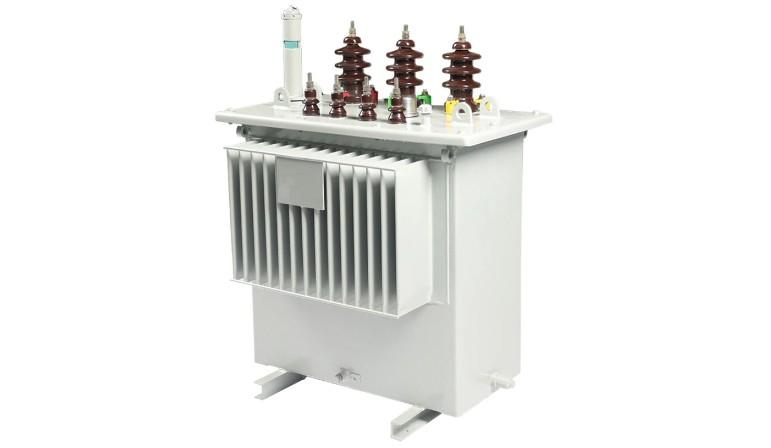
15kV Three-phase Oil-immersed Power Distribution Transformer.jpg

Most distribution transformers feature off-load tap changing capability with three adjustable positions. By changing the position of the tap changer's moving contact, the number of turns in the transformer winding is altered, thereby changing the output voltage. Common distribution transformers have a primary voltage of 10 kV and a secondary output voltage of 0.4 kV. The tap positions are configured as follows: Position I at 10.5 kV, Position II at 10 kV, and Position III at 9.5 kV, with Position II typically being the standard operating position.

The specific steps for adjusting the tap changer are:

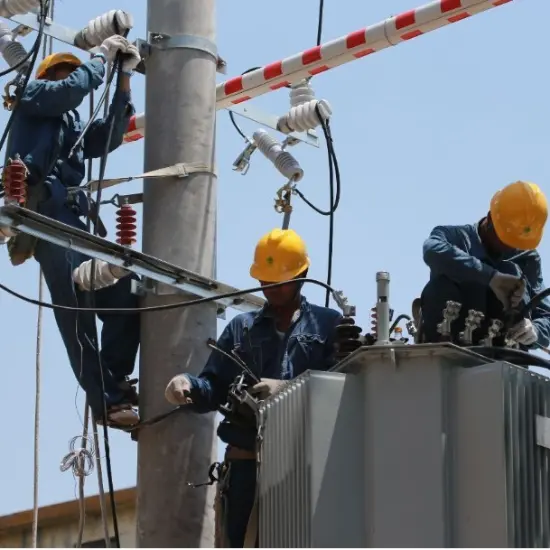
  • Power down first. Disconnect the low-voltage side load of the distribution transformer, then use an insulated rod to open the high-voltage side drop-out fuses. Implement all necessary safety measures. Unscrew the protective cover of the tap changer on the transformer and place the positioning pin in the neutral position.

  • Adjust the tap position based on output voltage measurements, following these fundamental principles:

    • When transformer output voltage is below the allowable value, move the tap changer from Position I to Position II, or from Position II to Position III.

    • When transformer output voltage is above the allowable value, move the tap changer from Position III to Position II, or from Position II to Position I.

  • Verify resistance balance after adjustment. Use a DC bridge to measure the DC resistance values of each phase winding to check for balance between phases. If the resistance values between phases differ by more than 2%, readjustment is mandatory. Otherwise, during operation, the moving and stationary contacts may overheat or even discharge due to poor contact, potentially damaging the transformer.
Give a tip and encourage the author!

Recommended

Faults and Handling of Single-phase Grounding in 10kV Distribution Lines
Characteristics and Detection Devices for Single-Phase Ground Faults1. Characteristics of Single-Phase Ground FaultsCentral Alarm Signals:The warning bell rings, and the indicator lamp labeled “Ground Fault on [X] kV Bus Section [Y]” illuminates. In systems with a Petersen coil (arc suppression coil) grounding the neutral point, the “Petersen Coil Operated” indicator also lights up.Insulation Monitoring Voltmeter Indications:The voltage of the faulted phase decreases (in
01/30/2026
Neutral point grounding operation mode for 110kV~220kV power grid transformers
The arrangement of neutral point grounding operation modes for 110kV~220kV power grid transformers shall meet the insulation withstand requirements of transformer neutral points, and shall also strive to keep the zero-sequence impedance of substations basically unchanged, while ensuring that the zero-sequence comprehensive impedance at any short-circuit point in the system does not exceed three times the positive-sequence comprehensive impedance.For 220kV and 110kV transformers in new constructi
01/29/2026
Why Do Substations Use Stones, Gravel, Pebbles, and Crushed Rock?
Why Do Substations Use Stones, Gravel, Pebbles, and Crushed Rock?In substations, equipment such as power and distribution transformers, transmission lines, voltage transformers, current transformers, and disconnect switches all require grounding. Beyond grounding, we will now explore in depth why gravel and crushed stone are commonly used in substations. Though they appear ordinary, these stones play a critical safety and functional role.In substation grounding design—especially when multiple gr
01/29/2026
HECI GCB for Generators – Fast SF6 Circuit Breaker
1.Definition and Function1.1 Role of the Generator Circuit BreakerThe Generator Circuit Breaker (GCB) is a controllable disconnect point located between the generator and the step-up transformer, serving as an interface between the generator and the power grid. Its primary functions include isolating generator-side faults and enabling operational control during generator synchronization and grid connection. The operating principle of a GCB is not significantly different from that of a standard c
01/06/2026
Related Products
Send inquiry
+86
Click to upload file
Download
Get the IEE Business Application
Use the IEE-Business app to find equipment, obtain solutions, connect with experts, and participate in industry collaboration anytime, anywhere—fully supporting the development of your power projects and business.