The difference between inductance, capacitance, resistance, voltage, current, and power

Distinction
Resistance: impedes current and dissipates energy.
Inductance: Stores magnetic field energy and opposes current changes.
Capacitors: Store electric field energy and oppose voltage changes.
Voltage: The force that drives the flow of electricity.
Current: The flow of charge, indicating the rate at which charge flows.
Power: The work done per unit time, indicating the rate of energy conversion.
Resistance definition
Resistance is a physical quantity in a circuit that impedes the flow of current. Resistive elements (such as resistors) can convert electrical energy into heat.
Peculiarity
Obstruction current: The resistance prevents the current from passing through, and the larger the value, the stronger the obstruction effect.
Energy dissipating components: Resistors are energy dissipating components, and the current passing through the resistors generates heat.
Ohm's Law: The relationship between voltage V, current I, and resistance R follows Ohm's law V=IR.
Apply
Current limiting: Used to limit current and protect other components in the circuit.
Voltage division: Used to build voltage division circuits.
Filter: Used in conjunction with capacitors to build RC filters.
Inductance definition
Inductance refers to the ability to store magnetic field energy in a circuit. An inductor (such as an inductor or coil) creates a counterelectromotive force when the current changes, which prevents the current from changing.
Peculiarity
Storage of magnetic field energy: inductors store magnetic field energy, the greater the value, the stronger the storage capacity.
Anti-current change: The inductor opposes the change of current, that is, the reverse electromotive force is generated when the current increases, and the energy is released when the current decreases.
Inductive reactance: In AC circuits, inductors produce inductive reactance XL=2πfL, where f is the frequency.
Apply
Filter: Used to build LC filters to filter out high-frequency components in AC signals.
Energy storage: Used in switching power supplies to store energy and smooth current.
Choke coil: Used to prevent high-frequency signals from passing through, while allowing DC signals to pass through.
Capacitance (Capacitance, C)definition
Capacitance is the ability to store electric field energy in a circuit. Capacitive elements (such as capacitors) charge or discharge when the voltage changes, storing or releasing electric field energy.
Peculiarity
Storage of electric field energy: Capacitors store electric field energy, and the larger the value, the stronger the storage capacity.
Anti-voltage change: The capacitor opposes the change of voltage, that is, charges when the voltage rises and discharges when the voltage decreases.
Capacitive reactance: In an AC circuit, a capacitor produces a capacitive reactance XC= 1/2πfC, where f is the frequency.
Apply
Filter: Used to build RC filters to filter out low-frequency components in AC signals.
Coupling: Used to isolate direct coupling and transmit AC signals.
Energy storage: Used for energy storage, such as storing energy in a camera flash.
Voltage (Voltage, V)definition
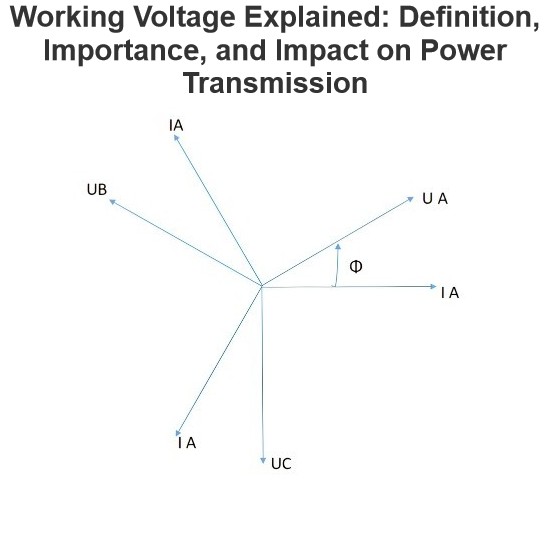
Voltage refers to the potential difference between two points in a circuit, indicating the direction and intensity of charge movement. Voltage is what drives the flow of electricity.
Peculiarity
Potential difference: Voltage is the electric potential difference, which is measured in volts (V).
Driving current: Voltage is the cause of current flow.
Power supply: Power supply (e.g. battery, generator) provides voltage.
Apply
Power supply: Provides electrical energy in the circuit.
Measurement: Used to measure the potential difference in a circuit.
Current (Current, I)definition
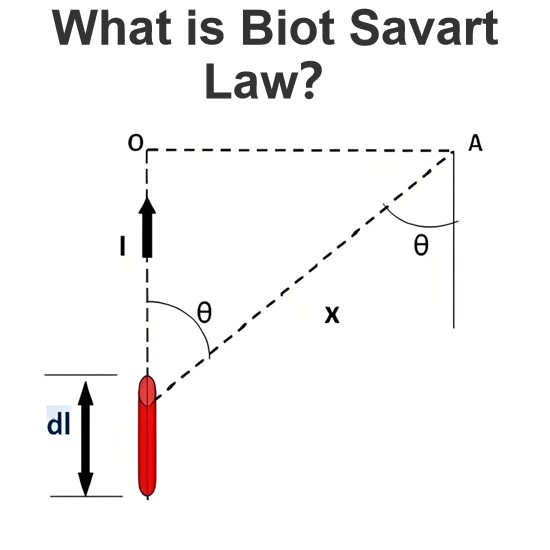
Current refers to the flow of charge, representing the amount of charge passing through a cross section of a conductor in unit time.
Peculiarity
Charge flow: Current is formed by the flow of charges and is measured in amperes (A).
Direction: The direction of the current is specified as the direction of the positive charge flow.
Strength: The strength of the current indicates the rate at which charge flows.
Apply
Load: Drive load (such as light bulb, motor) work.
Measurement: Used to measure charge flow in a circuit.
Power (P)definition
Power refers to the work done per unit time, indicating the rate of energy conversion.
Peculiarity
Energy conversion: Power represents the rate of energy conversion, and its unit is watt (W).
Electric power: Electric power is determined by voltage V and current I, calculated by P=VI.
Apply
Energy consumption: Used to calculate the energy consumption in the circuit.
Efficiency: Used to evaluate the efficiency of a circuit or device.