What is Ohm’s Law?

Ohm’s Law – Statement:
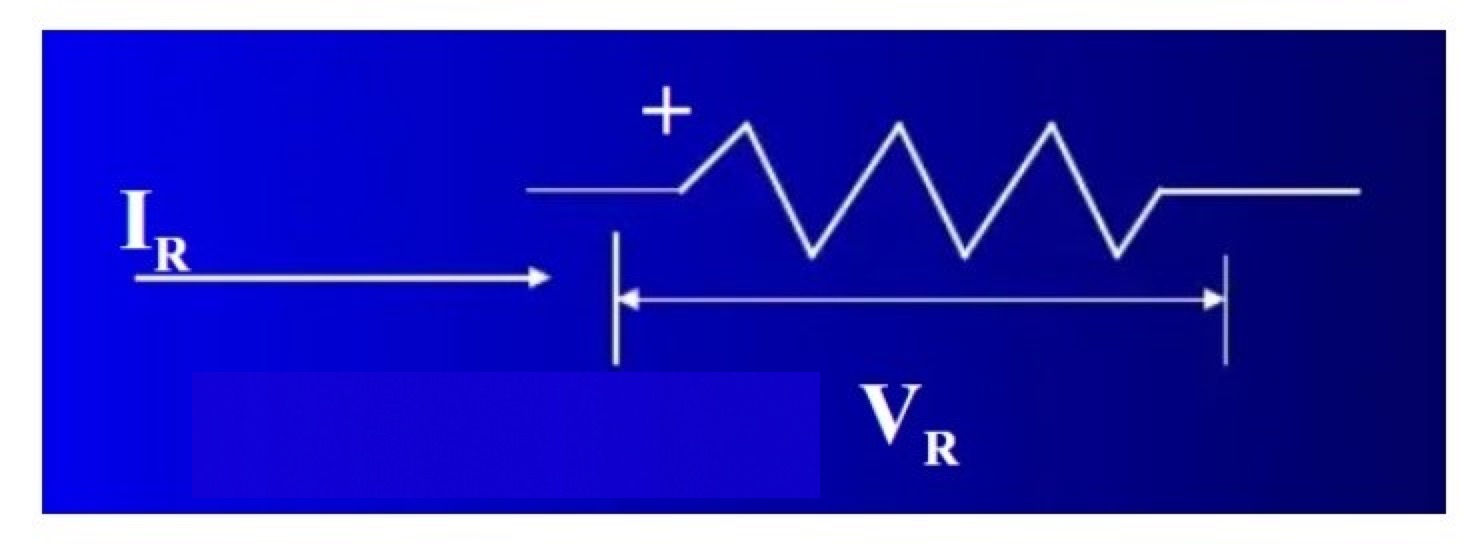
Ohm’s law states that the current flow through a conductor is directly proportional to the voltage across the conductor and inversely proportional to the resistance of the conductor, where the temperature remains constant.
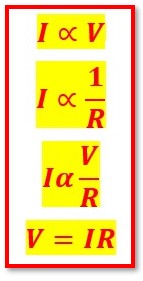
Where,
I denotes Current,
V denotes Voltage and
R denotes Resistance
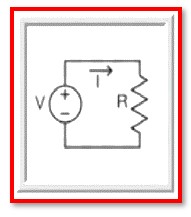
Ohm’s Law Triangle:
Ohm’s law triangle was formed through determining V, I, and R.
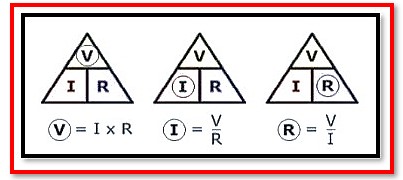
Ohm’s Law discusses the important variables in circuits:
| QUANTITY | SYMBOL | SI UNIT | DENOTED BY | OHM’S LAW APPLICABLE |
|---|---|---|---|---|
| Current | I | Ampere | A |  |
| Voltage | E or V | Volt | V |  |
| Resistance | R | Ohm | Ω |  |
Applications of Ohm’s law:
Ohm’s law applications:
1. To determine power consumption
2. To regulate the fan speed
3. To determining the fuse range
4. To determine the resistor size.
Limitations of Ohm’s law:
1. Only metallic conductors can use Ohm’s law. Therefore, it won’t function with non-metallic conductors.
2. The ratio of voltage and current won’t be constant with regards to time for non-linear electrical elements with features like capacitance, resistance, etc., making it hard to apply Ohm’s law.
3. Since transistors and diodes only allow current to flow in one direction, Ohm’s law does not apply to these electrical components.
Statement: Respect the original, good articles worth sharing, if there is infringement please contact delete.