• Product
  • Suppliers
  • Manufacturers
  • Solutions
  • Free tools
  • Knowledges
  • Experts
  • Communities
Search


How to Monitor Partial Discharge in RMUs Safely?
Oliver Watts
Oliver Watts
Field: Inspection and testing
China

Insulation degradation in power equipment is generally caused by multiple factors. During operation, insulation materials (such as epoxy resin and cable terminations) gradually deteriorate due to thermal, electrical, and mechanical stresses, leading to the formation of voids or cracks. Alternatively, contamination and moisture—such as dust or salt deposition or high-humidity environments—can increase surface conductivity, triggering corona discharge or surface tracking. Additionally, lightning surges, switching overvoltages, or resonant overvoltages may also induce discharges at weak points in the insulation. Furthermore, prolonged operation under heavy load and excessive current can cause conductor heating, accelerating thermal aging of insulation materials.

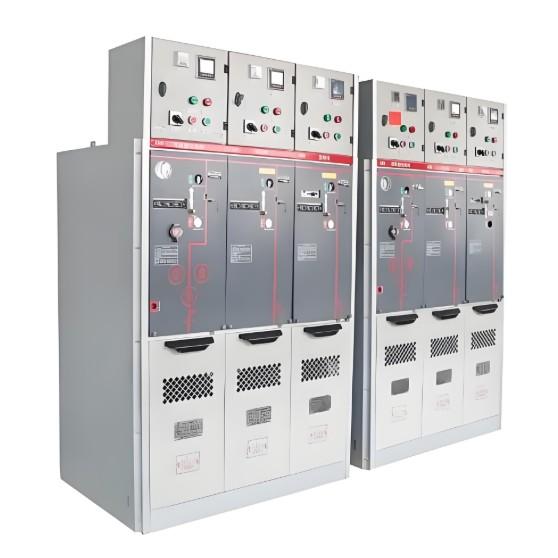
For ring main units (RMUs), these factors are unavoidable during normal operation. In the short term, the energy from partial discharges is relatively low and may not directly cause insulation breakdown, but it can generate electromagnetic interference (e.g., radio frequency interference). However, if left unaddressed, long-term presence of such discharges can lead to more severe consequences: insulation degradation and thermal effects significantly increase system risk, and in extreme cases, partial discharges may evolve into through-puncture breakdown, resulting in equipment failure, localized power outages, or even fire and explosion. Therefore, effective detection and preventive technical measures for partial discharge in RMUs are essential to ensure safe and stable operation.
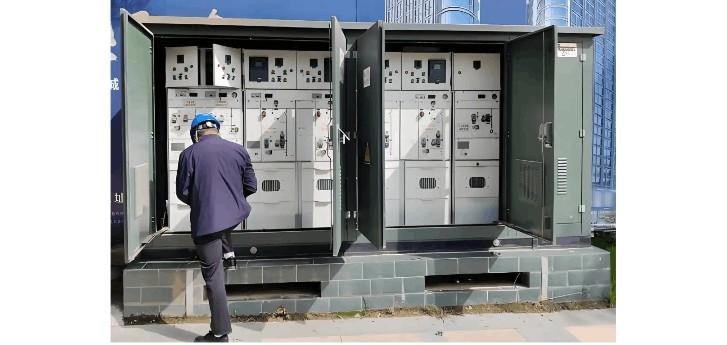
Ring Main Unit..jpg

Intelligent monitoring and early warning represent a highly effective technical approach. Online monitoring systems deploy ultra-high frequency (UHF) and acoustic emission (AE) sensors to capture discharge signals in real time. Edge computing is used for filtering and noise reduction, combined with AI algorithms to identify discharge types—such as corona discharge or void discharge—enabling data analysis and diagnosis. A warning mechanism is established by setting thresholds to trigger alarms and locate the discharge source.

In addition, during operation and maintenance, periodic inspections using portable detectors can check cable joints and busbar connections. Infrared thermography can also be employed to indirectly identify discharge areas through abnormal temperature patterns. Combining UHF, AE, and TEV (Transient Earth Voltage) techniques enables comprehensive diagnosis, significantly improving detection accuracy and reliability.

Partial discharge in ring main units is an early indicator of insulation system degradation. Prevention and control should be implemented through a multi-dimensional protection framework covering equipment design, environmental management, monitoring technology, and maintenance practices. Through environmental control, intelligent monitoring, and regular inspections, the probability of faults caused by partial discharge can be substantially reduced, ensuring the safe and stable operation of the power grid.
Give a tip and encourage the author!
Recommended
Research and Development Status of 12 kV SF6 Gas-Free Ring Main Unit
Gas insulation is primarily based on SF₆ gas. SF₆ has extremely stable chemical properties and exhibits excellent dielectric strength and arc-quenching performance, making it widely used in electrical power equipment. SF₆-insulated switchgear features a compact structure and small size, is unaffected by external environmental factors, and demonstrates exceptional adaptability.However, SF₆ is internationally recognized as one of the six major greenhouse gases. Leakage from SF₆-insulated switchgea
Echo
12/10/2025
Research on Arcing and Interruption Characteristics of Eco-Friendly Gas-Insulated Ring Main Units
Eco-friendly gas-insulated ring main units (RMUs) are important power distribution equipment in electrical systems, featuring green, environmentally friendly, and high-reliability characteristics. During operation, arc formation and interruption characteristics significantly affect the safety of eco-friendly gas-insulated RMUs. Therefore, in-depth research on these aspects is of great significance for ensuring the safe and stable operation of power systems. This article aims to investigate the a
Dyson
12/10/2025
SF6 vs SF6 gas Free Ring Main Units: Key Differences
From the perspective of insulation performance, sulfur hexafluoride SF6 exhibits excellent insulating properties. Its dielectric strength is approximately 2.5 times that of air, effectively ensuring the insulation performance of electrical equipment under standard atmospheric pressure and ambient temperature. The new SF6 gas free gases used in SF6 gas-free switchgear—such as certain gas mixtures—can also meet insulation requirements, though their specific values vary depending on the formulation
Echo
12/10/2025
High-Voltage SF₆-Free Ring Main Unit: Adjustment of Mechanical Characteristics
(1) The contact gap is primarily determined by insulation coordination parameters, interruption parameters, contact material of the high-voltage SF₆-free ring main unit, and the design of the magnetic blowout chamber. In practical application, a larger contact gap is not necessarily better; instead, the contact gap should be adjusted as close as possible to its lower limit to reduce operating energy consumption and extend service life.(2) The determination of contact overtravel is related to fac
James
12/10/2025
Related Products
Send inquiry
Download
Get the IEE Business Application
Use the IEE-Business app to find equipment, obtain solutions, connect with experts, and participate in industry collaboration anytime, anywhere—fully supporting the development of your power projects and business.