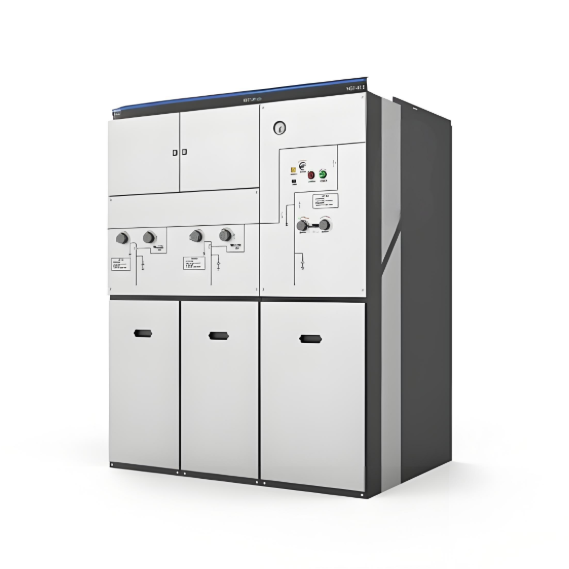
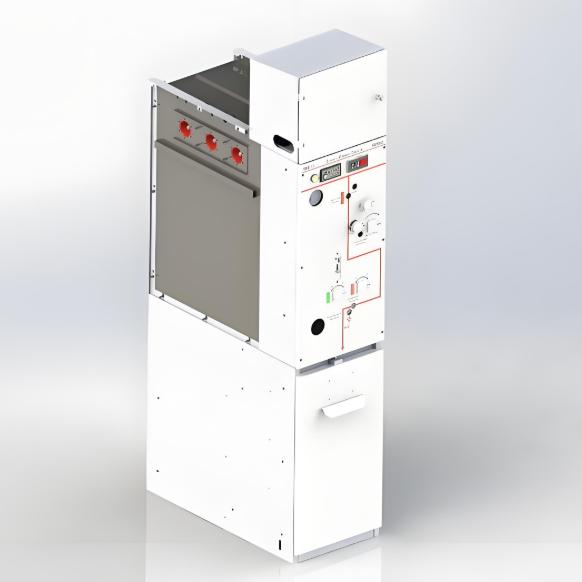
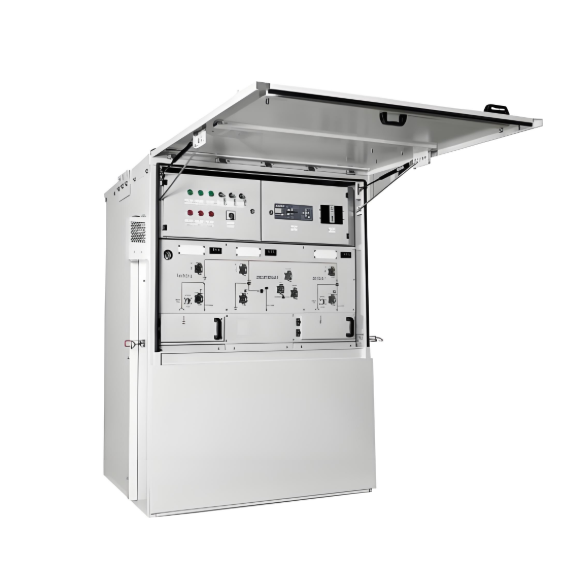
SF6 vs SF6 gas Free Ring Main Units: Key Differences
From the perspective of insulation performance, sulfur hexafluoride SF6 exhibits excellent insulating properties. Its dielectric strength is approximately 2.5 times that of air, effectively ensuring the insulation performance of electrical equipment under standard atmospheric pressure and ambient temperature. The new SF6 gas free gases used in SF6 gas-free switchgear—such as certain gas mixtures—can also meet insulation requirements, though their specific values vary depending on the formulation. Some of these new SF6 gas-free gases have dielectric strengths close to that of SF6, while others are slightly lower.
In terms of global warming impact, SF6 is a potent greenhouse gas with an extremely high Global Warming Potential (GWP). Over a 100-year time horizon, its GWP value reaches 23,900. In contrast, the gases used in SF6 gas-free switchgear are mostly low-GWP alternatives; for example, some fluorinated gas mixtures have GWP values controlled to a few hundred or even lower, significantly reducing their impact on climate change.
Regarding chemical stability, SF6 is highly chemically stable and hardly reacts with other substances under normal operating conditions, which helps maintain a stable internal environment in electrical equipment over the long term. However, some components in SF6 gas-free gases exhibit relatively weaker chemical stability and may undergo certain chemical reactions under special operating conditions—such as high temperature or strong electric fields—potentially affecting equipment performance.
In terms of sealing requirements, SF6 molecules are relatively small, resulting in a higher risk of leakage. Therefore, SF6-insulated switchgear demands extremely stringent sealing processes and materials, typically employing high-performance sealing compounds and structures to ensure an annual leakage rate below 0.5%. Although SF₆ gas-free switchgear also requires strict sealing, the focus in material and process selection differs from that of SF6 equipment. Some SF6 gas-free gases are less corrosive to sealing materials, allowing a broader range of sealant options.
Concerning arc-quenching capability, SF6 demonstrates outstanding arc interruption performance. After decomposition, it rapidly captures free electrons in the arc plasma, enabling quick arc extinction—particularly effective in high-voltage, high-current interruption scenarios. The arc-quenching performance of SF6 gas-free gases varies: some advanced formulations achieve arc interruption performance comparable to SF6, while others are somewhat inferior in arc quenching speed and effectiveness.
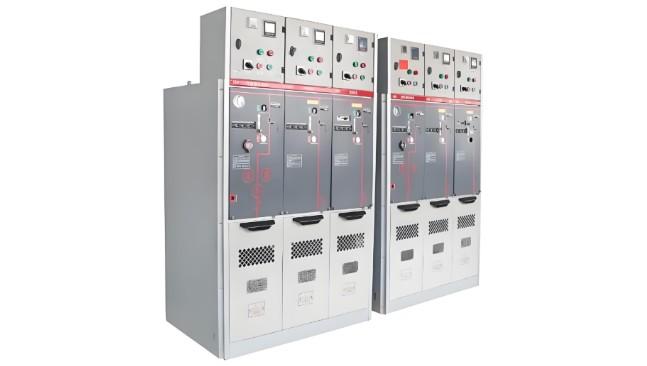
From a cost perspective, SF6 gas itself is relatively inexpensive. However, due to stringent sealing requirements and the complexity of gas recovery and handling systems, the overall cost of SF6 switchgear remains high. For SF6 gas-free switchgear, some new SF₆ gas-free gases involve high R&D costs and are currently more expensive, but with technological advancements and economies of scale, their costs are gradually decreasing and are expected to become competitive with SF6 equipment in the future.
Regarding maintenance intervals, SF6 switchgear benefits from the gas’s stability, typically requiring comprehensive gas testing and equipment inspection only once every 3 to 5 years under normal conditions. In contrast, maintenance intervals for SF6 gas-free switchgear depend on gas stability and operating conditions; some units may require more frequent gas monitoring and performance assessments, potentially shortening the maintenance cycle to 1–2 years.
In terms of breakdown voltage characteristics, SF6 has a breakdown voltage in uniform electric fields that is 2.5 to 3 times that of air, enabling it to withstand high voltages without breakdown. The breakdown voltage of SF6 gas-free gases is closely related to gas composition and pressure, with significant variation among different formulations—some approaching SF6 levels, while others are notably lower—requiring careful evaluation during design and application.
Regarding application scope, SF6 switchgear is widely used in high-voltage and extra-high-voltage power systems, particularly dominating in substations and high-voltage supply systems of large industrial facilities. SF6 gas-free switchgear is increasingly adopted in medium- and low-voltage systems, and with ongoing technological maturation, it is gradually expanding into high-voltage applications. However, in high-voltage, high-capacity scenarios, further validation and refinement are still needed compared to SF6 solutions.
In terms of gas detection methods, SF6 is typically detected using gas chromatography or infrared absorption techniques—mature methods offering high detection accuracy. For SF6 gas-free gases, due to their complex and diverse compositions, detection methods are more varied and continuously evolving. While some SF6 detection approaches can be adapted, new detection technologies tailored to specific gas components must also be developed to enable accurate and rapid gas analysis.