• Product
  • Suppliers
  • Manufacturers
  • Solutions
  • Free tools
  • Knowledges
  • Experts
  • Communities
Search


How Electrical Drives are Controlled ?

Encyclopedia
Field: Encyclopedia
0
China

How Electrical Drives are Controlled ?

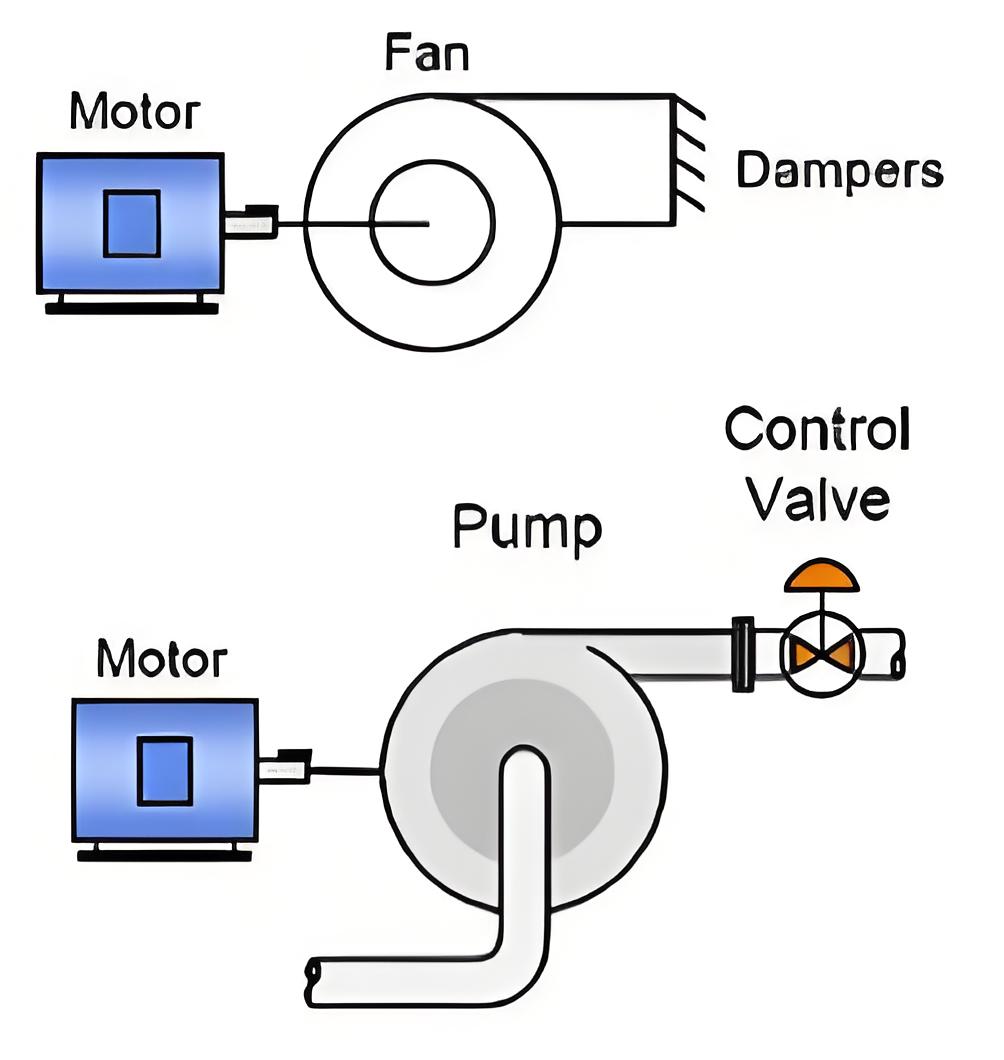
Electrical Drives Definition

Electrical drives are systems that control the operation of electric motors, including starting, speed control, and braking.
fefd0b29b630e813a0c997f9211ff439.jpeg

Importance of Control

Controlling electrical drives is essential to prevent damage from sudden changes in voltage or current.

Closed Loop Control

Control systems can be open loop or closed loop control system. In an open loop control system, the output does not affect the input, making the control independent of the output. In contrast, a closed loop system uses feedback from the output to adjust the input. If the output exceeds a set value, the input is reduced, and vice-versa. closed loop control system in electrical drives helps protect the system, enhance response speed, and improve accuracy.

  • Protection

  • Enhancement of speed of response

  • To improve steady-state accuracy

In the following discussions, we will see through different closed loop configurations which are used in electrical drives irrespective of the type of supply they are fed, i.e DC or AC.

Current Limit Control

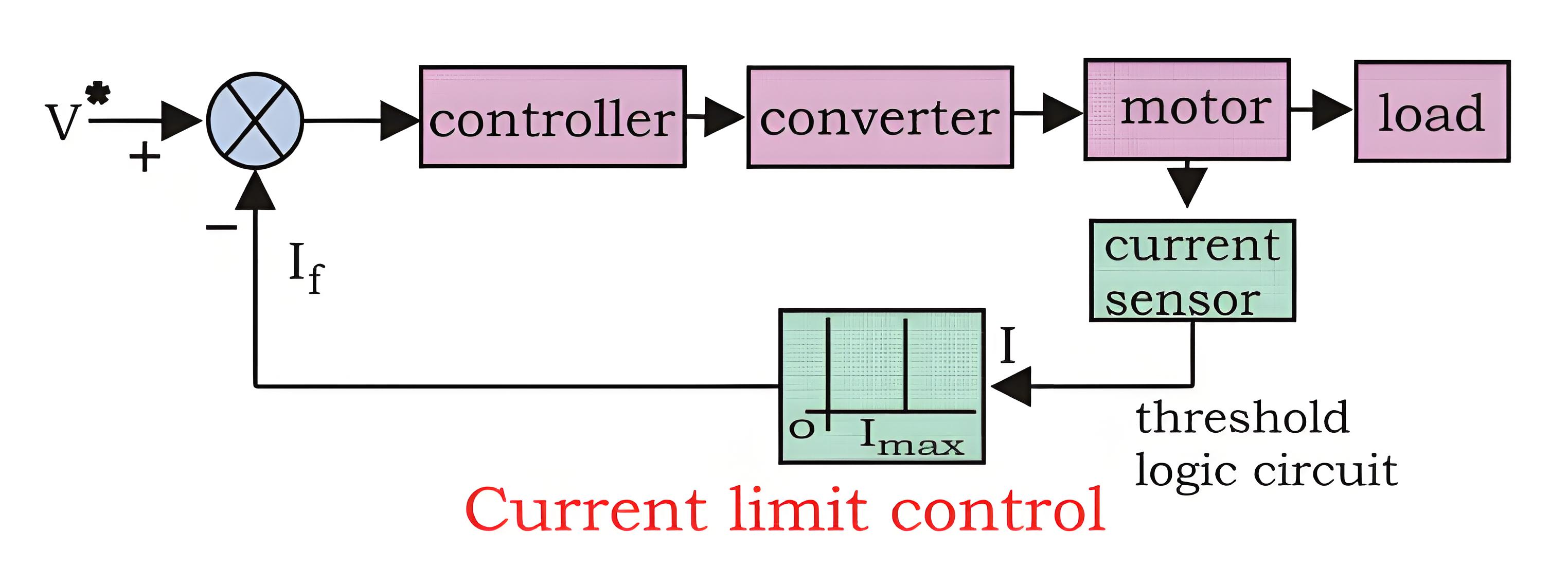
During start-up, motors can experience a huge current flow if precautions are not taken. A current limit controller is used to manage this. It monitors the current and, if it exceeds safe limits, the feedback loop activates to reduce the current. Once it’s back to a safe level, the feedback loop deactivates, ensuring normal operation.
5da80a20890f50452086ce8cf2b42e50.jpeg

Closed Loop Torque Control

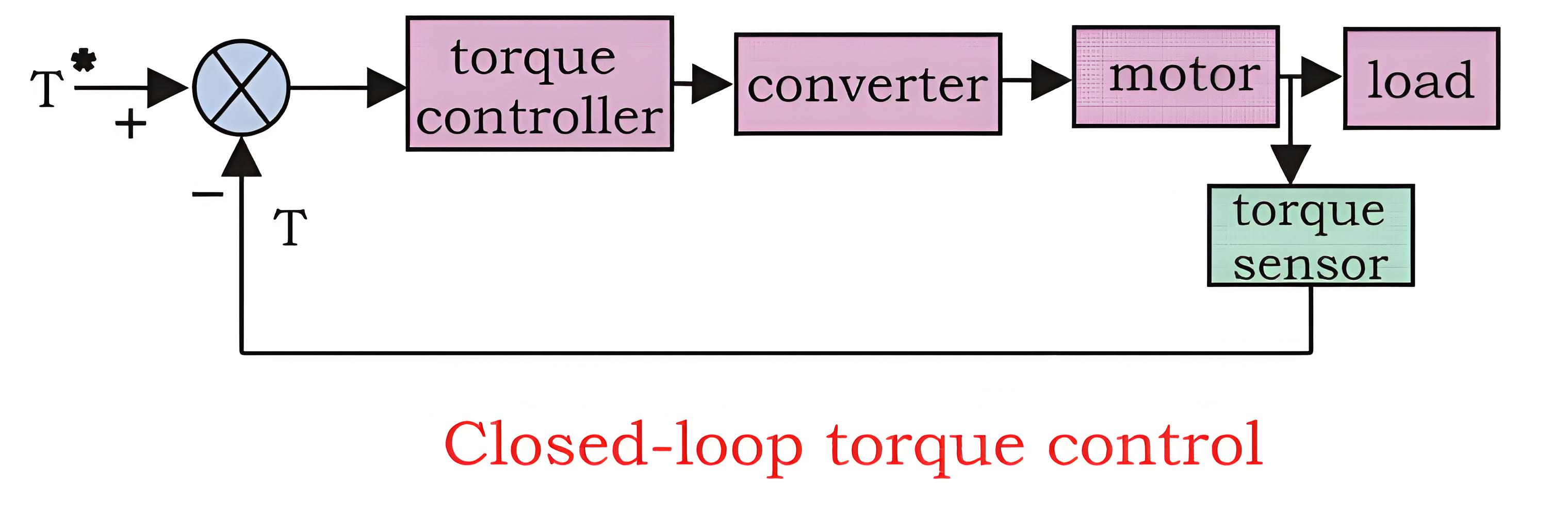
This type of torque controller is seen mainly in battery operated vehicles like cars, trains etc. the accelerator present in the vehicles is pressed by the driver to set the reference torque T. The actual torque T follows the T which is controlled by the driver via accelerator.*
f57e7e2d9843bc1dcf8cc72fa05cf4c9.jpeg

Closed Loop Speed Control

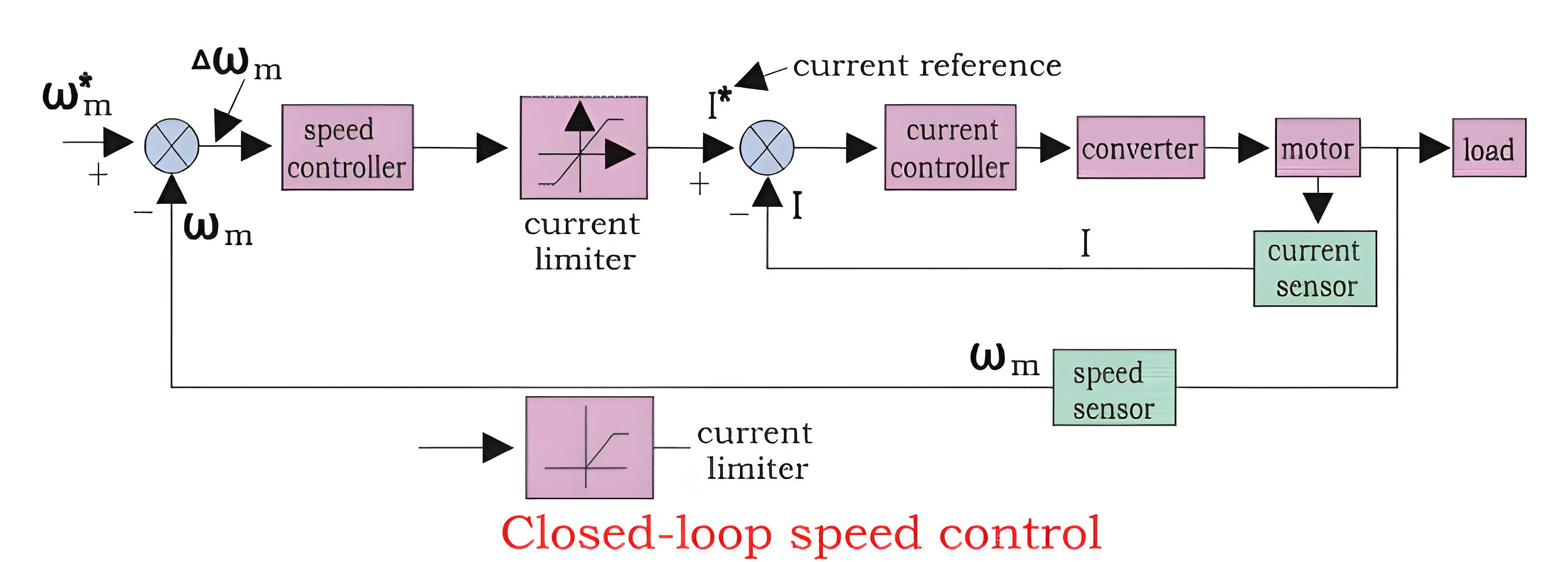
Speed control loops are widely used feedback loops in electrical drives. Looking at a block diagram can help understand how they work.

We can see from the diagram that there are two control loops, which can be said as an inner loop and outer loop. The inner current control loop limits the converter and motor current or motor torque below the safe limit. Now we can understand the function of the control loop and drive by practical examples. Suppose the reference speed W m* increases and there is a positive error ΔWm, which indicates that the speed is needed to be increased.

Now the inner loop increases the current keeping it under maximum allowable current. And then the driver accelerates, when the speed reaches the desired speed then the motor torque is equal to the load torque and there is a decrease in the reference speed Wm which indicates that there is no need of any more acceleration but there must be deceleration, and braking is done by the speed controller at maximum allowable current. So, we can say that during speed controlling the function transfers from motoring to braking and from braking to motoring continuously for the smooth operation and running of the motor.
a369609206a18763570a2394b97f59f2.jpeg

Give a tip and encourage the author!

Recommended

Transformer Noise Control Solutions for Different Installations
1.Noise Mitigation for Ground-Level Independent Transformer RoomsMitigation Strategy:First, conduct a power-off inspection and maintenance of the transformer, including replacing aged insulating oil, checking and tightening all fasteners, and cleaning dust from the unit.Second, reinforce the transformer foundation or install vibration isolation devices—such as rubber pads or spring isolators—selected based on the severity of vibration.Finally, strengthen sound insulation at weak points of the ro
12/25/2025
Recloser Controllers: Key to Smart Grid Reliability
Lightning strikes, fallen tree branches, and even Mylar balloons are enough to interrupt current flow on power lines. That’s why utility companies prevent outages by equipping their overhead distribution systems with reliable recloser controllers.In any smart grid environment, recloser controllers play a critical role in detecting and interrupting transient faults. Although many short circuits on overhead lines can resolve themselves, reclosers help improve service continuity by automatically re
12/11/2025
When to Use a Three-Phase Automatic Voltage Stabilizer?
When to Use a Three-Phase Automatic Voltage Stabilizer?A three-phase automatic voltage stabilizer is suitable for scenarios requiring stable three-phase voltage supply to ensure normal equipment operation, extend service life, and improve production efficiency. Below are typical situations that require the use of a three-phase automatic voltage stabilizer, along with analysis: Significant Grid Voltage FluctuationsScenario: Industrial zones, rural power grids, or remote areas where grid voltage f
12/01/2025
Analysis of PLC Control Technology Application in Intelligent Power Voltage Regulators
When evaluating power quality, voltage is a critical influencing factor. Voltage quality is typically assessed by measuring voltage deviation, fluctuation, waveform distortion, and three-phase symmetry—with voltage deviation being the most important indicator. To ensure high voltage quality, voltage regulation is generally required. Currently, the most widely used and effective method for voltage regulation involves adjusting the tap changer of power transformers.This paper primarily integrates
11/25/2025
Related Products
Send inquiry
+86
Click to upload file
Download
Get the IEE Business Application
Use the IEE-Business app to find equipment, obtain solutions, connect with experts, and participate in industry collaboration anytime, anywhere—fully supporting the development of your power projects and business.