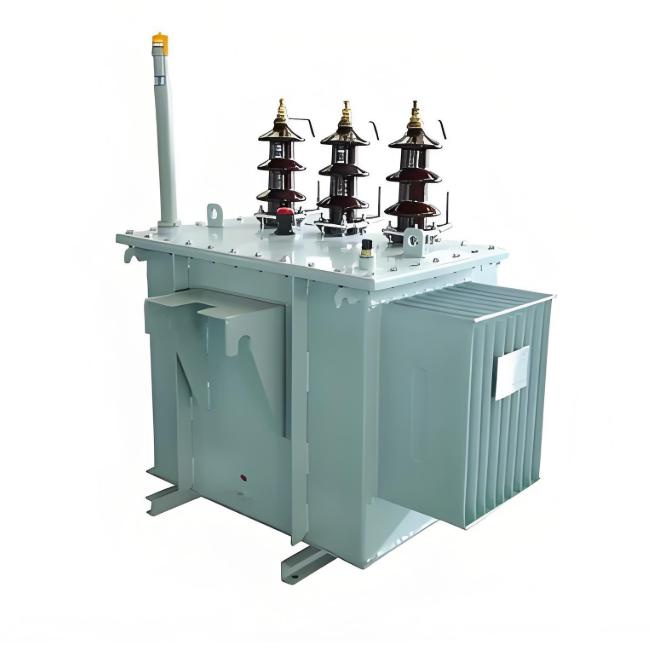
H59/H61 Transformer Failure Analysis and Protection Measures

1.Causes of Damage to Agricultural H59/H61 Oil-Immersed Distribution Transformers
1.1 Insulation Damage
Rural power supply commonly uses a 380/220V mixed system. Due to the high proportion of single-phase loads, H59/H61 oil-immersed distribution transformers often operate under significant three-phase load imbalance. In many cases, the degree of three-phase load imbalance far exceeds the limits permitted by operational regulations, causing premature aging, deterioration, and eventual failure of the winding insulation, leading to burnout.
When H59/H61 oil-immersed distribution transformers experience prolonged overloading, low-voltage side line faults, or sudden large load increases, and no protective devices are installed on the low-voltage side—while the high-voltage side drop-out fuses fail to operate promptly (or at all)—the transformers are forced to carry fault currents far exceeding their rated current (sometimes several times the rated value) for extended periods. This results in a sharp temperature rise, accelerating insulation aging and ultimately burning out the windings.
After long-term operation, sealing components such as rubber beads and gaskets in H59/H61 oil-immersed distribution transformers age, crack, and lose effectiveness. If not detected and replaced in time, this leads to oil leakage and a drop in oil level. Moisture from the air then enters the insulating oil in large quantities, drastically reducing its dielectric strength. In severe oil-deficient conditions, the tap changer may become exposed to air, absorb moisture, and cause discharges or short circuits, burning out the transformer.
Inadequate manufacturing processes—such as incomplete varnish impregnation between winding layers (or poor-quality insulating varnish), insufficient drying, or unreliable winding joint welding—leave hidden insulation defects in H59/H61 oil-immersed distribution transformers. Additionally, during commissioning or maintenance, substandard insulating oil may be added, or moisture and contaminants may enter the oil, degrading oil quality and reducing insulation strength. Over time, this can lead to insulation breakdown and burnout of the H59/H61 oil-immersed distribution transformer.
1.2 Overvoltage
Lightning protection grounding resistance does not meet required standards. Even if it was initially compliant upon commissioning, corrosion, oxidation, breakage, or poor welding of the grounding system’s steel components over time can cause a dramatic increase in grounding resistance, resulting in transformer damage during lightning strikes.
Improper lightning protection configuration is common: many rural H59/H61 oil-immersed distribution transformers are equipped with only one set of high-voltage surge arresters on the high-voltage side. Since rural power systems almost exclusively use Yyn0-connected transformers, lightning strikes can induce both forward and reverse transformation overvoltages. Without surge arresters on the low-voltage side, these overvoltages significantly increase the risk of transformer damage.
The rural 10kV power system has a relatively high probability of ferroresonance. During resonant overvoltage events, the primary-side current of H59/H61 oil-immersed distribution transformers surges sharply, potentially burning out windings or causing bushing flashover—even explosion.
1.3 Harsh Operating Conditions
During summer high-temperature periods or when H59/H61 oil-immersed distribution transformers operate continuously under overload, oil temperature rises excessively. This severely impairs heat dissipation, accelerates insulation aging, deterioration, and failure, and ultimately shortens the transformer’s service life.
1.4 Improper Tap Changer Operation or Poor Quality
Rural electricity loads are dispersed, highly seasonal, with large peak-to-valley differences and long low-voltage lines, resulting in significant voltage fluctuations. As a result, rural electricians often manually adjust the tap changers of H59/H61 oil-immersed distribution transformers. Most of these adjustments do not follow prescribed procedures, and after adjustment, DC resistance values of each phase are rarely measured and compared before re-energizing. Consequently, many transformers suffer from improperly positioned tap changers or poor contact, causing a sharp increase in contact resistance and burning out the tap changer.
Poor-quality tap changers—with inadequate contact between stationary and moving contacts, or mismatched external position indicators versus actual internal positions—can cause discharges or short circuits after energization, leading to destruction of the tap changer or even the entire winding.
1.5 Transformer Core Grounding Issues
Due to inherent quality problems in H59/H61 oil-immersed distribution transformers, the insulating varnish between silicon steel laminations ages over time or deteriorates prematurely for other reasons, causing multi-point grounding of the core and resulting in damage.
1.6 Prolonged Overload Operation
With the development of the rural economy, electricity demand has surged dramatically. However, new H59/H61 oil-immersed distribution transformers have not been timely installed, nor have existing units been replaced with higher-capacity models. As a result, current transformers operate under chronic overload. Combined with the high proportion of single-phase loads in rural areas—which prevents balanced three-phase loading—one phase often experiences severe long-term overload, and neutral-line current greatly exceeds allowable limits. These conditions ultimately lead to burnout of the H59/H61 oil-immersed distribution transformer.
2. Countermeasures
According to relevant regulations, every H59/H61 oil-immersed distribution transformer must be equipped with three fundamental protections: against lightning, short circuits, and overloads. Lightning protection requires surge arresters on both high- and low-voltage sides, with zinc oxide (ZnO) arresters preferred. Short-circuit and overload protections should be considered separately: high-voltage drop-out fuses should primarily protect against internal short circuits, while overloads and low-voltage line short circuits should be handled by low-voltage circuit breakers or fuses installed on the low-voltage side.
During operation, clamp-on ammeters should be used regularly to measure three-phase load currents and check whether the imbalance remains within regulatory limits. If imbalance exceeds allowable values, immediate load redistribution must be performed to bring it back into compliance.
Routine inspections of H59/H61 oil-immersed distribution transformers must be conducted as per regulations, checking oil color, oil level, and oil temperature for normality and looking for oil leakage. Bushing surfaces should be examined for flashover or discharge marks. Any abnormalities must be addressed immediately. The transformer exterior, especially bushings, should be cleaned periodically to remove dirt and contaminants.
Before the annual thunderstorm season, high- and low-voltage surge arresters and grounding down conductors must undergo thorough inspection. Non-compliant arresters must be replaced. Grounding down conductors must show no broken strands, poor welds, or fractures. Aluminum wire must not be used; instead, grounding conductors should be made of 10–12 mm diameter round steel or 30×3 mm flat steel.
Grounding resistance should be tested annually during dry winter weather (after at least one week of continuous clear skies). Non-compliant grounding systems must be rectified. When connecting the transformer’s terminal studs to overhead conductors on the high- and low-voltage sides, copper-aluminum transition connectors or copper-aluminum equipment clamps must be used. Before connection, the contact surfaces of these connectors must be polished with No. 0 sandpaper and coated with an appropriate amount of conductive grease.
Tap changer operations on H59/H61 oil-immersed distribution transformers must strictly follow regulations. After adjustment, the transformer must not be immediately re-energized. Instead, DC resistance measurements of all phases before and after the operation must be compared using a Wheatstone bridge. If no significant change is observed, the post-operation phase-to-phase and line-to-line DC resistance values must be compared: phase differences must not exceed 4%, and line differences must be less than 2%. If these criteria are not met, the cause must be identified and corrected. Only after meeting these requirements may the H59/H61 oil-immersed distribution transformer be returned to service.