• Product
  • Suppliers
  • Manufacturers
  • Solutions
  • Free tools
  • Knowledges
  • Experts
  • Communities
Search


Hazards Causes and Types of Transformer Core Multi point Ground Faults

Leon
Field: Fault Diagnosis
China

Hazards of Multi-point Core Ground Faults

A transformer core must not have multi-point grounding during normal operation. An alternating magnetic field around the winding induces parasitic capacitances between windings, core, and shell. Live windings couple through these capacitances, creating a core floating potential relative to ground. Uneven distances between components cause potential differences; when high enough, they spark. This intermittent discharge degrades transformer oil and solid insulation over time.

To prevent this, the core and shell are reliably connected to share the same potential. However, two or more core/metal component ground points form a closed loop, causing circulation and local overheating. This decomposes oil, reduces insulation performance, and in severe cases, burns core silicon steel sheets—leading to major main transformer accidents. Thus, main transformer cores must use single-point grounding.

Causes of Core Ground Faults

Key causes include: grounding plate short circuits from poor construction/design; multi-point grounding from accessories or external factors; metal debris left in the transformer; and burrs, rust, or welding slag due to shoddy core processing.

Types of Core Failures

Six common types:
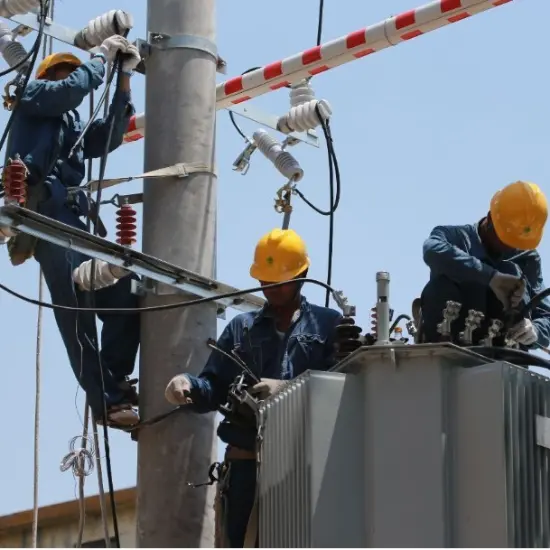
  • Core contact with shell/clamp: e.g., unremoved transport nails, clamp limb contact with core columns, warped silicon steel sheets touching clamps, fallen cardboard between clamp feet and iron yoke, or overlong thermometer seats.

  • Overlong core bolt steel covers shorting with silicon steel sheets.

  • Tank foreign objects causing partial short circuits (e.g., a screwdriver in a 31500/110 transformer, a 120mm copper wire in a 60000/220 unit).

  • Damp/damaged insulation (sludge, moisture, degraded clamp/pad/iron box insulation) leading to high-resistance multi-point grounding.

  • Worn submersible pump bearings releasing metal powder; electromagnetic attraction forms a bridge between lower rails, pads, or tank bottom, causing multi-point grounding.

  • Inadequate operation, maintenance, and lack of scheduled checks.

Give a tip and encourage the author!

Recommended

Faults and Handling of Single-phase Grounding in 10kV Distribution Lines
Characteristics and Detection Devices for Single-Phase Ground Faults1. Characteristics of Single-Phase Ground FaultsCentral Alarm Signals:The warning bell rings, and the indicator lamp labeled “Ground Fault on [X] kV Bus Section [Y]” illuminates. In systems with a Petersen coil (arc suppression coil) grounding the neutral point, the “Petersen Coil Operated” indicator also lights up.Insulation Monitoring Voltmeter Indications:The voltage of the faulted phase decreases (in
01/30/2026
Neutral point grounding operation mode for 110kV~220kV power grid transformers
The arrangement of neutral point grounding operation modes for 110kV~220kV power grid transformers shall meet the insulation withstand requirements of transformer neutral points, and shall also strive to keep the zero-sequence impedance of substations basically unchanged, while ensuring that the zero-sequence comprehensive impedance at any short-circuit point in the system does not exceed three times the positive-sequence comprehensive impedance.For 220kV and 110kV transformers in new constructi
01/29/2026
Why Do Substations Use Stones, Gravel, Pebbles, and Crushed Rock?
Why Do Substations Use Stones, Gravel, Pebbles, and Crushed Rock?In substations, equipment such as power and distribution transformers, transmission lines, voltage transformers, current transformers, and disconnect switches all require grounding. Beyond grounding, we will now explore in depth why gravel and crushed stone are commonly used in substations. Though they appear ordinary, these stones play a critical safety and functional role.In substation grounding design—especially when multiple gr
01/29/2026
HECI GCB for Generators – Fast SF6 Circuit Breaker
1.Definition and Function1.1 Role of the Generator Circuit BreakerThe Generator Circuit Breaker (GCB) is a controllable disconnect point located between the generator and the step-up transformer, serving as an interface between the generator and the power grid. Its primary functions include isolating generator-side faults and enabling operational control during generator synchronization and grid connection. The operating principle of a GCB is not significantly different from that of a standard c
01/06/2026
Send inquiry
+86
Click to upload file
Download
Get the IEE Business Application
Use the IEE-Business app to find equipment, obtain solutions, connect with experts, and participate in industry collaboration anytime, anywhere—fully supporting the development of your power projects and business.