• Product
  • Suppliers
  • Manufacturers
  • Solutions
  • Free tools
  • Knowledges
  • Experts
  • Communities
Search


Why Is Oil Used in Power Transformers? Key Benefits Explained

Rockwell
Field: Manufacturing
China

Most power transformers are oil-immersed, as the use of oil as both a cooling and insulating medium has proven highly effective in the electrical industry. Below are the primary reasons for using oil in power transformers:

Cooling: Oil possesses excellent cooling properties. It absorbs heat generated during transformer operation—particularly from the windings and core due to electrical losses—and transfers it away, effectively dissipating thermal energy and preventing overheating.

Insulation: Oil provides reliable electrical insulation, minimizing the risk of electrical breakdown and arcing between high-voltage and low-voltage windings. With its high dielectric strength, insulating oil can withstand significant electric field stresses without failure.

Dielectric Properties: The superior dielectric characteristics of oil make it an ideal insulating medium. It resists electrical conduction under high voltage, helping to prevent short circuits and ensuring stable, reliable transformer operation.
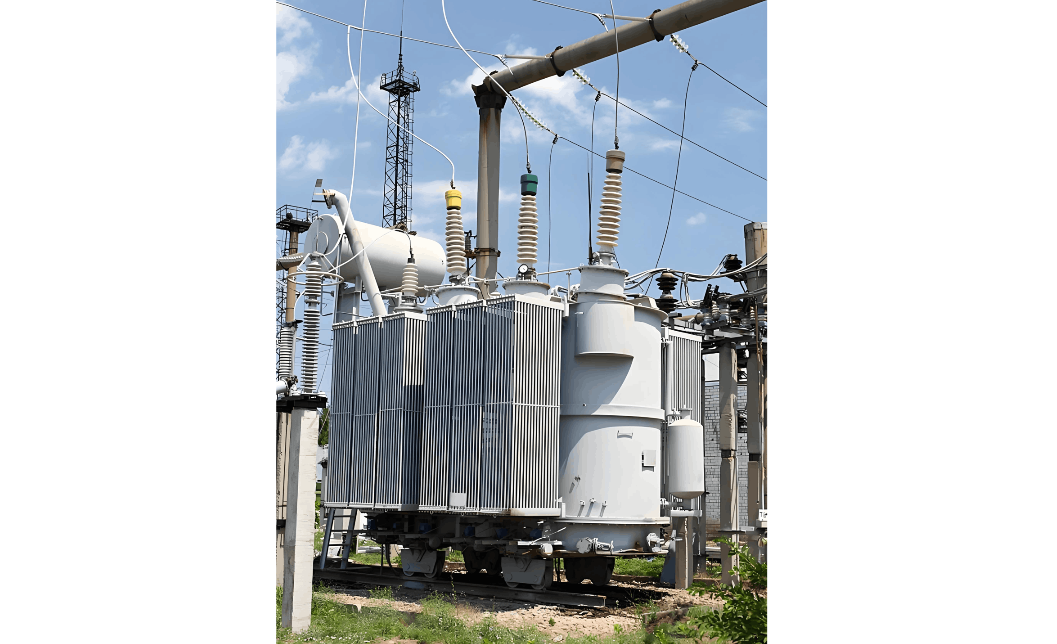
Chemical Stability: Transformer oil is chemically stable and resistant to degradation over time. This stability is essential for preserving its insulating capabilities and supporting the long-term reliability of the transformer.

Arc Quenching: In the event of an internal fault or arcing, oil acts as an effective arc-quenching medium. It helps extinguish the arc by cooling and deionizing the plasma, thereby limiting damage to internal components.

Ease of Maintenance: Oil-immersed transformers are relatively easy to maintain. The condition of the oil can be routinely tested for dielectric strength and other key properties. If needed, the oil can be filtered, reconditioned, or replaced to restore optimal performance.

Cost-Effectiveness: Compared to alternative cooling and insulation methods—such as air in dry-type transformers or gases like SF₆—transformer oil offers a favorable balance of performance, efficiency, and cost, making it economically advantageous for widespread use.

While oil-immersed transformers are known for their reliability and efficiency, ongoing research continues to explore alternative insulation and cooling technologies, such as dry-type transformers that use solid insulation materials. These alternatives are often preferred in applications where environmental safety, fire risk, or oil leakage are significant concerns.
Give a tip and encourage the author!

Recommended

Faults and Handling of Single-phase Grounding in 10kV Distribution Lines
Characteristics and Detection Devices for Single-Phase Ground Faults1. Characteristics of Single-Phase Ground FaultsCentral Alarm Signals:The warning bell rings, and the indicator lamp labeled “Ground Fault on [X] kV Bus Section [Y]” illuminates. In systems with a Petersen coil (arc suppression coil) grounding the neutral point, the “Petersen Coil Operated” indicator also lights up.Insulation Monitoring Voltmeter Indications:The voltage of the faulted phase decreases (in
01/30/2026
Neutral point grounding operation mode for 110kV~220kV power grid transformers
The arrangement of neutral point grounding operation modes for 110kV~220kV power grid transformers shall meet the insulation withstand requirements of transformer neutral points, and shall also strive to keep the zero-sequence impedance of substations basically unchanged, while ensuring that the zero-sequence comprehensive impedance at any short-circuit point in the system does not exceed three times the positive-sequence comprehensive impedance.For 220kV and 110kV transformers in new constructi
01/29/2026
Why Do Substations Use Stones, Gravel, Pebbles, and Crushed Rock?
Why Do Substations Use Stones, Gravel, Pebbles, and Crushed Rock?In substations, equipment such as power and distribution transformers, transmission lines, voltage transformers, current transformers, and disconnect switches all require grounding. Beyond grounding, we will now explore in depth why gravel and crushed stone are commonly used in substations. Though they appear ordinary, these stones play a critical safety and functional role.In substation grounding design—especially when multiple gr
01/29/2026
Why Must a Transformer Core Be Grounded at Only One Point? Isn't Multi-Point Grounding More Reliable?
Why Does the Transformer Core Need to Be Grounded?During operation, the transformer core, along with the metal structures, parts, and components that fix the core and windings, are all situated in a strong electric field. Under the influence of this electric field, they acquire a relatively high potential with respect to ground. If the core is not grounded, a potential difference will exist between the core and the grounded clamping structures and tank, which may lead to intermittent discharge.I
01/29/2026
Related Products
Send inquiry
+86
Click to upload file
Download
Get the IEE Business Application
Use the IEE-Business app to find equipment, obtain solutions, connect with experts, and participate in industry collaboration anytime, anywhere—fully supporting the development of your power projects and business.