• Product
  • Suppliers
  • Manufacturers
  • Solutions
  • Free tools
  • Knowledges
  • Experts
  • Communities
Search


Key Considerations for Step-Up Transformer Selection in Grid-Connected PV Power Systems

Edwiin
Field: Power switch
China

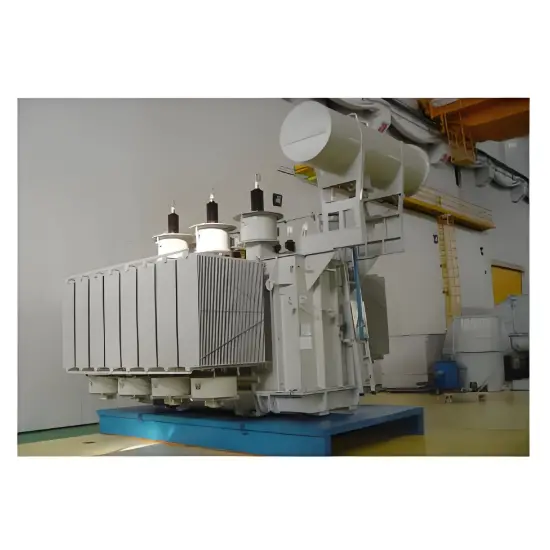
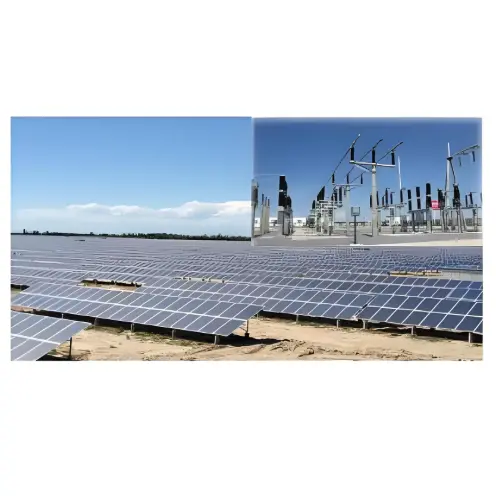
In grid-connected photovoltaic (PV) power generation systems, the step-up transformer is a critical component. Optimizing transformer selection to minimize inherent losses and enhance efficiency is essential for improving overall system performance. This article outlines key considerations for proper step-up transformer selection in PV systems.

  • Transformer Capacity Selection
    The required transformer capacity is calculated as: Apparent Power = Active Power / Power Factor. Power factor requirements vary by region—typically 0.85 for construction and small industrial loads, and 0.9 for large industrial loads. For example, a 550 kW load at 0.85 power factor requires 550 / 0.85 = 647 kVA, so a 630 kVA transformer is suitable. Total load should not exceed 80% of the transformer’s rated capacity.

  • Transformer Voltage Selection
    The primary winding voltage should match the source line voltage, while the secondary voltage must align with the connected equipment. For low-voltage three-phase four-wire distribution, appropriate voltage levels (e.g., 10 kV, 35 kV, or 110 kV) should be selected based on primary-side requirements.

  • Transformer Phase Selection
    Choose between single-phase and three-phase configurations according to the power source and load requirements.

  • Transformer Winding Connection Group Selection
    Three-phase windings can be connected in star (Y), delta (D), or zigzag (Z) configurations. The globally preferred connection for distribution transformers is Dyn11, which offers several advantages over Yyn0:

    • Harmonic Suppression: The delta (D) connection effectively suppresses higher-order harmonics.

    • Harmonic Circulation: Third harmonic currents circulate within the delta winding, neutralizing third harmonic flux from the low-voltage side.

    • Harmonic Containment: Third harmonic EMF in the high-voltage winding remains confined within the delta loop, preventing injection into the public grid.

    • Lower Zero-Sequence Impedance: Dyn11 transformers exhibit significantly lower zero-sequence impedance, aiding in the clearance of low-voltage single-phase ground faults.

    • Superior Neutral Current Handling: Capable of handling neutral currents exceeding 75% of phase current, making them ideal for unbalanced loads.

    • Continuity Under Phase Loss: If one high-voltage fuse blows, the remaining two phases can continue operating with Dyn11, unlike with Yyn0.

Therefore, Dyn11-connected transformers are strongly recommended.

Load Loss, No-Load Loss, and Impedance Voltage
Due to the daytime operation pattern of PV systems, transformers incur no-load losses whenever energized, regardless of output. Minimizing load losses is crucial; if nighttime operation occurs, low no-load losses are also important.

This selection strategy ensures efficient transformer operation within PV systems, reducing overall losses and enhancing power generation performance.
Give a tip and encourage the author!

Recommended

Faults and Handling of Single-phase Grounding in 10kV Distribution Lines
Characteristics and Detection Devices for Single-Phase Ground Faults1. Characteristics of Single-Phase Ground FaultsCentral Alarm Signals:The warning bell rings, and the indicator lamp labeled “Ground Fault on [X] kV Bus Section [Y]” illuminates. In systems with a Petersen coil (arc suppression coil) grounding the neutral point, the “Petersen Coil Operated” indicator also lights up.Insulation Monitoring Voltmeter Indications:The voltage of the faulted phase decreases (in
01/30/2026
Neutral point grounding operation mode for 110kV~220kV power grid transformers
The arrangement of neutral point grounding operation modes for 110kV~220kV power grid transformers shall meet the insulation withstand requirements of transformer neutral points, and shall also strive to keep the zero-sequence impedance of substations basically unchanged, while ensuring that the zero-sequence comprehensive impedance at any short-circuit point in the system does not exceed three times the positive-sequence comprehensive impedance.For 220kV and 110kV transformers in new constructi
01/29/2026
Why Do Substations Use Stones, Gravel, Pebbles, and Crushed Rock?
Why Do Substations Use Stones, Gravel, Pebbles, and Crushed Rock?In substations, equipment such as power and distribution transformers, transmission lines, voltage transformers, current transformers, and disconnect switches all require grounding. Beyond grounding, we will now explore in depth why gravel and crushed stone are commonly used in substations. Though they appear ordinary, these stones play a critical safety and functional role.In substation grounding design—especially when multiple gr
01/29/2026
What’s the Difference Between Rectifier Transformers and Power Transformers?
What is a Rectifier Transformer?"Power conversion" is a general term encompassing rectification, inversion, and frequency conversion, with rectification being the most widely used among them. Rectifier equipment converts input AC power into DC output through rectification and filtering. A rectifier transformer serves as the power supply transformer for such rectifier equipment. In industrial applications, most DC power supplies are obtained by combining a rectifier transformer with rectifier equ
01/29/2026
Related Products
Send inquiry
+86
Click to upload file
Download
Get the IEE Business Application
Use the IEE-Business app to find equipment, obtain solutions, connect with experts, and participate in industry collaboration anytime, anywhere—fully supporting the development of your power projects and business.