What are the principles of forced re-energization of transmission lines?

Principles of Forced Re-energization of Transmission Lines
Regulations for Forced Re-energization of Transmission Lines
Correctly select the forced re-energization end of the line. If necessary, change the connection configuration before forced re-energization, taking into account the reduction of short-circuit capacity and its impact on grid stability.
There must be a transformer with its neutral point directly grounded on the busbar at the forced re-energization end.
Pay attention to the impact of forced re-energization on the transient stability of adjacent lines. If necessary, first reduce the load on all lines and units within the dynamic stability range before performing forced re-energization.
When a line trips or fails to reclose, accompanied by obvious system oscillation, immediate forced re-energization should not be performed. The oscillation must be checked and eliminated before considering whether to perform forced re-energization.
The circuit breaker for forced re-energization and its auxiliary equipment must be in good condition, and protection must be complete and functional.
During forced re-energization, busbar differential protection should be selectively put into operation and have backup protection for the connection configuration, ensuring that a failure of the circuit breaker to trip will not result in a complete outage of both busbars. When only one busbar is in operation, forced re-energization of lines should be avoided as much as possible.
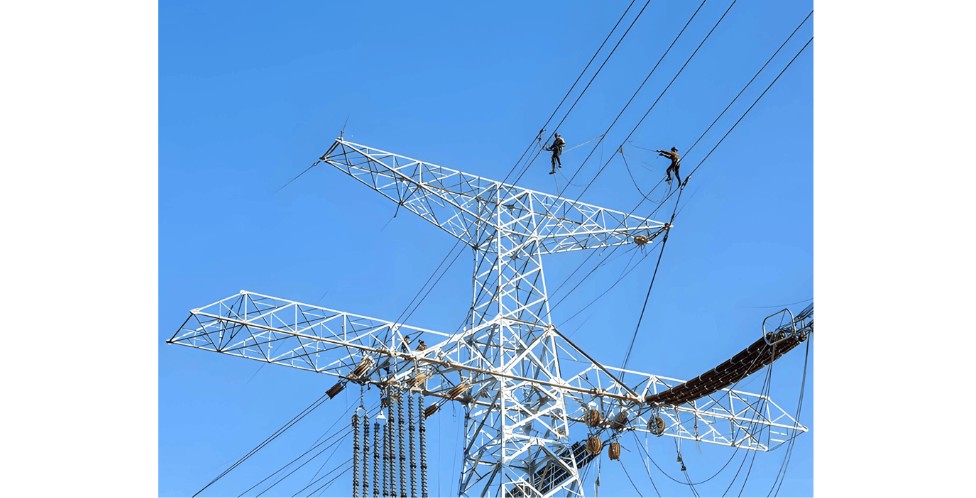
The Following Cases Prohibit Forced Re-energization After a Line Trip
Standby lines in an unloaded charging state;
Lines under trial operation;
After a line trip, if the load has already been transferred to other lines via automatic backup power switching, and power supply is unaffected;
Cable lines;
Lines where live-line work is being performed;
Line-transformer group circuit breakers that trip and fail to reclose;
When operating personnel have already observed obvious fault phenomena;
Lines where the circuit breaker has defects or insufficient interrupting capacity;
Lines known to have serious defects (e.g., submerged by water, severely tilted towers, severely broken conductor strands, etc.).
In the Following Cases, Forced Re-energization Must Be Performed Only After Contacting and Obtaining Permission from Dispatch
Busbar fault, where no obvious fault point is found after inspection;
Ring network line fault trip;
One circuit of a double-circuit line trips due to fault;
Lines that may cause out-of-phase closing;
Transformer backup protection trip.