• Product
  • Suppliers
  • Manufacturers
  • Solutions
  • Free tools
  • Knowledges
  • Experts
  • Communities
Search


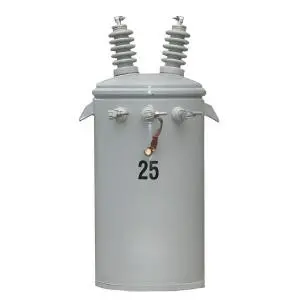
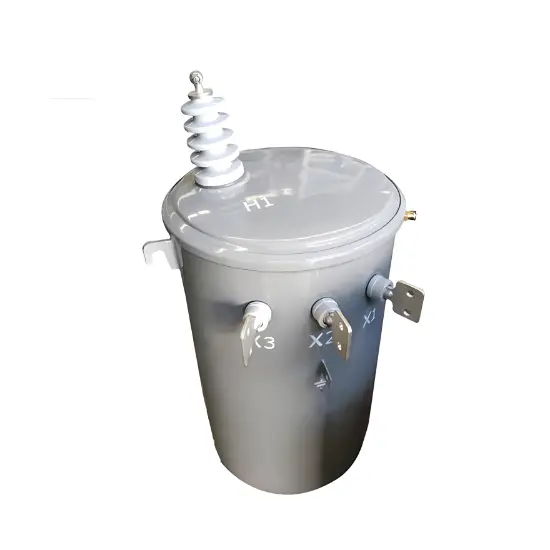
10kv Single Phase 25 kVA Pole Mounted Electric Distribution Transformer

  • 10kv Single Phase 25 kVA Pole Mounted Electric Distribution Transformer

Key attributes

Brand ROCKWILL
Model NO. 10kv Single Phase 25 kVA Pole Mounted Electric Distribution Transformer
Rated voltage 10kV
Rated frequency 50/60Hz
Rated capacity 100kVA
Series D

Product descriptions from the supplier

Description

Product Description

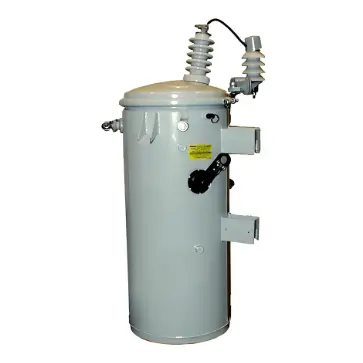
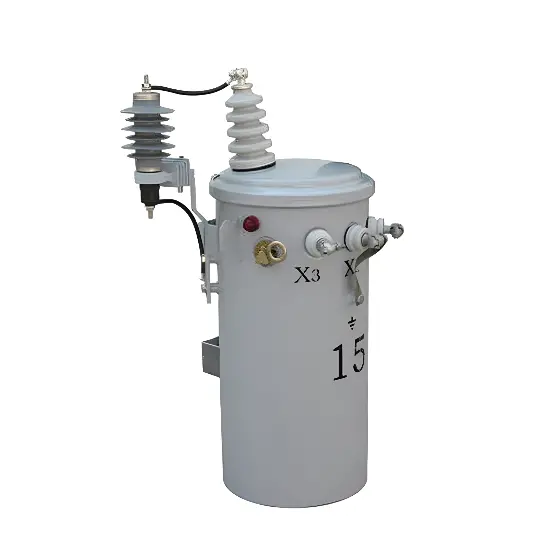
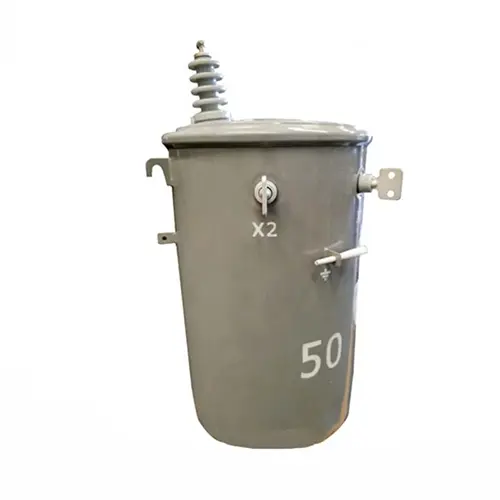
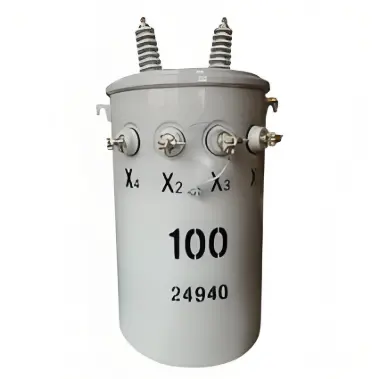
Rockwill's Single Phase Distribution Transformers are designed for versatile power distribution across residential, commercial, and light industrial applications. Our product line includes pole-mounted transformers (up to 333 kVA, 34.5 kV) and pad-mounted transformers, rigorously tested to comply with ANSI/CSA, IEEE C.57, and IEC 60076 standards. These transformers are optimized for efficiency, safety, and durability in diverse environments.

Key Features

Wide Power Range: Pole-mounted units support up to 333 kVA with high-voltage capacity up to 34.5 kV.

Multi-Standard Compliance: Meets ANSI/CSA, IEEE, and IEC requirements for global applicability.

Flexible Installation:

  • Pole-Mounted: Directly installed on wooden/concrete poles for overhead distribution (conventional or CSP types).

  • Pad-Mounted: Compact design for ground-level deployment in urban/rural areas.

Enhanced Safety: Fully sealed and insulated construction with optional accessories:

  • Load switches, bayonet fuses, current-limiting fuses.

  • Oil level/pressure gauges, pressure relief valves, surge arrestors.

Product Parameters

Product Advantages

  • Ultra-Reliable Performance: Low loss, low noise, and strong overload capacity for continuous operation.

  • Eco-Friendly & Safe: Hermetically sealed design prevents leaks; optional biodegradable oil for reduced environmental impact.

  • Smart Integration: Compatible with IoT monitoring systems (optional) for real-time diagnostics.

  • Low Maintenance: Corrosion-resistant tanks and robust materials extend service life.

Applications

  • Residential: Overhead distribution for housing complexes and rural electrification.

  • Commercial: Power supply for shops, offices, and street lighting.

  • Industrial: Light industrial loads and renewable energy integration.

Know your supplier
Online store
On-time delivery rate
Response time
100.0%
≤4h
Company overview
Workplace: 108000m²m² Total staff: 700+ Highest Annual Export(usD): 150000000
Workplace: 108000m²m²
Total staff: 700+
Highest Annual Export(usD): 150000000
Services
Business Type: Design/Manufacture/Sales
Main Categories: High Voltage Electrical Apparatus/Electric transformer
Whole life care manager
Whole-life care management services for equipment procurement, use, maintenance, and after-sales, ensuring safe operation of electrical equipment, continuous control, and worry-free electricity consumption.
The equipment supplier has passed platform qualification certification and technical evaluation, ensuring compliance, professionalism, and reliability from the source.

Related Products

Related Knowledges

  • Main Transformer Accidents and Light Gas Operation Issues
    1. Accident Record (March 19, 2019)At 16:13 on March 19, 2019, the monitoring background reported a light gas action of No. 3 main transformer. In accordance with the Code for Operation of Power Transformers (DL/T572-2010), operation and maintenance (O&M) personnel inspected the on-site condition of No. 3 main transformer.On-site confirmation: The WBH non-electrical protection panel of No. 3 main transformer reported a Phase B light gas action of the transformer body, and the reset was ineff
    02/05/2026
  • Faults and Handling of Single-phase Grounding in 10kV Distribution Lines
    Characteristics and Detection Devices for Single-Phase Ground Faults1. Characteristics of Single-Phase Ground FaultsCentral Alarm Signals:The warning bell rings, and the indicator lamp labeled “Ground Fault on [X] kV Bus Section [Y]” illuminates. In systems with a Petersen coil (arc suppression coil) grounding the neutral point, the “Petersen Coil Operated” indicator also lights up.Insulation Monitoring Voltmeter Indications:The voltage of the faulted phase decreases (in
    01/30/2026
  • Neutral point grounding operation mode for 110kV~220kV power grid transformers
    The arrangement of neutral point grounding operation modes for 110kV~220kV power grid transformers shall meet the insulation withstand requirements of transformer neutral points, and shall also strive to keep the zero-sequence impedance of substations basically unchanged, while ensuring that the zero-sequence comprehensive impedance at any short-circuit point in the system does not exceed three times the positive-sequence comprehensive impedance.For 220kV and 110kV transformers in new constructi
    01/29/2026
  • Why Do Substations Use Stones, Gravel, Pebbles, and Crushed Rock?
    Why Do Substations Use Stones, Gravel, Pebbles, and Crushed Rock?In substations, equipment such as power and distribution transformers, transmission lines, voltage transformers, current transformers, and disconnect switches all require grounding. Beyond grounding, we will now explore in depth why gravel and crushed stone are commonly used in substations. Though they appear ordinary, these stones play a critical safety and functional role.In substation grounding design—especially when multiple gr
    01/29/2026
  • Why Must a Transformer Core Be Grounded at Only One Point? Isn't Multi-Point Grounding More Reliable?
    Why Does the Transformer Core Need to Be Grounded?During operation, the transformer core, along with the metal structures, parts, and components that fix the core and windings, are all situated in a strong electric field. Under the influence of this electric field, they acquire a relatively high potential with respect to ground. If the core is not grounded, a potential difference will exist between the core and the grounded clamping structures and tank, which may lead to intermittent discharge.I
    01/29/2026
  • Understanding Transformer Neutral Grounding
    I. What is a Neutral Point?In transformers and generators, the neutral point is a specific point in the winding where the absolute voltage between this point and each external terminal is equal. In the diagram below, pointOrepresents the neutral point.II. Why Does the Neutral Point Need Grounding?The electrical connection method between the neutral point and earth in a three-phase AC power system is called theneutral grounding method. This grounding method directly affects:The safety, reliabilit
    01/29/2026

Related Solutions

  • Innovative Application Solutions for Single-Phase Distribution Transformers in U.S. Rural and Suburban Grid Modernization
    1 Rural Grid Challenges and Technical Advantages of Single-Phase TransformersThe U.S. rural and suburban grid faces critical challenges: aging infrastructure and low load density result in inefficient power supply, with line losses reaching 7%–12%—significantly higher than urban grids (4%–6%). Over 60% of rural areas exceed the 300-meter power supply radius standard, causing widespread voltage instability (peak voltage drops of 15%–20%). Three-phase transf
    06/19/2025
  • Single-Phase Distribution Transformers: The Key to Flexible and Efficient Deployment of EV Charging Infrastructure
    Single-Phase Distribution Transformers: The Key to Flexible and Efficient Deployment of EV Charging InfrastructureAmid the rapid deployment of EV charging infrastructure, overcoming grid limitations and achieving cost-effective flexible layouts has become critical. Traditional three-phase power supply solutions often face challenges like lengthy installation cycles and extensive modifications, particularly struggling in imbalanced distributed scenarios. Single-phase distribution transformers are
    06/19/2025
  • Advanced Solutions for Single Phase Distribution Transformers in the US Market
    Ⅰ. Characteristics of the U.S. Power System & Technical Requirements for Single-Phase TransformersThe U.S. power system utilizes a 480V/277V three-phase four-wire system as the primary power supply standard for commercial facilities, while residential applications adopt a 120V/240V single-phase three-wire system.Technical Parameters: Input Voltage: Must cover a fluctuation range of ±10% (e.g., 277V ±27.7V). Output Voltage Accuracy: Controlled within ±3%. Insu
    06/19/2025
Related Free tools
Haven't found the right supplier yet? Let matching verified suppliers find you. Get Quotation Now
Haven't found the right supplier yet? Let matching verified suppliers find you.
Get Quotation Now
Send inquiry
+86
Click to upload file
Download
Get the IEE Business Application
Use the IEE-Business app to find equipment, obtain solutions, connect with experts, and participate in industry collaboration anytime, anywhere—fully supporting the development of your power projects and business.