40.5kV HV Gas Insulated Switchgear (GIS)
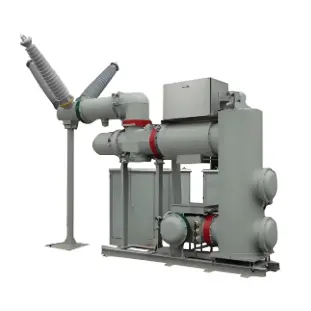
Key attributes
| Brand | ROCKWILL |
| Model NO. | 40.5kV HV Gas Insulated Switchgear (GIS) |
| Rated voltage | 40.5kV |
| Rated normal current | 2000A |
| Series | ZF28 |
Product descriptions from the supplier
Description
The 40.5kV GIS equipment represents a new - generation medium - voltage switchgear, evolved from high - voltage 126kV GIS technology. It finds applications in power systems, power generation, rail transit, petrochemicals, metallurgy, mining, building materials, and other large industrial sectors.
Tailored for the retrofit of old air - insulated switchgears, this product undergoes specialized optimization. With a cabinet width ranging from 1200mm to 1680mm and a depth from 2800mm to 3200mm, it enables retrofitting without the need to redo foundations, replace cables, or reinforce load - bearing structures.
Features
Superior Insulation: Boasts a fully enclosed, gas - insulated structure. Eliminates issues like condensation, insulation deterioration - induced discharge, and contact overheating common in air - insulated switchgears.
Enhanced Safety & Control: Features a three - position disconnector with an electric mechanism and one - key sequential control. Prevents risks such as manual operation jamming of mobile circuit breakers and avoids tipping - related injuries.
Retrofit - Friendly: Ideal for retrofitting old air - insulated switchgears. No need to redo foundations, replace cables, or shut down the entire power station during the process.
Advanced Circuit Breaker: Equipped with a self - blasting SF6 circuit breaker. Switching reactive loads won’t cause current interception. Comes with a C2 - level certification report for back - to - back capacitor banks from Xi'an High Voltage Apparatus Research Institute Co., Ltd.
User - Adaptable Operation: Retains the operating habits of traditional switchgear products. Operation and maintenance personnel can quickly get accustomed to using this new product.
Eco - Friendly Option: Aligns with green environmental protection trends. Offers product solutions with mixed gases.
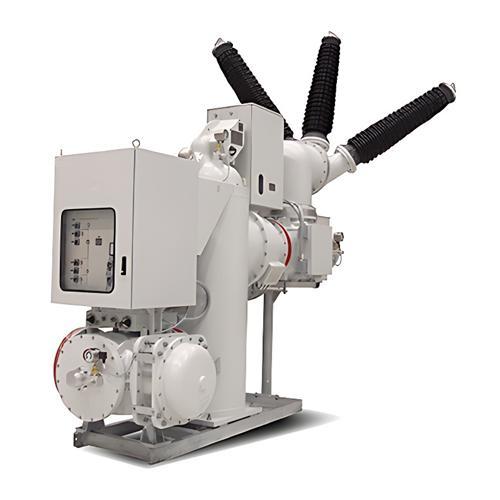
Technical Parameters:

Insulation Principle:
-
In an electric field, the electrons in SF₆ gas molecules are slightly displaced from the nuclei. However, due to the stability of the SF₆ molecular structure, it is difficult for electrons to escape and form free electrons, resulting in high insulation resistance. In GIS (Gas-Insulated Switchgear) equipment, the insulation is achieved by precisely controlling the pressure, purity, and electric field distribution of the SF₆ gas. This ensures a uniform and stable insulating electric field between the high-voltage conductive parts and the grounded enclosure, as well as between different phase conductors.
-
Under normal operating voltage, the few free electrons in the gas gain energy from the electric field, but this energy is not sufficient to cause collision ionization of the gas molecules. This ensures the maintenance of the insulating properties.
Due to the excellent insulation performance, arc extinguishing performance and stability performance of SF6 gas, GIS equipment has the advantages of small footprint, strong arc extinguishing ability and high reliability, but the insulation ability of SF6 gas is greatly affected by the uniformity of the electric field, and it is easy to have insulation abnormalities when there are tips or foreign objects inside the GIS.
GIS equipment adopts a fully enclosed structure, which brings the advantages of internal components without environmental interference, long maintenance cycle, low maintenance workload, low electromagnetic interference, etc., while also having problems such as complex single overhaul work and relatively poor detection methods, and when the closed structure is eroded and damaged by the external environment, it will further bring a series of problems such as water ingress and air leakage.

Related Products
-
550kV Gas Insulated Switchgear HV (GIS)
-
420kV HV Gas Insualted Switchgear(GIS)
-
145kV HV Gas-Insulated Switchgear (GIS)
-
252kV HV Gas Insulated Switchgear (GIS)
-
800kV HV Gas Insulated Switchgear (GIS)
-
330kV 345kV 400kV 550kV High Voltage Gas Insulated Switchgear (GIS) Original Manufacturer
-
72.5kV 126kV 145kV High Voltage Gas Insulated Switchgear (GIS)for Power System
Related Knowledges
-
 Faults and Handling of Single-phase Grounding in 10kV Distribution LinesCharacteristics and Detection Devices for Single-Phase Ground Faults1. Characteristics of Single-Phase Ground FaultsCentral Alarm Signals:The warning bell rings, and the indicator lamp labeled “Ground Fault on [X] kV Bus Section [Y]” illuminates. In systems with a Petersen coil (arc suppression coil) grounding the neutral point, the “Petersen Coil Operated” indicator also lights up.Insulation Monitoring Voltmeter Indications:The voltage of the faulted phase decreases (in01/30/2026
 -
 Neutral point grounding operation mode for 110kV~220kV power grid transformersThe arrangement of neutral point grounding operation modes for 110kV~220kV power grid transformers shall meet the insulation withstand requirements of transformer neutral points, and shall also strive to keep the zero-sequence impedance of substations basically unchanged, while ensuring that the zero-sequence comprehensive impedance at any short-circuit point in the system does not exceed three times the positive-sequence comprehensive impedance.For 220kV and 110kV transformers in new constructi01/29/2026
 -
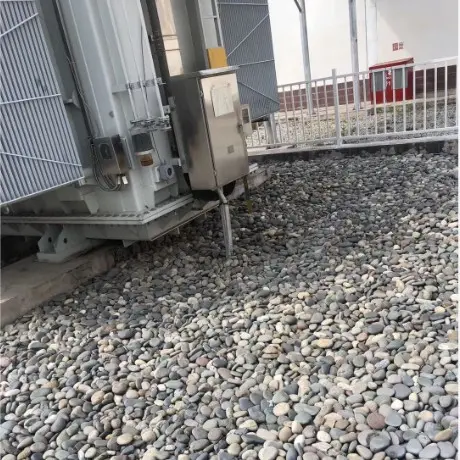 Why Do Substations Use Stones, Gravel, Pebbles, and Crushed Rock?Why Do Substations Use Stones, Gravel, Pebbles, and Crushed Rock?In substations, equipment such as power and distribution transformers, transmission lines, voltage transformers, current transformers, and disconnect switches all require grounding. Beyond grounding, we will now explore in depth why gravel and crushed stone are commonly used in substations. Though they appear ordinary, these stones play a critical safety and functional role.In substation grounding design—especially when multiple gr01/29/2026
 -
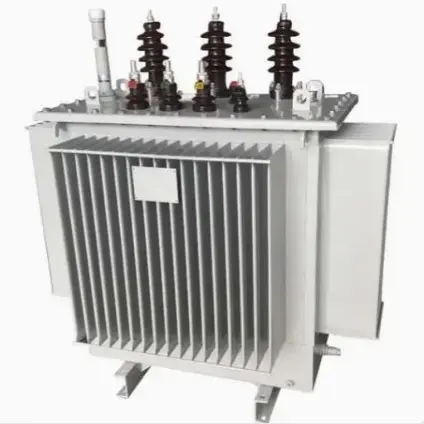 Why Must a Transformer Core Be Grounded at Only One Point? Isn't Multi-Point Grounding More Reliable?Why Does the Transformer Core Need to Be Grounded?During operation, the transformer core, along with the metal structures, parts, and components that fix the core and windings, are all situated in a strong electric field. Under the influence of this electric field, they acquire a relatively high potential with respect to ground. If the core is not grounded, a potential difference will exist between the core and the grounded clamping structures and tank, which may lead to intermittent discharge.I01/29/2026
 -
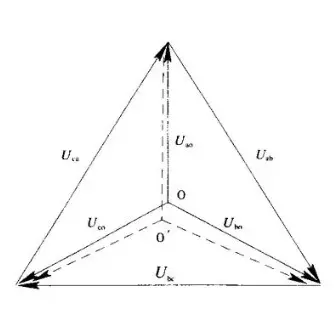 Understanding Transformer Neutral GroundingI. What is a Neutral Point?In transformers and generators, the neutral point is a specific point in the winding where the absolute voltage between this point and each external terminal is equal. In the diagram below, pointOrepresents the neutral point.II. Why Does the Neutral Point Need Grounding?The electrical connection method between the neutral point and earth in a three-phase AC power system is called theneutral grounding method. This grounding method directly affects:The safety, reliabilit01/29/2026
 -
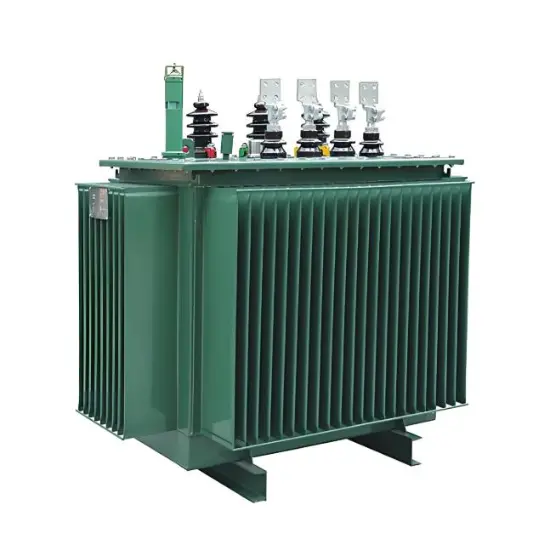 What’s the Difference Between Rectifier Transformers and Power Transformers?What is a Rectifier Transformer?"Power conversion" is a general term encompassing rectification, inversion, and frequency conversion, with rectification being the most widely used among them. Rectifier equipment converts input AC power into DC output through rectification and filtering. A rectifier transformer serves as the power supply transformer for such rectifier equipment. In industrial applications, most DC power supplies are obtained by combining a rectifier transformer with rectifier equ01/29/2026
Related Solutions
-
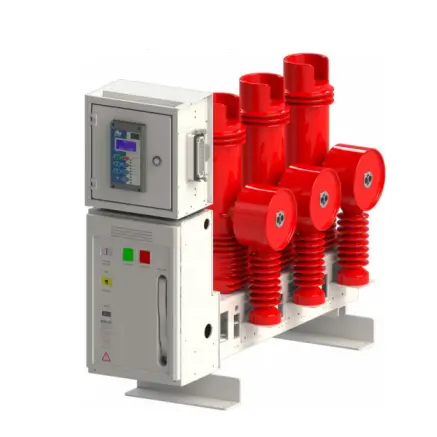 Intelligent Operation Solution for 12kV Vacuum Circuit Breakers: Integrating Real-time Monitoring & Lifetime OptimizationⅠ. Equipment Operation & MaintenanceIntelligent Monitoring System IntegrationMulti-parameter Real-time Monitoring: Embedded sensors (temperature, displacement, Hall effect current sensors) track contact temperature rise, mechanical characteristics (opening/closing speed, overtravel), coil current, and partial discharge signals. Data undergoes preprocessing via edge computing prior to cloud upload.Lifetime Prediction Model: Dynamically evaluates remaining lifespan using electrical wear data06/10/2025
 -
 SF6 Circuit Breaker Solutions for Outdoor Installation (Anti-Pollution & Seismic Resistance)I.Core Challenges in Outdoor InstallationIn high-voltage transmission and distribution systems, SF6 circuit breakers are exposed to complex outdoor environments for extended periods, facing the following critical issues:Pollution & Insulation DegradationDust, salt fog, and industrial pollutants in outdoor environments easily adhere to equipment surfaces. In coastal or industrial areas, pollution levels may reach Class IV, resulting in insufficient creepage distance and triggering flasho05/12/2025
 -
 12kV Indoor Vacuum Circuit Breaker Southeast Asia Solution: Anti-Corrosion Compact Design12kV Indoor Vacuum Circuit Breaker Southeast Asia Solution: Anti-Corrosion Compact DesignⅠ. Executive SummarySoutheast Asia faces rapidly growing electricity demand alongside environmental challenges including high temperatures, humidity, salt spray corrosion, and grid instability. This solution recommends Solid Insulated Pole-Mounted Vacuum Circuit Breakers (VCB) featuring high reliability, compact design, and smart monitoring. Tailored for tropical climates and industrial scenarios, it06/10/2025






