• Product
  • Suppliers
  • Manufacturers
  • Solutions
  • Free tools
  • Knowledges
  • Experts
  • Communities
Search


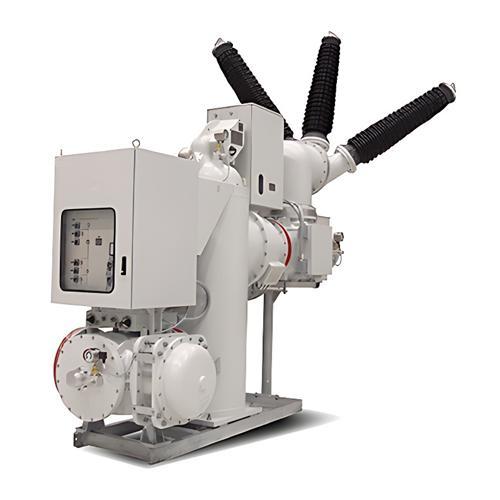
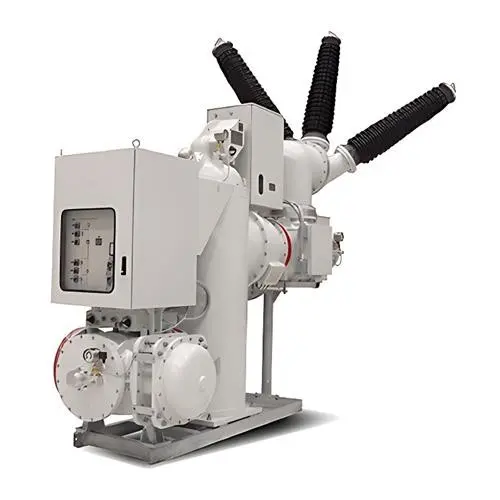
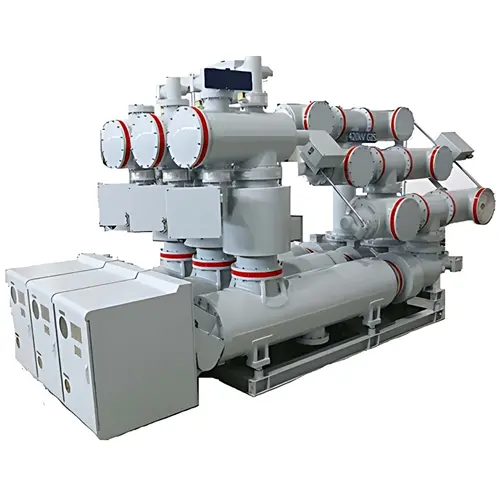
420kV HV Gas Insualted Switchgear(GIS)

  • 420kV HV Gas Insualted Switchgear(GIS)

Key attributes

Brand ROCKWILL
Model NO. 420kV HV Gas Insualted Switchgear(GIS)
Rated voltage 420kV
Rated normal current 4000A
Series ZF28

Product descriptions from the supplier

Description

Product overview:
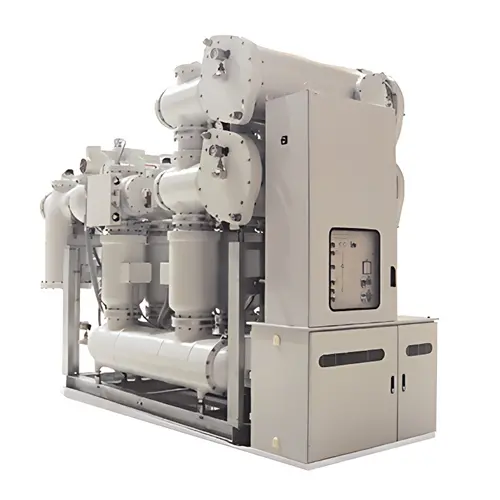
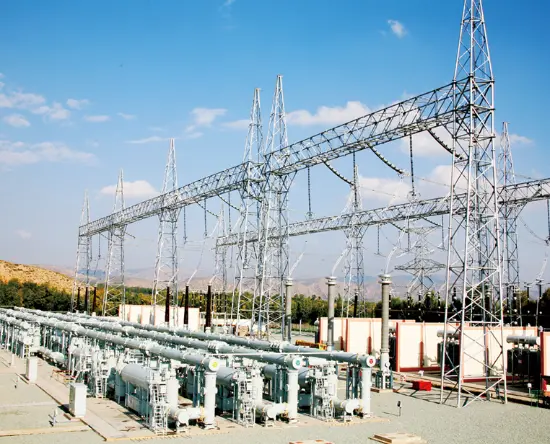
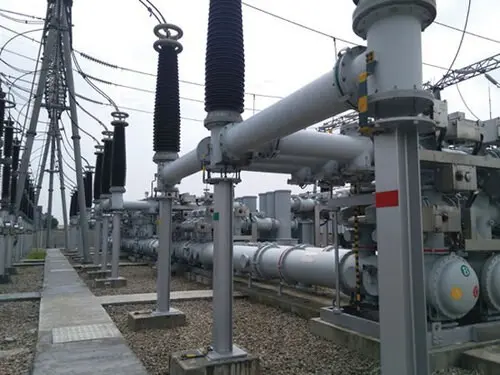
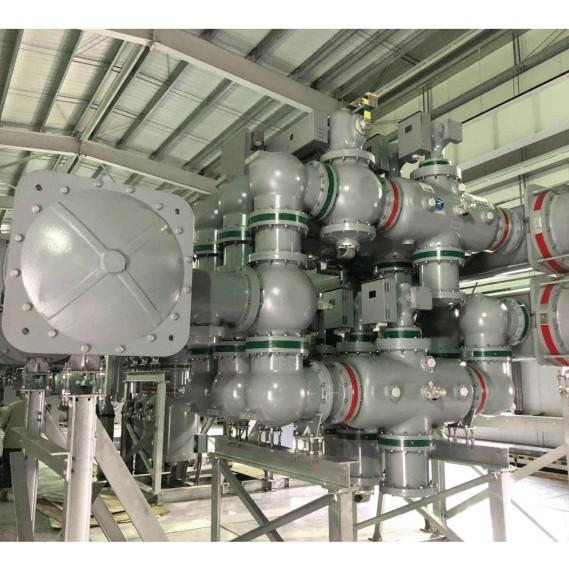
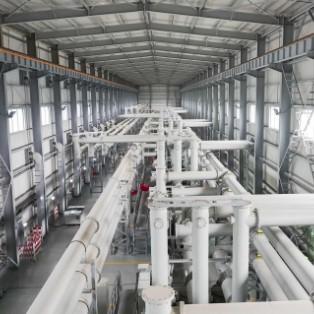
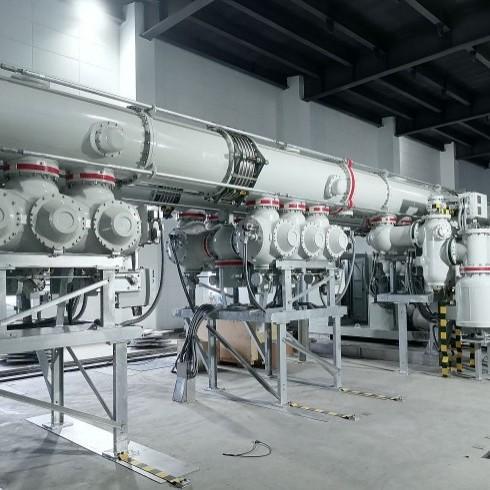
    ZF28-420 type GIS is composed of standard modules through flanged joint, which can meet the demand for substation optimization design through the flexible combination between modules. It saves space and conforms to technical requests.
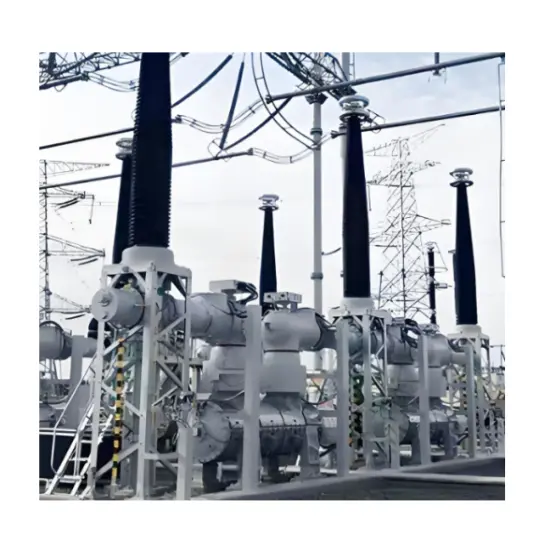
    This product can be applied to power system, power generation, rail transportation, petrochemical, metallurgy, mining, building materials and other large industrial consumer.

Features and advantages of the product:

  • Horizontal circuit breaker structure, integrated transportation, high space utilization.

  • Fusion of high parameters and high reliabilityCircuit breaker, disconnector and grounding switch have a mechanical life of 10,000 times.

  • Advanced circuit breaker, excellent breaking capacity.

  • Mature pure spring operating mechanism application.

  • Basin insulator with aluminum flange with double seal structure.

  • Import of key components, accessories and major production equipment.

  • The GIS phase spacing is 670mm and the standard spacing width is 2050mm (see layout). The whole interval of three-phase integrated transportation, its technological innovation level is domestic leading, international advanced level.

  •  Arrangement of circuit breaker is horizontal, it’s convenient for overhauling and emergency maintenance; it also will make lighter impact to the ground.

  • Excellent insulation level and low partial discharge. The only company in the industry that can achieve: under  1.2 times phase voltage (1.2×420/√3 = 291kV), the partial discharge of intervals is lower than 5pC, the partial discharge of the insulator is lower than 3pC.

Technical Parameters:

ZF28-420 GIS .png


Documentation Resource Library
Restricted
ZF28 HV Gas-Insulated Switchgear (GIS)
Catalogue
English
Consulting
Consulting
FAQ
Q: What is the insulation principle of gas-insulated switches?
A:

Insulation Principle:

  • In an electric field, the electrons in SF₆ gas molecules are slightly displaced from the nuclei. However, due to the stability of the SF₆ molecular structure, it is difficult for electrons to escape and form free electrons, resulting in high insulation resistance. In GIS (Gas-Insulated Switchgear) equipment, the insulation is achieved by precisely controlling the pressure, purity, and electric field distribution of the SF₆ gas. This ensures a uniform and stable insulating electric field between the high-voltage conductive parts and the grounded enclosure, as well as between different phase conductors.

  • Under normal operating voltage, the few free electrons in the gas gain energy from the electric field, but this energy is not sufficient to cause collision ionization of the gas molecules. This ensures the maintenance of the insulating properties.

Q: What are the characteristics of GIS equipment?
A:

Due to the excellent insulation performance, arc extinguishing performance and stability performance of SF6 gas, GIS equipment has the advantages of small footprint, strong arc extinguishing ability and high reliability, but the insulation ability of SF6 gas is greatly affected by the uniformity of the electric field, and it is easy to have insulation abnormalities when there are tips or foreign objects inside the GIS.

GIS equipment adopts a fully enclosed structure, which brings the advantages of internal components without environmental interference, long maintenance cycle, low maintenance workload, low electromagnetic interference, etc., while also having problems such as complex single overhaul work and relatively poor detection methods, and when the closed structure is eroded and damaged by the external environment, it will further bring a series of problems such as water ingress and air leakage.
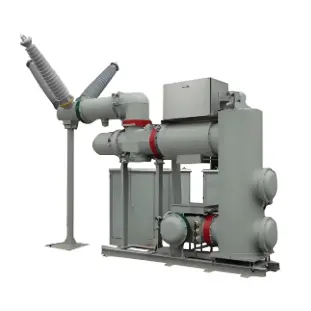
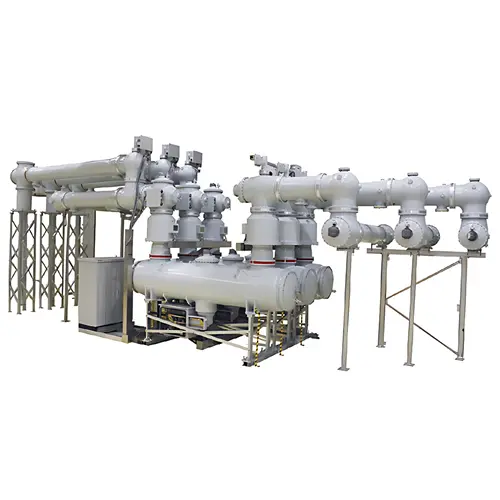
Q: What are the typical application scenarios for HGIS of different voltage levels?
A:
The application scenarios of HGIS are highly matched with its voltage level, with different levels corresponding to different power system requirements:
  • High Voltage (HV, 72.5kV-170kV): Mainly used in transmission systems, industrial plant power supply, distribution networks, and offshore platforms, adapting to medium-scale power transmission and distribution needs;
  • Extra-High Voltage (EHV, 245kV-550kV): Core applications in large-scale transmission grids, major substations, and other key power hubs, undertaking large-capacity and long-distance power transmission tasks.
Know your supplier
Online store
On-time delivery rate
Response time
100.0%
≤4h
Company overview
Workplace: 108000m²m² Total staff: 700+ Highest Annual Export(usD): 150000000
Workplace: 108000m²m²
Total staff: 700+
Highest Annual Export(usD): 150000000
Services
Business Type: Design/Manufacture/Sales
Main Categories: High Voltage Electrical Apparatus/Electric transformer
Whole life care manager
Whole-life care management services for equipment procurement, use, maintenance, and after-sales, ensuring safe operation of electrical equipment, continuous control, and worry-free electricity consumption.
The equipment supplier has passed platform qualification certification and technical evaluation, ensuring compliance, professionalism, and reliability from the source.

Related Products

Related Knowledges

  • HECI GCB for Generators – Fast SF6 Circuit Breaker
    1.Definition and Function1.1 Role of the Generator Circuit BreakerThe Generator Circuit Breaker (GCB) is a controllable disconnect point located between the generator and the step-up transformer, serving as an interface between the generator and the power grid. Its primary functions include isolating generator-side faults and enabling operational control during generator synchronization and grid connection. The operating principle of a GCB is not significantly different from that of a standard c
    01/06/2026
  • Distribution Equipment Transformer Testing, Inspection, and Maintenance
    1.Transformer Maintenance and Inspection Open the low-voltage (LV) circuit breaker of the transformer under maintenance, remove the control power fuse, and hang a “Do Not Close” warning sign on the switch handle. Open the high-voltage (HV) circuit breaker of the transformer under maintenance, close the grounding switch, fully discharge the transformer, lock the HV switchgear, and hang a “Do Not Close” warning sign on the switch handle. For dry-type transformer maintenance: first clean the porcel
    12/25/2025
  • How to Test Insulation Resistance of Distribution Transformers
    In practical work, insulation resistance of distribution transformers is generally measured twice: the insulation resistance between thehigh-voltage (HV) windingand thelow-voltage (LV) winding plus the transformer tank, and the insulation resistance between theLV windingand theHV winding plus the transformer tank.If both measurements yield acceptable values, it indicates that the insulation among the HV winding, LV winding, and transformer tank is qualified. If either measurement fails, pairwise
    12/25/2025
  • Design Principles for Pole-Mounted Distribution Transformers
    Design Principles for Pole-Mounted Distribution Transformers(1) Location and Layout PrinciplesPole-mounted transformer platforms should be located near the load center or close to critical loads, following the principle of “small capacity, multiple locations” to facilitate equipment replacement and maintenance. For residential power supply, three-phase transformers may be installed nearby based on current demand and future growth projections.(2) Capacity Selection for Three-Phase Pole-Mounted Tr
    12/25/2025
  • Transformer Noise Control Solutions for Different Installations
    1.Noise Mitigation for Ground-Level Independent Transformer RoomsMitigation Strategy:First, conduct a power-off inspection and maintenance of the transformer, including replacing aged insulating oil, checking and tightening all fasteners, and cleaning dust from the unit.Second, reinforce the transformer foundation or install vibration isolation devices—such as rubber pads or spring isolators—selected based on the severity of vibration.Finally, strengthen sound insulation at weak points of the ro
    12/25/2025
  • Risk Identification and Control Measures for Distribution Transformer Replacement Work
    1.Electric Shock Risk Prevention and ControlAccording to typical design standards for distribution network upgrades, the distance between the transformer’s drop-out fuse and the high-voltage terminal is 1.5 meters. If a crane is used for replacement, it is often impossible to maintain the required minimum safety clearance of 2 meters between the crane boom, lifting gear, slings, wire ropes, and the 10 kV live parts, posing a severe risk of electric shock.Control Measures:Measure 1:De-energize th
    12/25/2025

Related Solutions

  • Intelligent Operation Solution for 12kV Vacuum Circuit Breakers: Integrating Real-time Monitoring & Lifetime Optimization
    Ⅰ. Equipment Operation & MaintenanceIntelligent Monitoring System Integration​Multi-parameter Real-time Monitoring: Embedded sensors (temperature, displacement, Hall effect current sensors) track contact temperature rise, mechanical characteristics (opening/closing speed, overtravel), coil current, and partial discharge signals. Data undergoes preprocessing via edge computing prior to cloud upload.​Lifetime Prediction Model: Dynamically evaluates remaining lifespan using electrical wear data
    06/10/2025
  • SF6 Circuit Breaker Solutions for Outdoor Installation (Anti-Pollution & Seismic Resistance)
    I.Core Challenges in Outdoor Installation​In high-voltage transmission and distribution systems, SF6 circuit breakers are exposed to complex outdoor environments for extended periods, facing the following critical issues:​Pollution & Insulation Degradation​Dust, salt fog, and industrial pollutants in outdoor environments easily adhere to equipment surfaces. In coastal or industrial areas, pollution levels may reach ​Class IV, resulting in insufficient creepage distance and triggering ​flasho
    05/12/2025
  • 12kV Indoor Vacuum Circuit Breaker Southeast Asia Solution: Anti-Corrosion Compact Design
    12kV Indoor Vacuum Circuit Breaker Southeast Asia Solution: Anti-Corrosion Compact DesignⅠ. Executive Summary​Southeast Asia faces rapidly growing electricity demand alongside environmental challenges including high temperatures, humidity, salt spray corrosion, and grid instability. This solution recommends ​Solid Insulated Pole-Mounted Vacuum Circuit Breakers (VCB)​​ featuring ​high reliability, ​compact design, and ​smart monitoring. Tailored for tropical climates and industrial scenarios, it
    06/10/2025
Haven't found the right supplier yet? Let matching verified suppliers find you. Get Quotation Now
Haven't found the right supplier yet? Let matching verified suppliers find you.
Get Quotation Now
Send inquiry
Download
Get the IEE Business Application
Use the IEE-Business app to find equipment, obtain solutions, connect with experts, and participate in industry collaboration anytime, anywhere—fully supporting the development of your power projects and business.