• Product
  • Suppliers
  • Manufacturers
  • Solutions
  • Free tools
  • Knowledges
  • Experts
  • Communities
Search


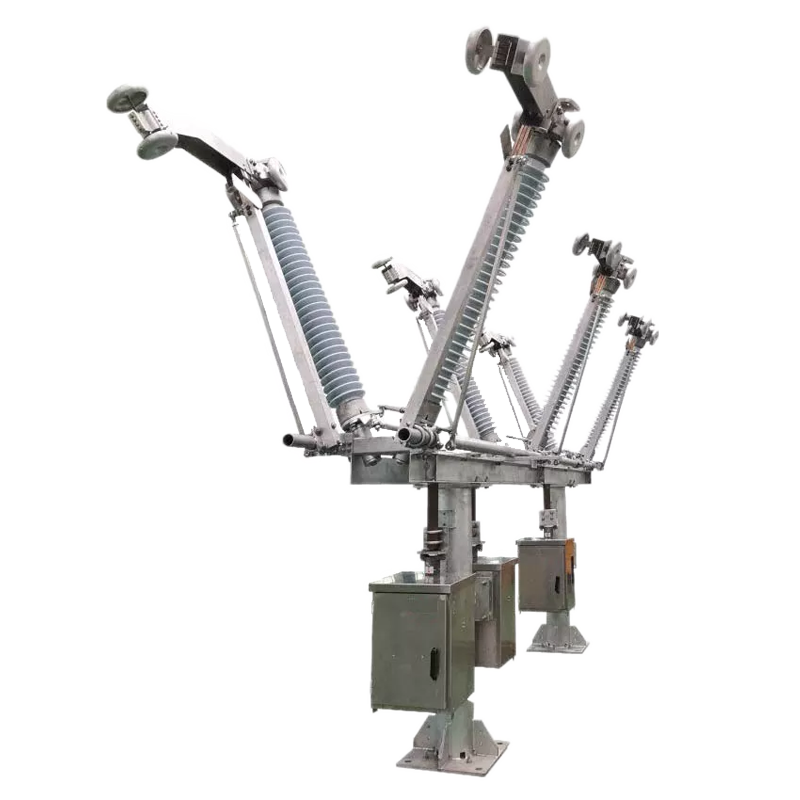
DS5 40.5kV 72.5kV 126kV High voltage disconnect switch

  • DS5 40.5kV 72.5kV 126kV High voltage disconnect switch

Key attributes

Brand ROCKWILL
Model NO. DS5 40.5kV 72.5kV 126kV High voltage disconnect switch
Rated voltage 126kV
Rated normal current 2000A
Series DS5

Product descriptions from the supplier

Description

Description:

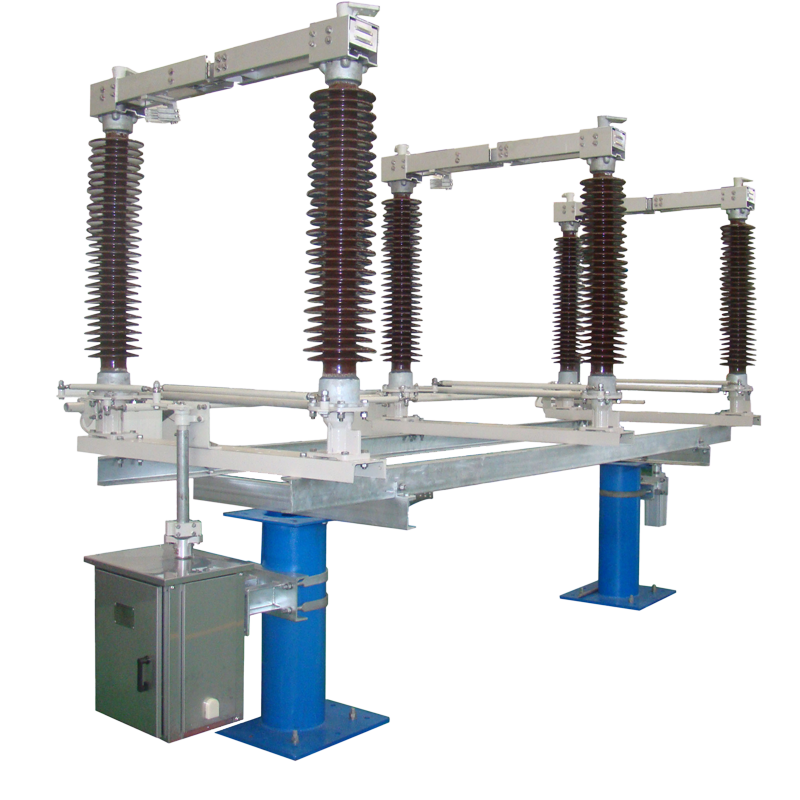
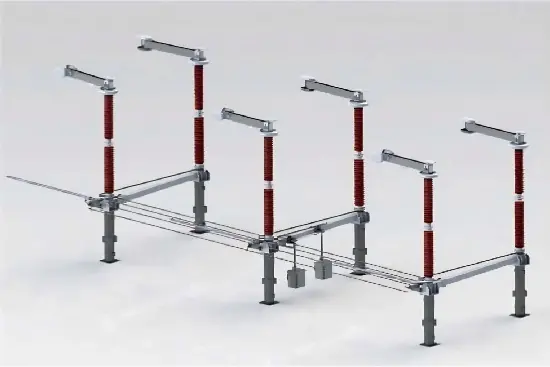
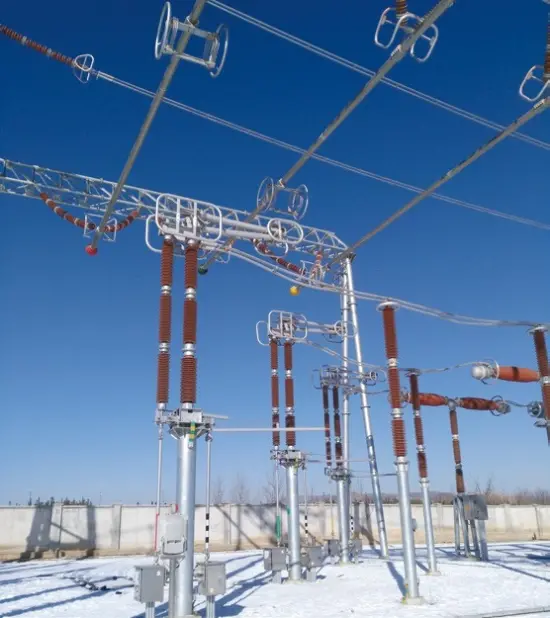
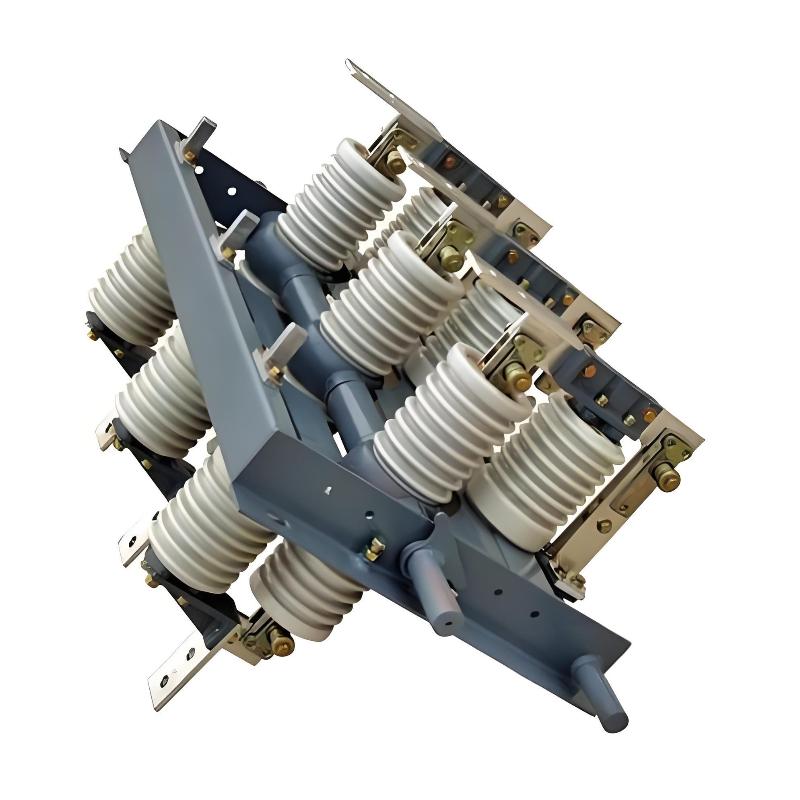
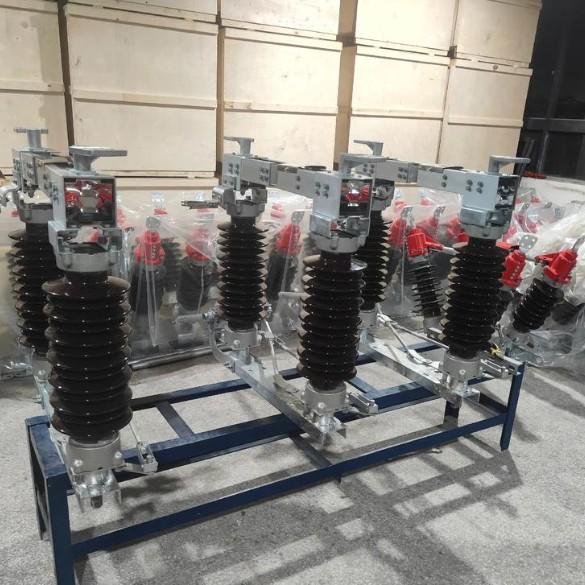
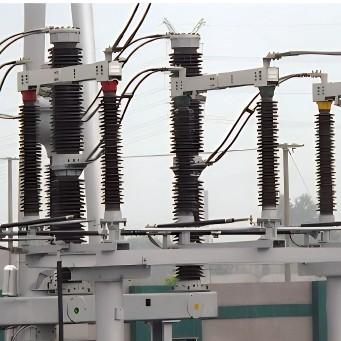
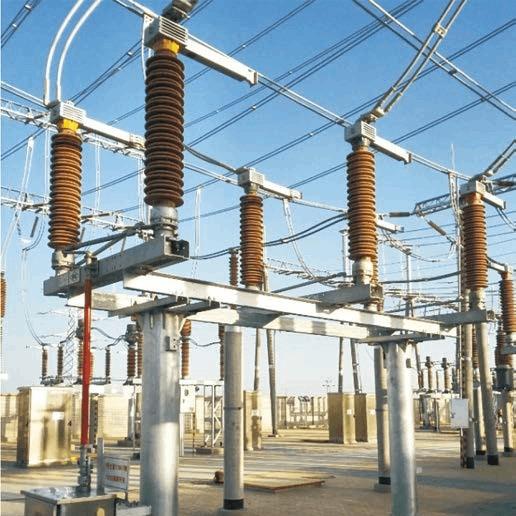
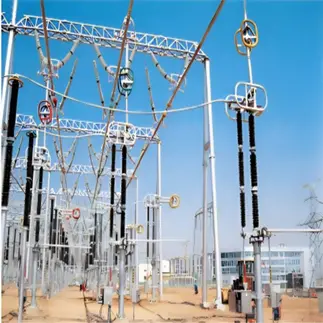
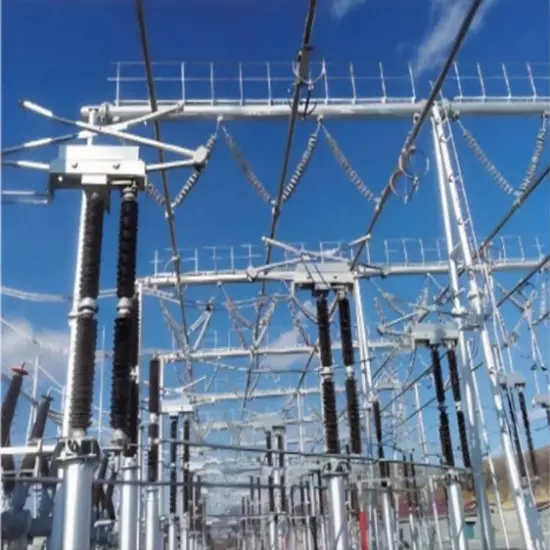
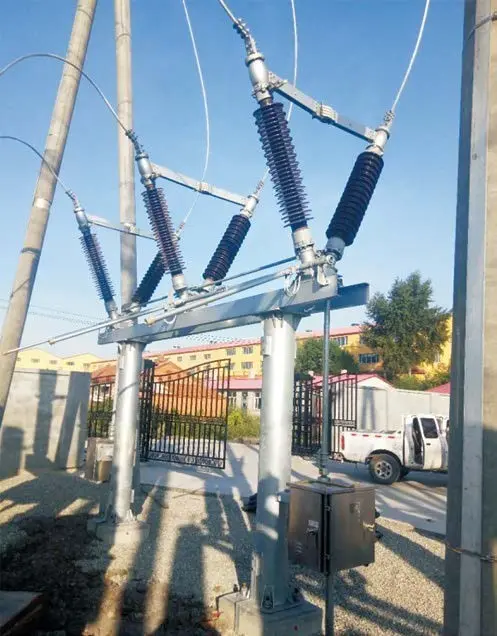
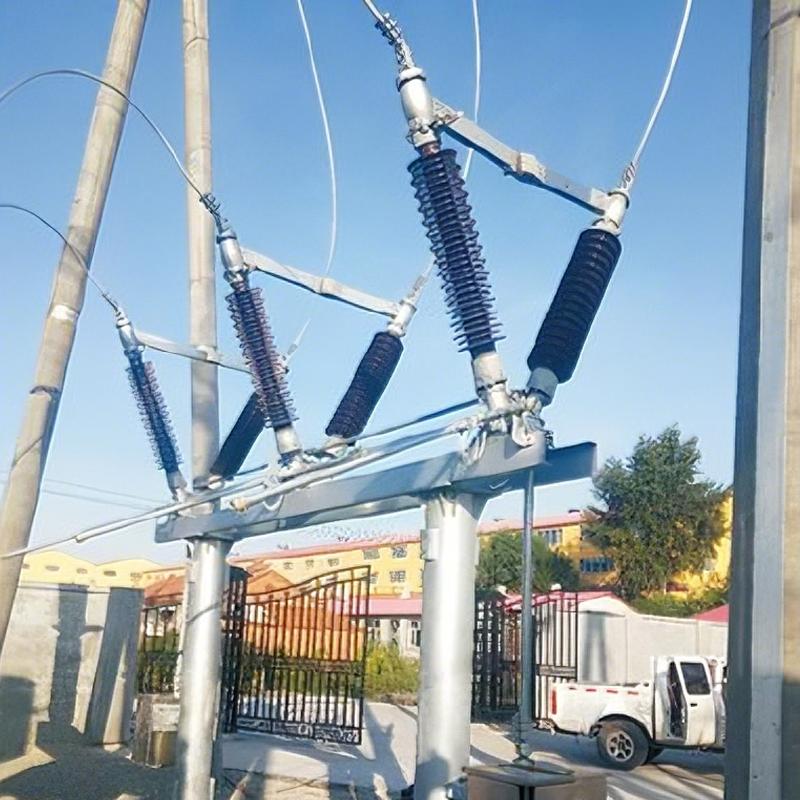
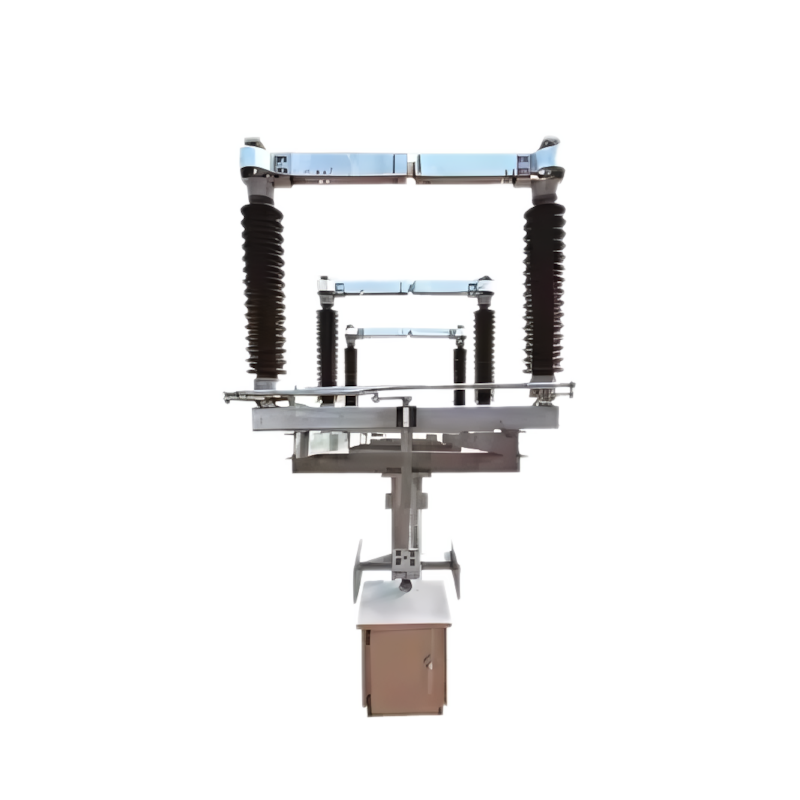
DS5 series disconnector adopts double-column horizontal V-type rotation structure, which is composed of three unipolar and operating mechanism. Each single electrode consists of a base, a post insulator, and a conducting part. A rotating pillar insulator is installed at both ends of the base, and the contact arm and contact arm of the main electrical part are respectively fixed on the top of the pillar insulator.

The operating mechanism drives one end of the pillar insulator to rotate, and drives the other end of the pillar insulator to reverse rotate 90° through the cross connecting rod, so that the conductive knife can turn on the horizontal plane to realize the isolation switch opening and closing. The opening state forms a horizontal insulation fracture.


Main Features:


  •  The conductive arm is made of rectangular aluminum alloy tube or aluminum alloy plate, high strength, light weight, large heat dissipation area, good anti-corrosion performance;

  • The contact part of the conductive arm adopts external pressure plate spring structure. The plate spring is made of alloy material with good elasticity, which can keep the contact pressure stable for a long time and overcome the drawbacks of the spring internal pull structure.

Technical parameter:


What are the main functions of the disconnector?


This is the primary function of an isolator switch. When performing maintenance or inspection on electrical equipment, the isolator switch is opened to create a clear break point between the equipment and the power supply. The insulation distance at this break point must meet relevant standards to ensure that no voltage from the power side is applied to the equipment side, thus ensuring the safety of the operators and the equipment. For example, when inspecting a transformer in a substation, the isolator switch connected to the transformer is first opened to isolate the transformer from the grid, before proceeding with subsequent maintenance work.

Auxiliary Function in Switching Operations:

In switching operations in substations and other electrical systems, isolator switches are used in conjunction with circuit breakers and other switching devices. Although isolator switches cannot interrupt normal load currents or short-circuit currents, they can be used to change the connection configuration of the circuit after the circuit breaker has already interrupted the circuit. For instance, they can be used to switch a line from one busbar to another. However, these operations must be performed strictly according to the operating procedures, as incorrect operation sequences can lead to serious electrical accidents.

Opening and Closing Small Current Circuits;

Isolator switches can be used to open and close small current circuits, such as the no-load currents of voltage transformers and surge arresters, and capacitive currents. However, they cannot be used to open and close normal load currents or short-circuit currents because they lack arc-quenching devices (or have very weak arc-quenching capabilities). Attempting to open or close large currents can result in intense arcs, damaging the isolator switch and potentially causing electrical fires or other accidents.
Documentation Resource Library
Restricted
12 to 800kV Center Vee Center Break Disconnect Switch Installation and Instruction Manuals
Installation Manual
English
Consulting
Consulting
FAQ
Q: Which manufacturer's products should be prioritized for frequently operated wind farm step-up substations?
A:

Considering the requirements for equipment reliability and frequent operation in wind farm step-up substations, the following models are recommended:

  • Rockwill Electric: DS4C-252/4000, with voltage and current parameters highly compatible for outdoor applications in wind power scenarios, providing isolation functions to ensure operational safety.

  • Siyuan Electric: GW5-G-252D/2000, an improved design that enhances contact wear resistance and overall reliability.

  • Changgao Electric: GW5C-252DD/3150, specifically designed for renewable energy projects, featuring rapid response and high reliability.

  • Shandong Taikai: GW5-126D/2000, while with a lower voltage rating, is a suitable option for wind farm step-up substations at 126kV and below.

Comparison Points:

  • Operational Lifespan: The "G" improved version from Siyuan and the "C" optimized version from Changgao emphasize product durability, making them suitable for frequent operation scenarios.

  • Cost-Effectiveness: Products from Rockwill and Taikai are renowned for their cost-performance advantages, making them ideal choices when budget constraints are a concern.
Know your supplier
Online store
On-time delivery rate
Response time
100.0%
≤4h
Company overview
Workplace: 108000m²m² Total staff: 700+ Highest Annual Export(usD): 150000000
Workplace: 108000m²m²
Total staff: 700+
Highest Annual Export(usD): 150000000
Services
Business Type: Design/Manufacture/Sales
Main Categories: High Voltage Electrical Apparatus/Electric transformer
Whole life care manager
Whole-life care management services for equipment procurement, use, maintenance, and after-sales, ensuring safe operation of electrical equipment, continuous control, and worry-free electricity consumption.
The equipment supplier has passed platform qualification certification and technical evaluation, ensuring compliance, professionalism, and reliability from the source.

Related Products

Related Knowledges

  • Faults and Handling of Single-phase Grounding in 10kV Distribution Lines
    Characteristics and Detection Devices for Single-Phase Ground Faults1. Characteristics of Single-Phase Ground FaultsCentral Alarm Signals:The warning bell rings, and the indicator lamp labeled “Ground Fault on [X] kV Bus Section [Y]” illuminates. In systems with a Petersen coil (arc suppression coil) grounding the neutral point, the “Petersen Coil Operated” indicator also lights up.Insulation Monitoring Voltmeter Indications:The voltage of the faulted phase decreases (in
    01/30/2026
  • Neutral point grounding operation mode for 110kV~220kV power grid transformers
    The arrangement of neutral point grounding operation modes for 110kV~220kV power grid transformers shall meet the insulation withstand requirements of transformer neutral points, and shall also strive to keep the zero-sequence impedance of substations basically unchanged, while ensuring that the zero-sequence comprehensive impedance at any short-circuit point in the system does not exceed three times the positive-sequence comprehensive impedance.For 220kV and 110kV transformers in new constructi
    01/29/2026
  • Why Do Substations Use Stones, Gravel, Pebbles, and Crushed Rock?
    Why Do Substations Use Stones, Gravel, Pebbles, and Crushed Rock?In substations, equipment such as power and distribution transformers, transmission lines, voltage transformers, current transformers, and disconnect switches all require grounding. Beyond grounding, we will now explore in depth why gravel and crushed stone are commonly used in substations. Though they appear ordinary, these stones play a critical safety and functional role.In substation grounding design—especially when multiple gr
    01/29/2026
  • Why Must a Transformer Core Be Grounded at Only One Point? Isn't Multi-Point Grounding More Reliable?
    Why Does the Transformer Core Need to Be Grounded?During operation, the transformer core, along with the metal structures, parts, and components that fix the core and windings, are all situated in a strong electric field. Under the influence of this electric field, they acquire a relatively high potential with respect to ground. If the core is not grounded, a potential difference will exist between the core and the grounded clamping structures and tank, which may lead to intermittent discharge.I
    01/29/2026
  • Understanding Transformer Neutral Grounding
    I. What is a Neutral Point?In transformers and generators, the neutral point is a specific point in the winding where the absolute voltage between this point and each external terminal is equal. In the diagram below, pointOrepresents the neutral point.II. Why Does the Neutral Point Need Grounding?The electrical connection method between the neutral point and earth in a three-phase AC power system is called theneutral grounding method. This grounding method directly affects:The safety, reliabilit
    01/29/2026
  • What’s the Difference Between Rectifier Transformers and Power Transformers?
    What is a Rectifier Transformer?"Power conversion" is a general term encompassing rectification, inversion, and frequency conversion, with rectification being the most widely used among them. Rectifier equipment converts input AC power into DC output through rectification and filtering. A rectifier transformer serves as the power supply transformer for such rectifier equipment. In industrial applications, most DC power supplies are obtained by combining a rectifier transformer with rectifier equ
    01/29/2026

Related Solutions

  • Intelligent Operation Solution for 12kV Vacuum Circuit Breakers: Integrating Real-time Monitoring & Lifetime Optimization
    Ⅰ. Equipment Operation & MaintenanceIntelligent Monitoring System Integration​Multi-parameter Real-time Monitoring: Embedded sensors (temperature, displacement, Hall effect current sensors) track contact temperature rise, mechanical characteristics (opening/closing speed, overtravel), coil current, and partial discharge signals. Data undergoes preprocessing via edge computing prior to cloud upload.​Lifetime Prediction Model: Dynamically evaluates remaining lifespan using electrical wear data
    06/10/2025
  • SF6 Circuit Breaker Solutions for Outdoor Installation (Anti-Pollution & Seismic Resistance)
    I.Core Challenges in Outdoor Installation​In high-voltage transmission and distribution systems, SF6 circuit breakers are exposed to complex outdoor environments for extended periods, facing the following critical issues:​Pollution & Insulation Degradation​Dust, salt fog, and industrial pollutants in outdoor environments easily adhere to equipment surfaces. In coastal or industrial areas, pollution levels may reach ​Class IV, resulting in insufficient creepage distance and triggering ​flasho
    05/12/2025
  • 12kV Indoor Vacuum Circuit Breaker Southeast Asia Solution: Anti-Corrosion Compact Design
    12kV Indoor Vacuum Circuit Breaker Southeast Asia Solution: Anti-Corrosion Compact DesignⅠ. Executive Summary​Southeast Asia faces rapidly growing electricity demand alongside environmental challenges including high temperatures, humidity, salt spray corrosion, and grid instability. This solution recommends ​Solid Insulated Pole-Mounted Vacuum Circuit Breakers (VCB)​​ featuring ​high reliability, ​compact design, and ​smart monitoring. Tailored for tropical climates and industrial scenarios, it
    06/10/2025
Haven't found the right supplier yet? Let matching verified suppliers find you. Get Quotation Now
Haven't found the right supplier yet? Let matching verified suppliers find you.
Get Quotation Now
Send inquiry
+86
Click to upload file
Download
Get the IEE Business Application
Use the IEE-Business app to find equipment, obtain solutions, connect with experts, and participate in industry collaboration anytime, anywhere—fully supporting the development of your power projects and business.