Pole fuse switche disconnector for in-coming and out-going conductors

Key attributes
| Brand | Wone Store |
| Model NO. | Pole fuse switche disconnector for in-coming and out-going conductors |
| Rated normal current | 160A |
| Rated frequency | 50/60Hz |
| Series | SZ |
Product descriptions from the supplier
Product Introduction
The Pole Fuse Switch Disconnector for In-coming and Out-going Conductors is a specialized electrical component designed to manage, isolate, and protect both incoming (power supply side) and outgoing (load side) conductors in pole-mounted low-voltage (LV) distribution systems. It serves as a critical interface between the main power source and downstream circuits, enabling safe switching, isolation during maintenance, and fuse-based protection against overloads or short circuits. Widely used in industrial feeders, commercial power grids, and infrastructure networks, it ensures reliable power distribution while safeguarding conductors and connected equipment.
Features
Dual Conductor Management:Specifically engineered to handle both in-coming (supply) and out-going (load) conductors, providing a unified solution for connecting, controlling, and protecting the entire conductor path—eliminating the need for separate components for each side.
Integrated Fuse Protection:Equipped with fuses that interrupt abnormal currents (overloads, short circuits) in both directions, preventing damage to conductors, transformers, or downstream devices. The fuse mechanism acts as a fail-safe, melting to break the circuit when current exceeds safe limits.
Safe Isolation Capability:Designed to isolate both in-coming and out-going conductors from the power source when in the "open" position, ensuring technicians can safely work on either side of the system during maintenance. Features clear position indicators (e.g., visible contacts) to confirm isolation status.
Pole-Mounted Efficiency:Optimized for pole installation, saving space in overhead or vertical distribution setups. The compact design simplifies integration into existing pole networks, reducing installation time and minimizing disruption to conductor routing.
Main Parameters
Certificates |
|
Standards |
IEC 60947-3 |
Dimensions |
|
Weight |
3.87 kg |
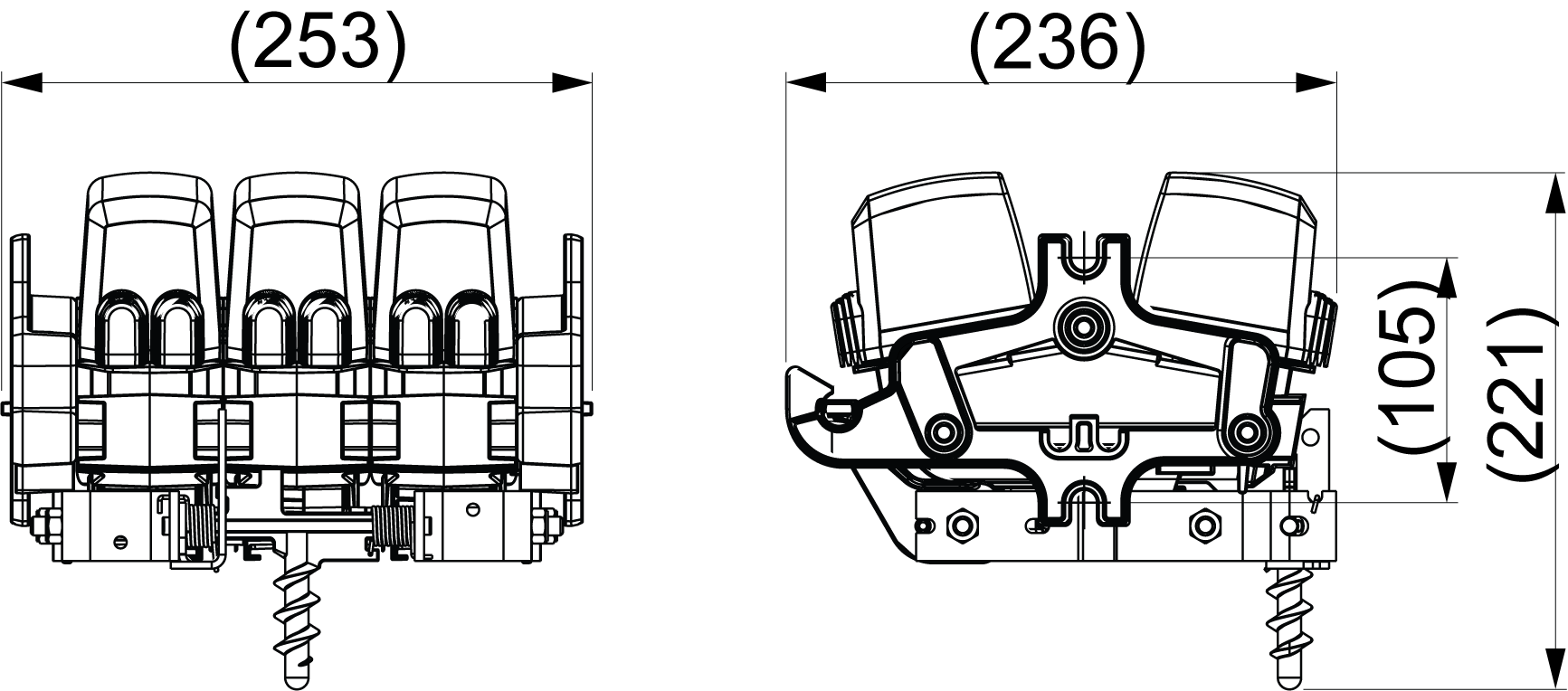
Height |
221 mm |
Width |
236 mm |
Length |
253 mm |
Conductor size Al |
16 ... 120 mm² |
Conductor size Cu |
16 ... 120 mm² |
Electrical values |
|
Fuse |
160 A |
Nominal insulation voltage |
1000 V |
Nominal voltage (Un) |
≥ 0.415 kV |
Rated values |
160 A, 415 V |
Features |
|
Connectors included |
6 x KG45.5 |
Fuse contact |
Not included |
Number of poles |
3 |
Utilization category |
AC22B |
Ratings |
|
Degree of protection |
IP23 |
Short-circuit characteristics |
|
Rated conditional short-circuit current |
50 kA |
ETIM |
|
ETIM Class |
EC001040 |
Max. rated operation voltage Ue AC |
415 V |
Rated permanent current Iu |
160 A |
Conditioned rated short-circuit current Iq |
50 kA |
Suitable for fuses |
NH00 |
Number of poles |
3 |
Type of electrical connection of main circuit |
Cable clamp |
Cable entry |
Side |
Equipped with connectors |
Yes |
Type of control element |
Long turning handle |

Related Products
-
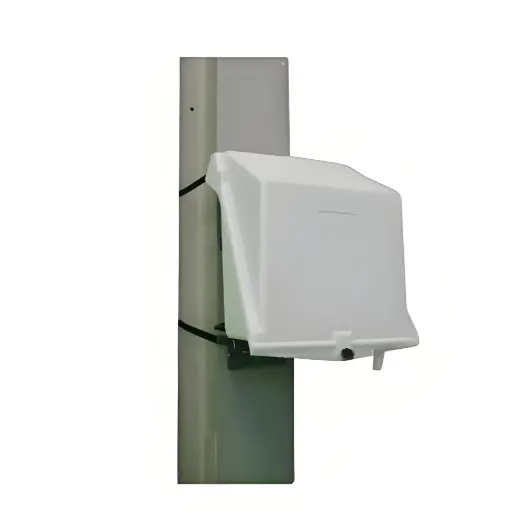
Circuit breaker Pole Mounted Circuit Breaker D265T (Middle Pole) with Digital Trip Unit
-
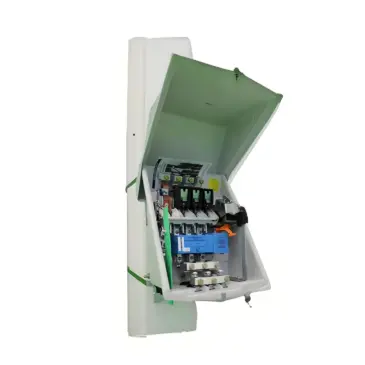
Low voltage pole mounted circuit breaker D165T with digital trip unit
-
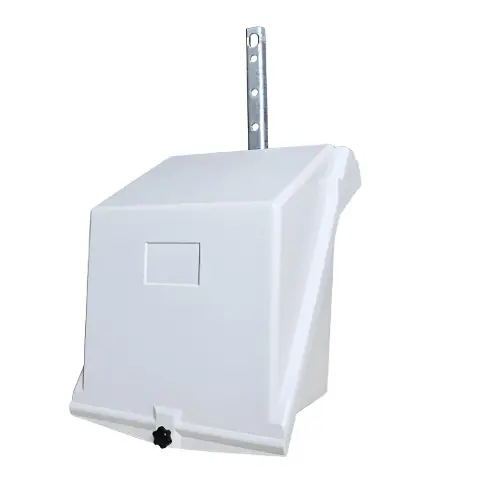
DHP type LV Pole mounted Circuit Breaker/Digital Stroke Unit Installed
-
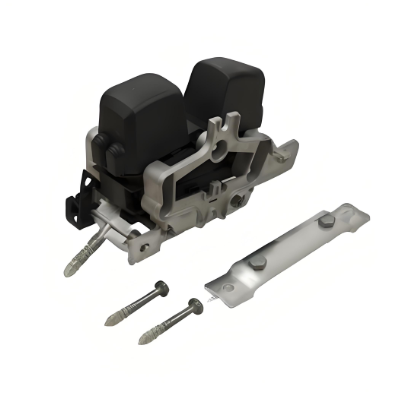
160A Pole fuse switch disconnector
-
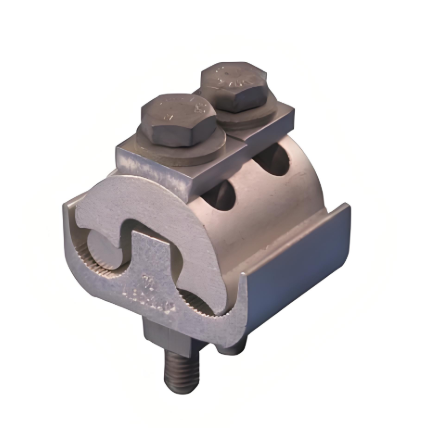
Busbar connector used for connecting Al/Cu-conductors
-
Pole fuse switch disconnector for protecting in LV-networks

-
Pole fuse switch disconnector for protecting underground cables

Related Knowledges
-
 Main Transformer Accidents and Light Gas Operation Issues1. Accident Record (March 19, 2019)At 16:13 on March 19, 2019, the monitoring background reported a light gas action of No. 3 main transformer. In accordance with the Code for Operation of Power Transformers (DL/T572-2010), operation and maintenance (O&M) personnel inspected the on-site condition of No. 3 main transformer.On-site confirmation: The WBH non-electrical protection panel of No. 3 main transformer reported a Phase B light gas action of the transformer body, and the reset was ineff02/05/2026
 -
 Faults and Handling of Single-phase Grounding in 10kV Distribution LinesCharacteristics and Detection Devices for Single-Phase Ground Faults1. Characteristics of Single-Phase Ground FaultsCentral Alarm Signals:The warning bell rings, and the indicator lamp labeled “Ground Fault on [X] kV Bus Section [Y]” illuminates. In systems with a Petersen coil (arc suppression coil) grounding the neutral point, the “Petersen Coil Operated” indicator also lights up.Insulation Monitoring Voltmeter Indications:The voltage of the faulted phase decreases (in01/30/2026
 -
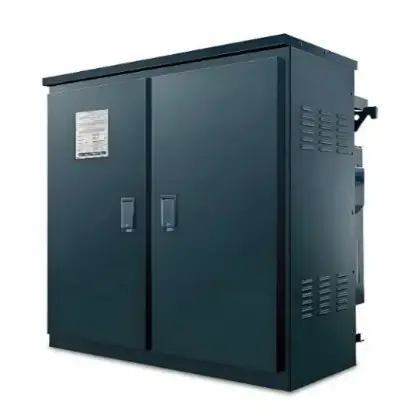 Neutral point grounding operation mode for 110kV~220kV power grid transformersThe arrangement of neutral point grounding operation modes for 110kV~220kV power grid transformers shall meet the insulation withstand requirements of transformer neutral points, and shall also strive to keep the zero-sequence impedance of substations basically unchanged, while ensuring that the zero-sequence comprehensive impedance at any short-circuit point in the system does not exceed three times the positive-sequence comprehensive impedance.For 220kV and 110kV transformers in new constructi01/29/2026
 -
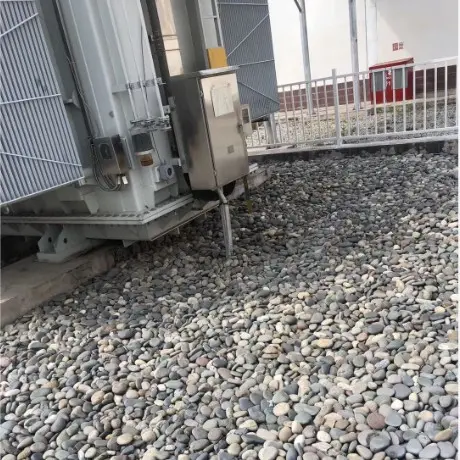 Why Do Substations Use Stones, Gravel, Pebbles, and Crushed Rock?Why Do Substations Use Stones, Gravel, Pebbles, and Crushed Rock?In substations, equipment such as power and distribution transformers, transmission lines, voltage transformers, current transformers, and disconnect switches all require grounding. Beyond grounding, we will now explore in depth why gravel and crushed stone are commonly used in substations. Though they appear ordinary, these stones play a critical safety and functional role.In substation grounding design—especially when multiple gr01/29/2026
 -
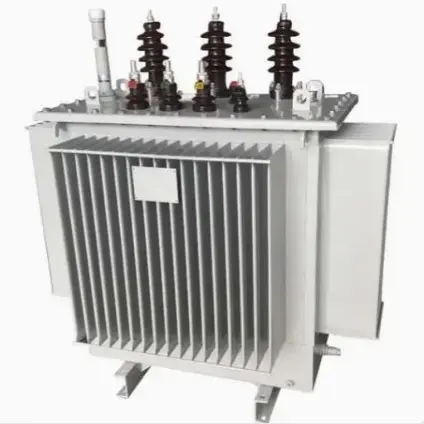 Why Must a Transformer Core Be Grounded at Only One Point? Isn't Multi-Point Grounding More Reliable?Why Does the Transformer Core Need to Be Grounded?During operation, the transformer core, along with the metal structures, parts, and components that fix the core and windings, are all situated in a strong electric field. Under the influence of this electric field, they acquire a relatively high potential with respect to ground. If the core is not grounded, a potential difference will exist between the core and the grounded clamping structures and tank, which may lead to intermittent discharge.I01/29/2026
 -
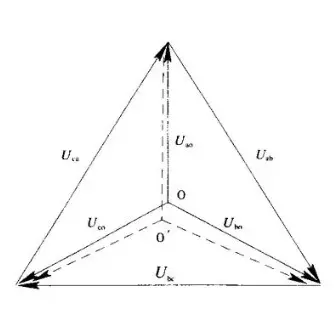 Understanding Transformer Neutral GroundingI. What is a Neutral Point?In transformers and generators, the neutral point is a specific point in the winding where the absolute voltage between this point and each external terminal is equal. In the diagram below, pointOrepresents the neutral point.II. Why Does the Neutral Point Need Grounding?The electrical connection method between the neutral point and earth in a three-phase AC power system is called theneutral grounding method. This grounding method directly affects:The safety, reliabilit01/29/2026
Related Solutions
-
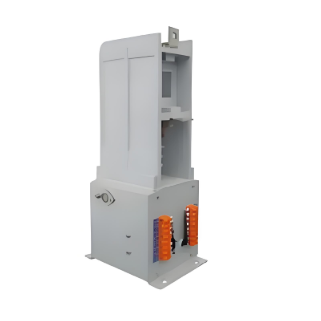 Dedicated Vacuum Contactor Solution for Port Shore Power SystemsI. Background and ChallengesShore power systems have become core technical equipment for ports to reduce carbon emissions and noise pollution. However, these systems face two major challenges in the harsh operational environment of ports:Severe Environmental Corrosion: High humidity and salt spray in port areas cause serious corrosion to metal components and enclosures of electrical equipment, significantly impacting electrical lifespan and operational reliability.High Switching Requirements:09/13/2025
 -
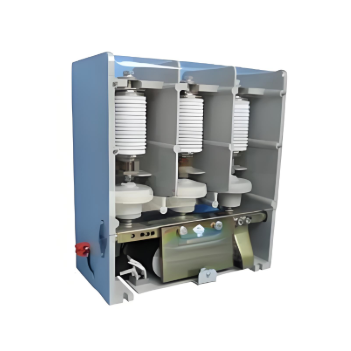 ABB Vacuum Contactor KC2 Power Supply System Technical Transformation PlanIssue OverviewThe 10kV air compressor starting system of a company utilizes the ABB vacuum contactor KC2 as the control component for the operating circuit. The dedicated wide-voltage power supply module paired with this contactor presents the following issues:Frequent failures: The power supply module fails to properly transition the voltage from 300V to 12V, resulting in fuse blowouts.Poor heat dissipation: Enclosed installation of the module leads to insufficient heat dissipation, acceler09/13/2025
 -
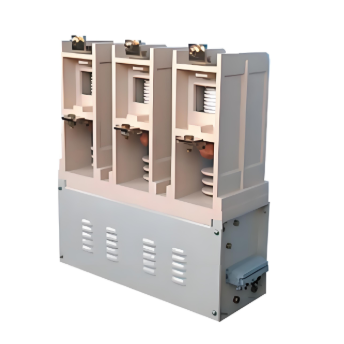 Solution for Medium-Voltage Motor Control and Protection Using Vacuum Contactor-Fuse (VCF) in a Coal Conveying System1.Project BackgroundA coal conveying system comprises 15 belt conveyors driven by medium-voltage motors. The system operates under complex conditions, with motors often subjected to heavy loads and frequent starts. To address these challenges and achieve effective control and reliable protection during motor startup, the project comprehensively adopts Vacuum Contactor-Fuse (VCF) combination devices for the 6kV medium-voltage motor power distribution. This solution details the technical features,09/13/2025






