• Product
  • Suppliers
  • Manufacturers
  • Solutions
  • Free tools
  • Knowledges
  • Experts
  • Communities
Search


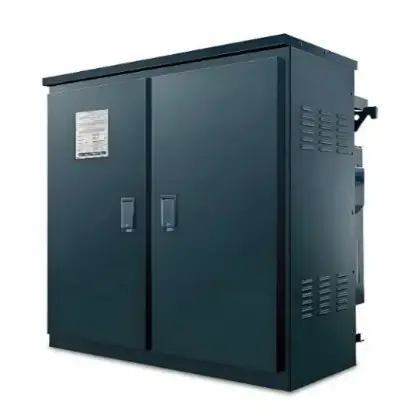
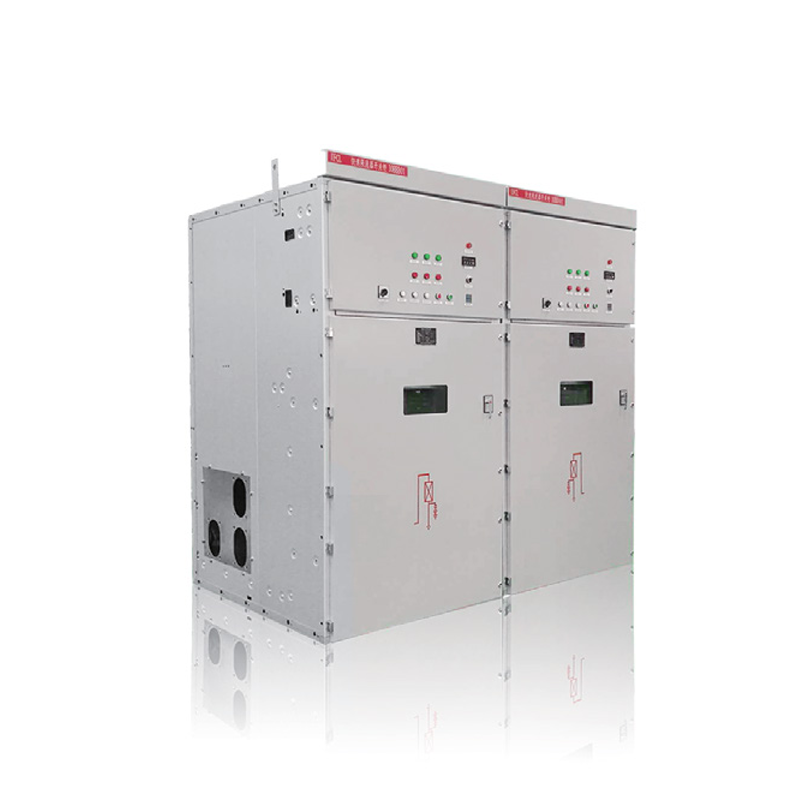
Ultra-Fast Current Limiter

  • Ultra-Fast Current Limiter
  • Ultra-Fast Current Limiter
  • Ultra-Fast Current Limiter
  • Ultra-Fast Current Limiter

Key attributes

Brand RW Energy
Model NO. Ultra-Fast Current Limiter
Rated voltage 24kV
Rated normal current 4000A
Rated frequency 50/60Hz
Mounting type Integrated type
Power frequency withstand voltage 50kV/min
lightning impulse withstand voltage 125kV
Series UFCL Series

Product descriptions from the supplier

Description

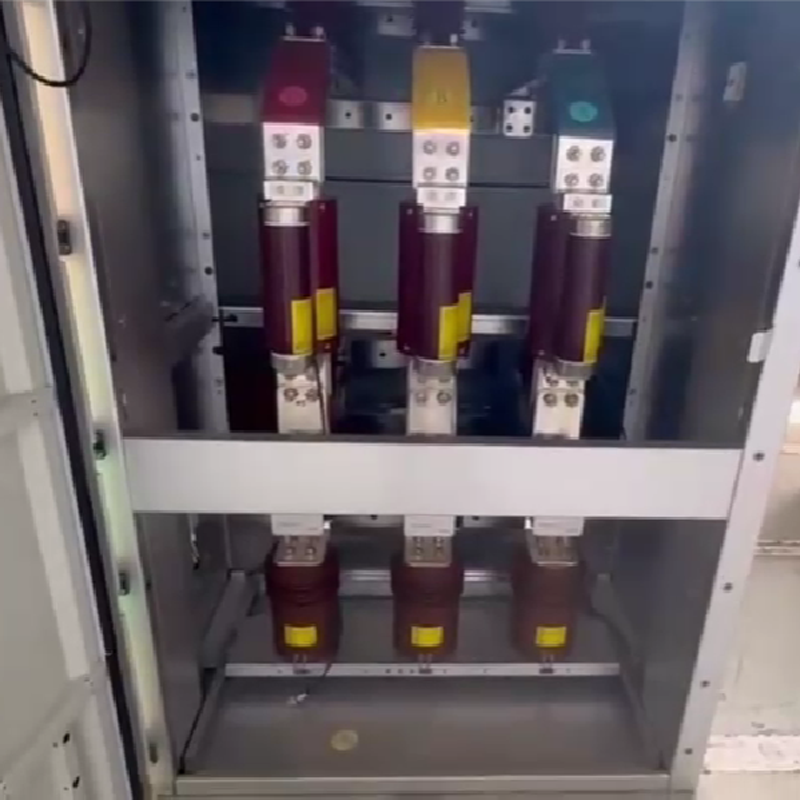
The UFCL-limiter, a fault current limiter based on pyrotechnic technology, is a technological answer to the problem of higher levels of short circuit current where system augmentation takes place but replacing of whole protection switchgear is not feasible.Faults in electrical power systems are inevitable. Apart from the damages in the vicinity of the fault - e.g. due to the effects of an electric arc - the fault currents flowing from the sources to the location of the fault impose high dynamical and thermal stresses on equipment like bus-bars, transformers, and switchgears. The circuit-breakers further have to be capable of (selectively) interrupting the currents associated.

But, a growth in the generation of electrical energy and an increased interconnection of the networks lead to higher fault currents. Especially, the continuous growth in the generation of electrical energy has the consequence that networks approach or even exceed their limits with respect to the short-circuit current withstand capability. Therefore, there is a considerable interest in devices which are capable of limiting fault currents. A fault current limiter can trip at the very early stage of first rise and limit the first peak of the fault current passing through it.

The use of UFCL-limiters allows equipment to remain in service even if the prospective fault current exceeds its rated peak and short-time withstand current and in case of circuit breakers also its rated short-circuit making and breaking current. Replacement of equipment can be avoided or at least shifted to a later date. In case of newly planned networks UFCL-limiters allow the use of equipment with lower ratings which renders possible considerable cost savings. In case of newly planned networks UFCL-limiters allow the use of equipment with lower ratings which renders possible considerable cost savings.

Sometimes, UFCL-limiter is the only solution

As shown in Figure 1 below, the UFCL-limiter is installed in the bus-tie section and is series-connected to the bus coupling circuit-breaker (CB). In the event of a short-circuit in the outgoing feeder, the prospective short-circuit current flowing through the outgoing feeder CB (Ik") may reach 80kArms, which is equivalent to a peak current of 200kAp. This exceeds the ratings of the CB (40kArms and 100kAp). In other words, the CB is unable to provide protection against this high peak short-circuit current and the operation speed of the CB is too slow. This will lead to serious mechanical and thermal stress and eventually equipment failure.

微信截图_20250710105240.png

However, thanks to the high operation speed and current limiting capabilities of the UFCL-limiter, it is possible to resolve this issue without upgrading all the equipment in the system. By installing the UFCL-limiter on the strategic position of the bus-tie, the short-circuit current i2 contributed by T2 is limited at the rise of the first cycle and interrupted before the prospective current i2 reaches its peak. The total (peak) short-circuit current flowing through the CB of the fault circuit is then kept below 100kAp (i1 + i2 <100 kAp), which is the rated peak withstand current of the CB. Therefore, the CB can withstand the fault current and trip to clear the fault safely.

In comparison with complex conventional solutions, the UFCL-limiter has both technical and economic advantages when used in transformer or generator feeders, in switchgear sectionalizing and connected in parallel with reactors. There is no need for customers to upgrade all the switchgear, bus-bars cables, etc.

The advantages of the use of a UFCL-limiter in a network are:

• Reduction of the short-circuit current of the system (compared to the short-circuit current with closed tie circuit breaker)

• Reduction of voltage sags and flicker due to the lower total source impedance

• Reduction of harmonics due to the lower total source impedance

• Higher system availability due to the parallel connection of the feeding generators and transformers

• Higher loads possible in a sub-system (higher than the ratings of the feeding generators and transformers in that sub-system)

UFCL-limiter switchgear


Rated   voltage

kV

7.2

12

17.5

24

36

40.5

Rated   current

A

1250-6300

1250-4000

1250-3150

Rated   frequency

Hz

50/60

Rated   power-frequency withstand voltage

kV

20

28

38

50

70

95

Rated   lightning impulse withstand voltage

kV

60

75

95

125

170

185

Rated   auxiliary voltage

V

AC220/230

Installation   type

Cabinet type


UFCL-limiter in loose equipment supply

Rated   voltage

kV

7.2

12

17.5

24

36

40.5

Rated   current

A

1250-6300

1250-4000

1250-3150

Rated   frequency

Hz

50/60

Rated   short-circuit breaking current

kA rms

Up to200

Rated   power-frequency withstand voltage

kV

20

28

38

50

70

95

Rated   lightning impulse withstand voltage

kV

60

75

95

125

170

185

Tripping   time

ms

<1

Total   operating time

ms

<10

Peak   current limiting ratio

%

15-50

Rated   auxiliary voltage

V

DC 110/220;AC110/220/230

Installation   type

Install in the form of loose parts


If you need to know about more parameters and application, Please check the model selection manual.↓↓↓ 

FAQ
Q: How to achieve coordination with circuit breakers?
A:

After the fuse is activated, it outputs a signal through the impactor and triggers the tripping of the higher-level circuit breaker, achieving selective protection and avoiding over tripping.

Q: Can it be used for generator protection?
A:

Yes, it is commonly used at the generator outlet or excitation system as the last fast protective barrier to prevent the winding from burning out due to short-circuit current.

Q: What is the difference between this specialized fuse and a regular high-voltage fuse?
A:

Adopting special arc extinguishing materials and structural design, it has extremely fast I ² t value and precise current limiting characteristics, specially designed for use with high-speed switches or FCL systems.
Know your supplier
Online store
On-time delivery rate
Response time
100.0%
≤4h
Company overview
Workplace: 30000m² Total staff: Highest Annual Export(usD): 100000000
Workplace: 30000m²
Total staff:
Highest Annual Export(usD): 100000000
Services
Business Type: Design/Manufacture/Sales
Main Categories: High Voltage Electrical Apparatus/Low Voltage Electrical Apparatus/Instrument meters/New energy/Tester/Robot
Whole life care manager
Whole-life care management services for equipment procurement, use, maintenance, and after-sales, ensuring safe operation of electrical equipment, continuous control, and worry-free electricity consumption.
The equipment supplier has passed platform qualification certification and technical evaluation, ensuring compliance, professionalism, and reliability from the source.

Related Products

Related Knowledges

  • Faults and Handling of Single-phase Grounding in 10kV Distribution Lines
    Characteristics and Detection Devices for Single-Phase Ground Faults1. Characteristics of Single-Phase Ground FaultsCentral Alarm Signals:The warning bell rings, and the indicator lamp labeled “Ground Fault on [X] kV Bus Section [Y]” illuminates. In systems with a Petersen coil (arc suppression coil) grounding the neutral point, the “Petersen Coil Operated” indicator also lights up.Insulation Monitoring Voltmeter Indications:The voltage of the faulted phase decreases (in
    01/30/2026
  • Neutral point grounding operation mode for 110kV~220kV power grid transformers
    The arrangement of neutral point grounding operation modes for 110kV~220kV power grid transformers shall meet the insulation withstand requirements of transformer neutral points, and shall also strive to keep the zero-sequence impedance of substations basically unchanged, while ensuring that the zero-sequence comprehensive impedance at any short-circuit point in the system does not exceed three times the positive-sequence comprehensive impedance.For 220kV and 110kV transformers in new constructi
    01/29/2026
  • Why Do Substations Use Stones, Gravel, Pebbles, and Crushed Rock?
    Why Do Substations Use Stones, Gravel, Pebbles, and Crushed Rock?In substations, equipment such as power and distribution transformers, transmission lines, voltage transformers, current transformers, and disconnect switches all require grounding. Beyond grounding, we will now explore in depth why gravel and crushed stone are commonly used in substations. Though they appear ordinary, these stones play a critical safety and functional role.In substation grounding design—especially when multiple gr
    01/29/2026
  • Why Must a Transformer Core Be Grounded at Only One Point? Isn't Multi-Point Grounding More Reliable?
    Why Does the Transformer Core Need to Be Grounded?During operation, the transformer core, along with the metal structures, parts, and components that fix the core and windings, are all situated in a strong electric field. Under the influence of this electric field, they acquire a relatively high potential with respect to ground. If the core is not grounded, a potential difference will exist between the core and the grounded clamping structures and tank, which may lead to intermittent discharge.I
    01/29/2026
  • Understanding Transformer Neutral Grounding
    I. What is a Neutral Point?In transformers and generators, the neutral point is a specific point in the winding where the absolute voltage between this point and each external terminal is equal. In the diagram below, pointOrepresents the neutral point.II. Why Does the Neutral Point Need Grounding?The electrical connection method between the neutral point and earth in a three-phase AC power system is called theneutral grounding method. This grounding method directly affects:The safety, reliabilit
    01/29/2026
  • What’s the Difference Between Rectifier Transformers and Power Transformers?
    What is a Rectifier Transformer?"Power conversion" is a general term encompassing rectification, inversion, and frequency conversion, with rectification being the most widely used among them. Rectifier equipment converts input AC power into DC output through rectification and filtering. A rectifier transformer serves as the power supply transformer for such rectifier equipment. In industrial applications, most DC power supplies are obtained by combining a rectifier transformer with rectifier equ
    01/29/2026

Related Solutions

  • Distribution automation systems solutions
    What are the difficulties in overhead line operation and maintenance?Difficulty one:Overhead lines of distribution network have wide coverage,complicatedterrain,many radiation branches and distributed power supply,resultingin "many line faults and difficulty in fault troubleshooting".Difficulty Two:Manual troubleshooting is time-consuming and laborious.Meanwhile,therunning current,voltage and switching state of the line cannot be graspedin real time,because of the lack of intelligent technical m
    04/22/2025
  • RW8000 DMS Distribution Management System Solutions
    OverviewNowadays, the development trend of power grid is intellectualization. As an important part of power grid, the power distribution system is very close to the customers and it has to run properly. The distribution management system (DMS)played an important role in it.Introduction:RW8000 power distribution management system (DMS) is designed for the smart grids. It is based on real-time application, centered on distribution network operation and management, focusing on the business process
    09/07/2023
  • High-Precision Electrical Parameter Monitoring System Solution
    1.Introduction​With the increasingly stringent requirements for power supply quality in high-end facilities such as precision manufacturing, medical diagnosis, and data centers, traditional power monitoring systems, due to their low sampling accuracy and weak data analysis capabilities, can no longer meet the demand for deep insight and precise management of power quality. In response, we are introducing a new generation ​High-Precision Electrical Parameter Monitoring System. With ​millisecond-l
    09/28/2025
Haven't found the right supplier yet? Let matching verified suppliers find you. Get Quotation Now
Haven't found the right supplier yet? Let matching verified suppliers find you.
Get Quotation Now
Send inquiry
+86
Click to upload file
Download
Get the IEE Business Application
Use the IEE-Business app to find equipment, obtain solutions, connect with experts, and participate in industry collaboration anytime, anywhere—fully supporting the development of your power projects and business.