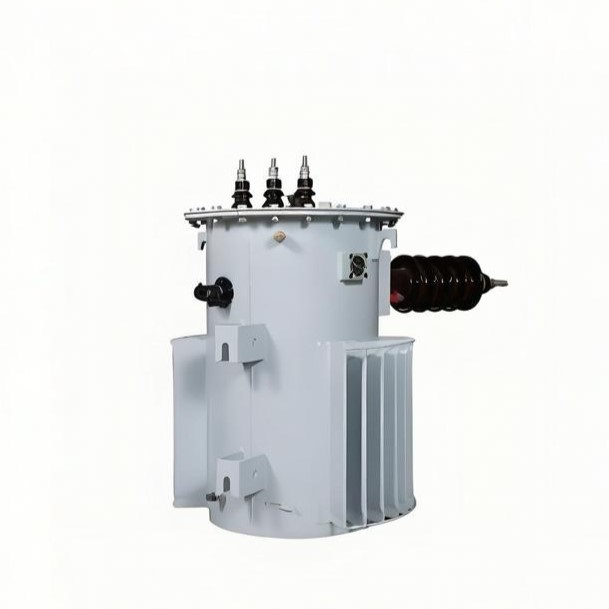
1. Structural Principles and Efficiency Advantages
1.1 Structural Differences Affecting Efficiency
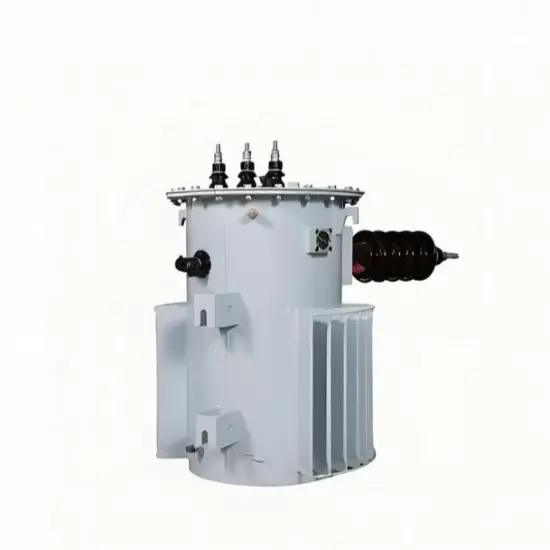
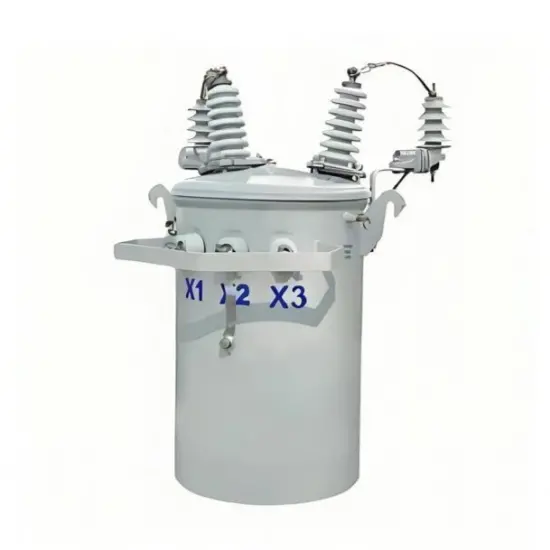
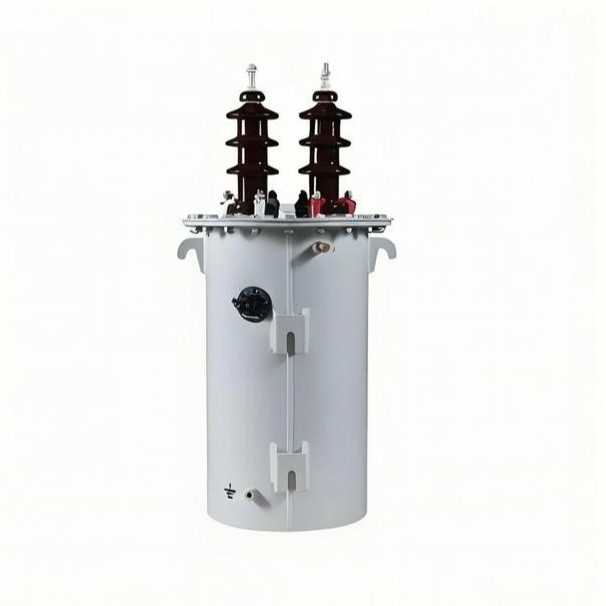
Single-phase distribution transformers and three-phase transformers exhibit significant structural differences. Single-phase transformers typically adopt an E-type or wound core structure, while three-phase transformers use a three-phase core or group structure. This structural variation directly impacts efficiency:
The wound core in single-phase transformers optimizes magnetic flux distribution, reducing high-order harmonics and associated losses.
Data shows that single-phase wound-core transformers exhibit 10%–25% lower no-load losses and ~50% lower no-load currents compared to traditional three-phase laminated-core transformers, with significantly reduced noise levels.
1.2 Working Principle Reducing Losses
Single-phase transformers process only single-phase AC, simplifying design by eliminating phase differences and magnetic potential balancing issues inherent in three-phase systems.
In three-phase transformers, unbalanced loads cause additional losses: rotating magnetic fields in core joints and transverse flux leakage at lamination seams increase energy dissipation.
Single-phase transformers avoid these issues due to independent magnetic paths, enhancing operational efficiency.
1.3 Power Supply Mode Optimizing Line Losses
Single-phase transformers enable a "small capacity, dense distribution, short radius" power supply model. By installing near load centers, they shorten low-voltage supply radii, reducing line losses.
Practical applications use single-pole suspension mounting, saving material costs and improving installation efficiency—ideal for rural and urban fringe grid upgrades.
2. Material Usage and Manufacturing Cost Advantages
2.1 Material Savings Reducing Costs
Single-phase transformers use 20% less core material and 10% less copper than equivalent-capacity three-phase units.
This reduces manufacturing costs by 20%–30%.
2.2 Case Study: Rural Grid Renovation
In Shexian County, after adopting single-phase transformers:
Low-voltage line construction costs decreased by ~20%.
Substation area construction costs fell by ~66%.
Although initial investment is slightly higher (e.g., ¥5,000 for 50kVA single-phase vs. ¥4,500 for three-phase), the Life Cycle Cost (LCC) over 10 years is significantly lower: ¥22,585 (single-phase) vs. ¥57,623 (three-phase).
2.3 Cost-Effective Power Supply Modes
Single-phase systems use two-wire high-voltage lines (10% savings) and two- or three-wire low-voltage lines (15% savings), reducing engineering costs.
Ideal for rural grids with long lines and dispersed loads.
2.4 Production Advantages
Simpler structure enables mass production, facilitating adoption of advanced technologies like amorphous alloy cores, further cutting costs.
3. Applicability Analysis in Different Scenarios
Application Scenario |
Key Features |
Case Details |
Transformation Effect |
Advantages |
Rural Power Grids |
Long supply radii, high line losses, poor voltage quality |
Shexian County: 30kVA three-phase transformer replaced with two single-phase units (50kVA + 20kVA) |
Line loss ↓ from 12% to 2.2%; voltage compliance ↑ from 97.61% to 99.9972% |
Solves "low-voltage" issues, improves reliability |
Urban Residential Areas |
Concentrated loads, voltage drops at peak times |
Ankang Dongxiangzi: 250kVA three-phase replaced with six 50kVA single-phase units |
Line loss ↓ from 5.3% to 2.2%; end-point voltage stabilized |
Shortens supply radius, enhances voltage quality |
Street Lighting Systems |
Energy-saving potential via voltage adjustment |
Single-phase V/V₀ transformers reduce voltage to 200V at night, saving 16% for 70W high-pressure sodium lamps |
Lower line losses, smart control for efficiency |
Energy savings via intelligent control |
4. Recommendations for Rational Application
4.1 Capacity Selection
Core Principle: "Small capacity, dense distribution":
Rural areas: ≤20kVA; urban areas: ≤100kVA.
Wiring:
≤40kVA: 1 circuit; ≥50kVA: 2 circuits; prioritize single-phase three-wire system.
Formula: P=kf⋅Kt⋅∑PN=Kx⋅∑PNP = k_f \cdot K_t \cdot \sum P_N = K_x \cdot \sum P_NP=kf⋅Kt⋅∑PN=Kx⋅∑PN (where kfk_fkf: load factor; KtK_tKt: simultaneity factor).
4.2 Installation Methods
Independent: For scattered villages; ensures proximity to loads.
Branch-Type: For flexible power switching.
Mainline-Type: For three-phase areas with no three-phase loads.
Prioritize single-pole mounting for space-saving and easy maintenance.
4.3 Hybrid Power Supply
Single-phase loads ≤15% of three-phase loads: direct summation; else, convert to equivalent three-phase loads.
Load Matching:
Single-phase: residential loads; three-phase: industrial motors.
Seasonal fluctuations: Use on-load capacity-adjustable transformers.
4.4 Operation and Maintenance
Smart Monitoring: Remote data collection and metering.
Protection Devices:
High-voltage side: PRWG or HPRW6 drop-out fuses.
Lightning protection: gapless composite insulator surge arresters.
Low-voltage side: isolating switches + molded-case circuit breakers for safety.
4.5 Economic Considerations
LCC Advantage: Lower long-term costs despite higher initial investment (e.g., ¥22,585 vs. ¥57,623 over 10 years).
5. Future Trends and Prospects
Material Innovations:
Amorphous alloy and wound cores will further reduce no-load losses by 70%–80% and 10%–15%, respectively.
Smart Grid Integration:
IoT-enabled monitoring and AI-driven optimization enhance real-time management.
Renewable Energy Synergy:
Facilitate rural distributed PV/wind integration, improving energy absorption.
Standardization:
Guidelines like Rural Power Grid Upgrade Technical Principles will refine application norms.