• Product
  • Suppliers
  • Manufacturers
  • Solutions
  • Free tools
  • Knowledges
  • Experts
  • Communities
Search


How many volts are in the main lines that go from the electric meter to the breaker box?

Encyclopedia
Field: Encyclopedia
0
China

The main line voltage from the meter to the circuit breaker box typically depends on local power supply standards and distribution systems. Globally, there are several common voltage standards. Here are the details:

1. Single-Phase Systems

1.1 120V

  • Regions: North America (United States, Canada)

  • Usage: Residential and small commercial buildings

1.2 230V

  • Regions: Europe, Asia, Africa, Australia

  • Usage: Residential and small commercial buildings

2. Three-Phase Systems

2.1 208V

  • Regions: North America

  • Usage: Commercial and industrial buildings

2.2 400V

  • Regions: Europe, Asia, Africa, Australia

  • Usage: Commercial and industrial buildings

3. Special Applications

3.1 480V

  • Regions: North America

  • Usage: Large industrial buildings

3.2 600V

  • Regions: North America

  • Usage: Specific industrial applications

4. Standards in China

In China, the common voltage standards are as follows:

  • Single-Phase System: 220V

  • Three-Phase System: 380V

5. Specific Applications

5.1 Residential

  • Single-Phase: 220V

  • Three-Phase: 380V (less common, typically used in large residential areas or special needs)

5.2 Commercial and Industrial

  • Single-Phase: 220V

  • Three-Phase: 380V

Summary

  • Single-Phase System: The main line voltage from the meter to the circuit breaker box is typically 220V.

  • Three-Phase System: The main line voltage from the meter to the circuit breaker box is typically 380V.

If you are in China, residential homes typically use a 220V single-phase system, while commercial and industrial buildings may use a 380V three-phase system. The specific voltage should be determined based on the actual installation and the regulations of the local power company. If you have a specific project or application, it is recommended to consult the local power company or a professional electrician for accurate information.
Give a tip and encourage the author!

Recommended

Why Must a Transformer Core Be Grounded at Only One Point? Isn't Multi-Point Grounding More Reliable?
Why Does the Transformer Core Need to Be Grounded?During operation, the transformer core, along with the metal structures, parts, and components that fix the core and windings, are all situated in a strong electric field. Under the influence of this electric field, they acquire a relatively high potential with respect to ground. If the core is not grounded, a potential difference will exist between the core and the grounded clamping structures and tank, which may lead to intermittent discharge.I
01/29/2026
Understanding Transformer Neutral Grounding
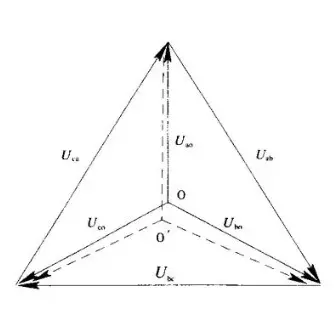
I. What is a Neutral Point?In transformers and generators, the neutral point is a specific point in the winding where the absolute voltage between this point and each external terminal is equal. In the diagram below, pointOrepresents the neutral point.II. Why Does the Neutral Point Need Grounding?The electrical connection method between the neutral point and earth in a three-phase AC power system is called theneutral grounding method. This grounding method directly affects:The safety, reliabilit
01/29/2026
High Voltage Bushing Selection Standards for Power transformer
1. Structure Forms and Classification of BushingsThe structure forms and classification of bushings are shown in the table below: Serial No. Classification Feature Category 1 Main insulation structure Capacitive Type Resin-impregnated paperOil-impregnated paper Non-capacitive Type Gas insulationLiquid insulationCasting resinComposite insulation 2 External Insulation Material PorcelainSilicone Rubber 3 Filling Material Between Capacitor Core and Exte
12/20/2025
Chinese Gas-Insulated Switchgear Enables Commissioning of Longdong-Shandong ±800kV UHV DC Transmission Project
On May 7, China's first large-scale integrated wind-solar-thermal-storage comprehensive energy base UHV transmission project—the Longdong~Shandong ±800kV UHV DC transmission project—was officially energized and put into operation. The project has an annual transmission capacity exceeding 36 billion kilowatt-hours, with new energy sources accounting for more than 50% of the total. After commissioning, it will reduce carbon dioxide emissions by approximately 14.9 million tons annually, contributin
12/13/2025
Related Products
Send inquiry
+86
Click to upload file
Download
Get the IEE Business Application
Use the IEE-Business app to find equipment, obtain solutions, connect with experts, and participate in industry collaboration anytime, anywhere—fully supporting the development of your power projects and business.